Shock absorbers dampen the compression and rebound cycles of the springs. If a vehicle is not equipped with shock absorbers, the up and down motion would multiply until the vehicle was alternately trying to leap off the ground and pound itself into the pavement.
Shock absorbers do not support the ride height of the vehicle. Ride height is controlled by the springs, and by the diameter of the rim and tire. Worn shock absorbers will affect handling. If the front of the vehicle is rising or falling excessively, the "footprint" of the tires change on the pavement and steering is severely affected.
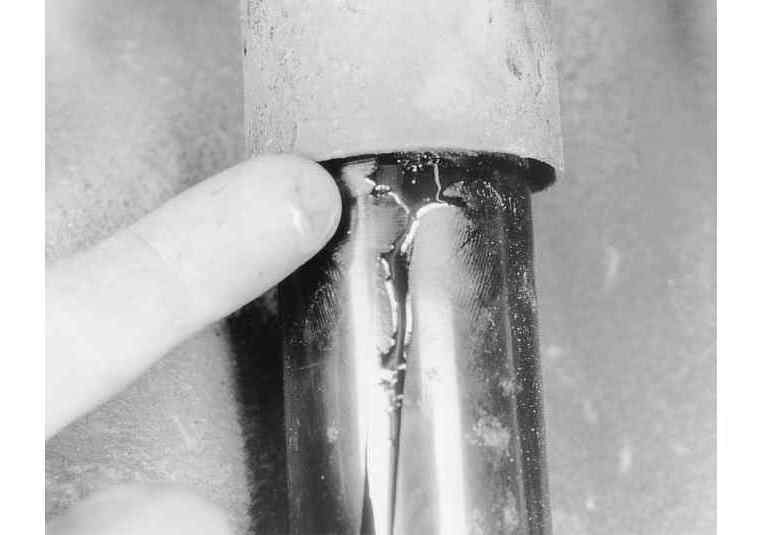
To test the compression and rebound of a shock absorber push down on the vehicle (over each tire) and release. Observe the motion of the body as it is released. In most cases, it will come up beyond it original rest position, dip back below and settle quickly to rest. This shows that the shock absorber is dampening the spring action. Excessive extension or failure to return to rest within two to three cycles is a sign of poor function. Oil-filled shock absorbers may have a light film of oil around the seal resulting from normal breathing and air exchange. This should not be taken as a sign of failure however any sign of thick or running oil indicates failure. Gas filled shocks may also show some film at the shaft; if the gas has leaked out, the shock will have almost no resistance to motion.
| When fluid is seeping out of the shock absorber, it’s time to replace it
|
Never replace only one shock absorber. Always replace shocks in pairs -- front or rear--or replace all of the shock absorbers to equal the dampening effect throughout the entire vehicle.