Check the alignment of your vehicle periodically to ensure even tire wear and stable handling. The easiest way to check the alignment (without the use of an alignment rack) is to check the condition of the tires. Uneven wear patterns across the tread area are a dead giveaway. Other symptoms include pulling or drifting to the right or left and instability when turning or changing lanes. If an alignment problem is suspected, first check for improper tire inflation and other possible causes such as worn suspension or steering components, accident damage or unmatched tires. If any worn or damaged components are found, they must be replaced before the wheels can be properly aligned. Wheel alignment requires very expensive equipment and involves finite adjustments that must be accurate. Alignments should only be performed by a trained technician. Have your vehicle aligned by a qualified repair facility.
The following is a description of the alignment angles that are adjustable on most vehicles and how they affect vehicle handling. These angles can apply to both the front and rear wheels. On rear wheel drive vehicles typically, only the front suspension is adjustable.
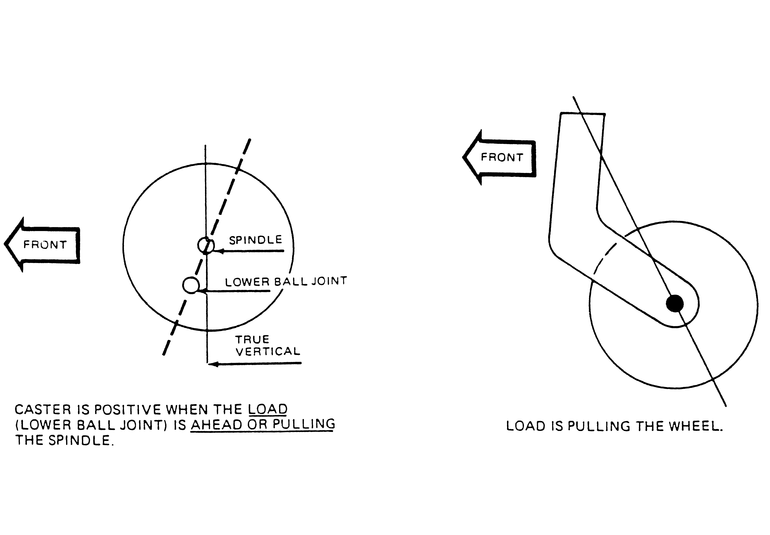
Looking at a vehicle from the side, caster angle describes the steering axis from front to rear. The steering knuckle is attached to a control arm or strut at the top and a control arm at the bottom. The wheel pivots around the line between these points to steer the vehicle. When the upper point is tilted back, this is described as positive caster. Having positive caster tends to make the wheels self-centering increasing directional stability. Excessive positive caster makes the wheels hard to steer, while an uneven caster will cause a pull to one side. Overloading the vehicle or sagging rear springs will affect caster, as it will raise the rear of the vehicle. If the rear of the vehicle is lower than normal, the caster becomes more positive.
| Caster affects straight-line stability. Caster wheels used on shopping carts, for example, employ negative caster
|
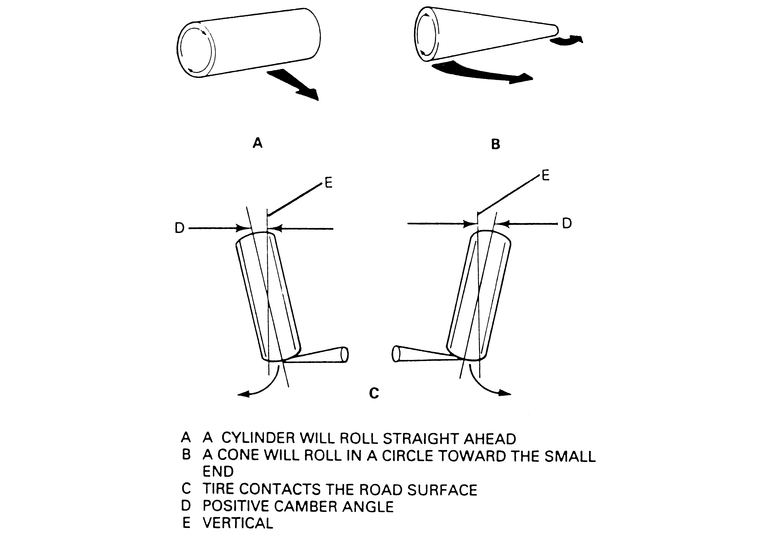
Looking from the front of the vehicle, camber is the inward or outward tilt of the top of wheels. When the tops of the wheels are tilted in, this is negative camber; if they are tilted out, positive. In a turn a slight amount of negative camber helps maximize contact of the tire with the road. Too much negative camber compromises straight-line stability, increases bump steer and torque steer.
| Camber influences tire contact with the road
|
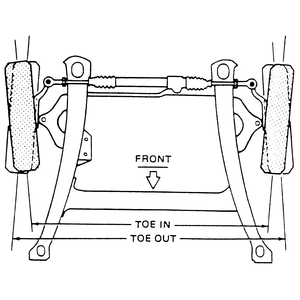
Looking down at the wheels from above the vehicle, toe angle is the difference in distance between the front of the wheels, to the back of the wheels. If the wheels are closer at the front, they are said to be toed-in or to have negative toe. A small amount of negative toe enhances directional stability and provides a smoother ride on the highway.
| With toe-in, the distance between the wheels is closer at the front than at the rear
|