Vehicle Lifting Points
Precautions: General safety (00)
 WARNING:
Improperly lifting the vehicle using a hoist could cause serious personal injury and/or damage to the vehicle.
Take the following precautions when lifting the vehicle with a hoist:
•Before applying the hoist arms to the underbody, keep in mind how the balance of the vehicle will change when components are removed during the intended service.
•Before lifting up the vehicle, check that the ends of the hoist arms are not in contact with components such as the brake and fuel lines, and related brackets.
•When using a frame contact hoist, apply the right and left arms to the symmetrically located points shown in the figure. Lift up the vehicle until all 4 tires are slightly off the ground and check that the vehicle will not fall off the hoist by rocking the vehicle body back and forth.
Work should be started only after this confirmation.
•Lock the hoist after the vehicle has been raised up to the desired height.
•Before lifting up the vehicle, check that the ends of the hoist arms are not in contact with components such as the brake and fuel lines, and related brackets.
•When using a frame contact hoist, apply the right and left arms to the symmetrically located points shown in the figure. Lift up the vehicle until all 4 tires are slightly off the ground and check that the vehicle will not fall off the hoist by rocking the vehicle body back and forth.
Work should be started only after this confirmation.
•Lock the hoist after the vehicle has been raised up to the desired height.
NOTICE:
Failure to follow the following precautions may cause damage to the vehicle:
•When lifting up a vehicle, place a pad (1) or attachment (2) on the support position (3).
•When using a frame contact hoist or the like, use a pad or attachment without concave groove (4) to avoid interference (5) between the pad or attachment and the vehicle body (6).
•When using a pad or attachment with concave groove, change the direction of the pad or attachment so that the support position does not fall into the groove.
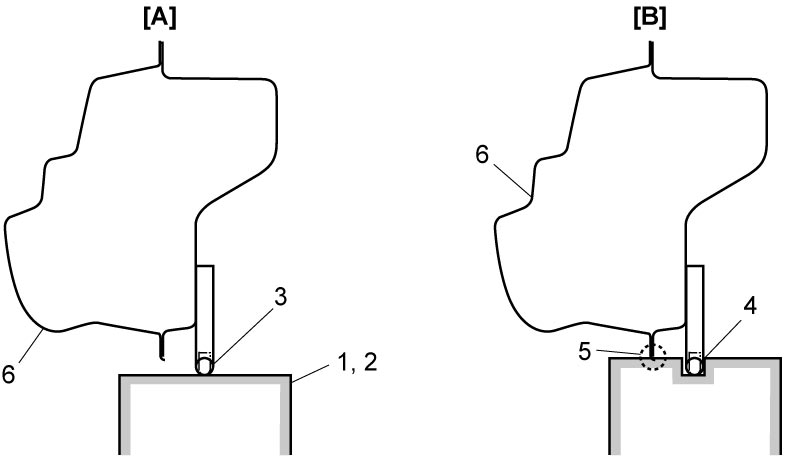

•When using a frame contact hoist or the like, use a pad or attachment without concave groove (4) to avoid interference (5) between the pad or attachment and the vehicle body (6).
•When using a pad or attachment with concave groove, change the direction of the pad or attachment so that the support position does not fall into the groove.
| [A]: | Proper lifting | [B]: | Improper lifting |
When Using Frame Contact Hoist
NOTICE:
When lifting the vehicle with a hoist, improperly placing the ends of the hoist arms to the vehicle may cause damage to the side sill splash guards.
Before lifting up the vehicle, check the distance “b” between the ends of the hoist arms and the front undercovers (front side) or the side sill splash guards (rear side), and place the ends of the hoist arms properly so that the ends of the hoist arms do not contact the front undercovers and the side sill splash guards when the vehicle is lifted up.
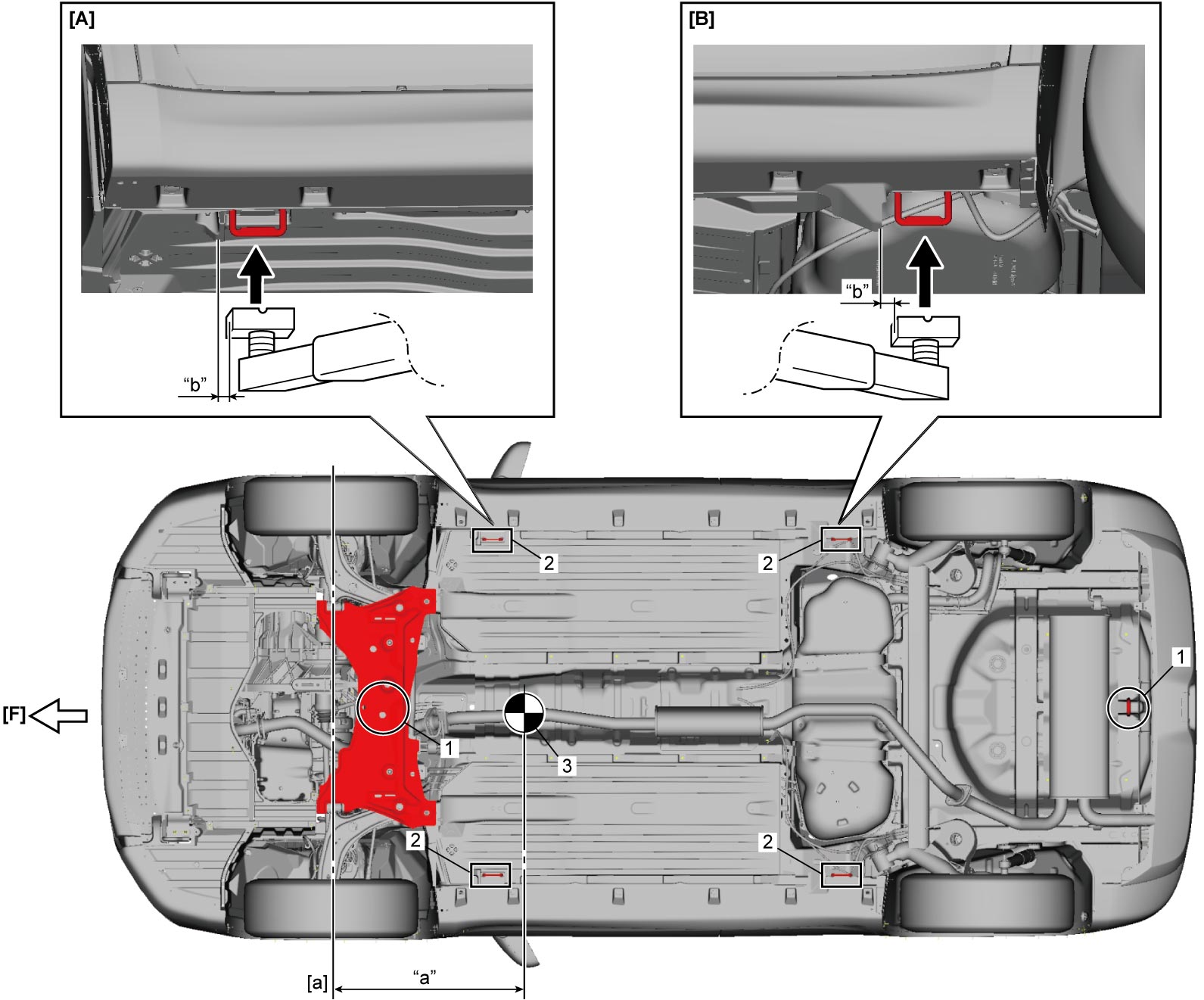
| [A]: | Front side | [a]: | Wheel center | 2. | Support position for frame contact hoist and safety stand |
| [B]: | Rear side | “a”: | Approx. 842 – 1045 mm (Approx. 33.1 – 40.7 in.) | 3. | Gravity center position without load in vehicle |
| [F]: | Vehicle front | 1. | Floor jack position |
When Using Floor Jack
WARNING:
Improperly raising only the front or rear of the vehicle with a jack could cause serious personal injury and/or damage to the vehicle.
•Before jacking up a vehicle only at the front or rear end, block all the wheels that will remain on the ground.
•After the vehicle is jacked up, support it on safety stands. It is extremely dangerous to do any work on the vehicle supported by a jack alone.
•After the vehicle is jacked up, support it on safety stands. It is extremely dangerous to do any work on the vehicle supported by a jack alone.
NOTICE:
If you apply a jack against rear suspension parts (i.e. torsion beam, etc.) or the vehicle floor, these parts may get deformed.
Avoid applying a jack against any rear suspension component or the vehicle floor.
NOTE:
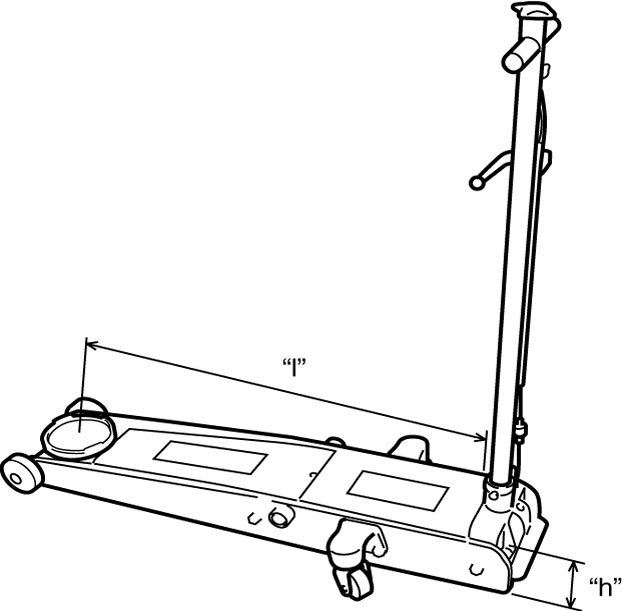
When jacking up the front end, the floor jack sizes shown below are appropriate.
Jack size
Height “h”: below 145 mm (below 5.71 in.)
Length “l”: above 900 mm (above 35.4 in.)
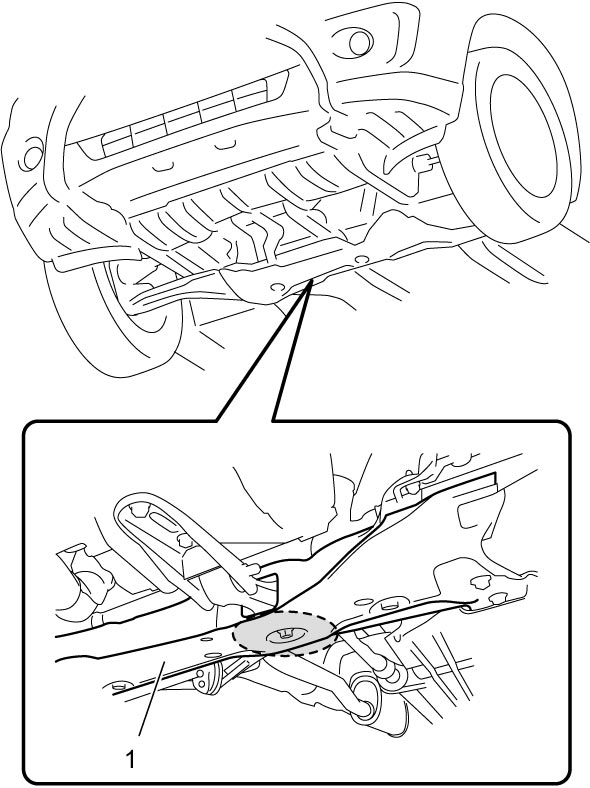
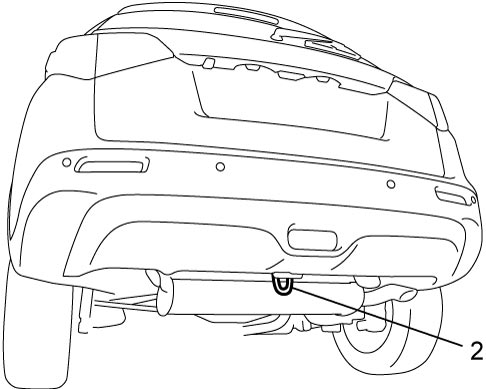
In raising front or rear vehicle end off the floor by jacking, put the jack against front suspension frame (1) or rear towing hook (2).
Front
Rear
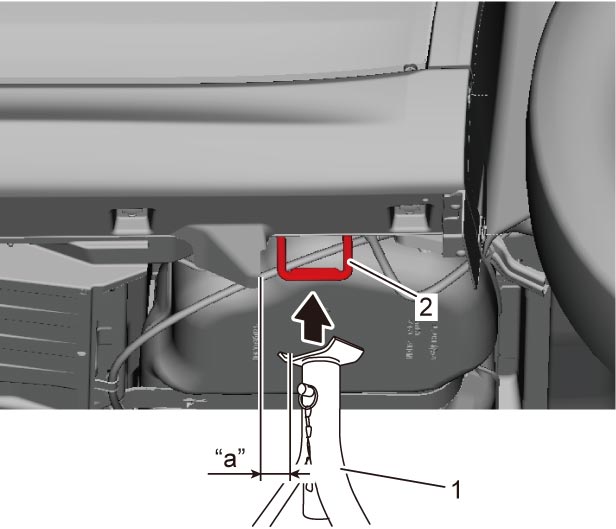
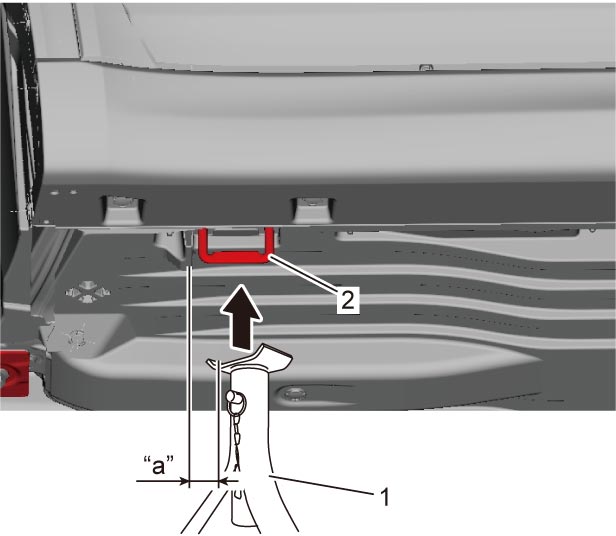
To perform service with either front or rear vehicle end jacked up, place safety stands (1) under the body mounting stays (2) so that vehicle body is securely supported. Then check that vehicle body does not slide on safety stands and the vehicle is held stable.
NOTICE:
When supporting the vehicle body on the safety stands, improperly placing the safety stands to the vehicle may cause damage to the main floor undercover, front undercover or side sill splash guards.
Before supporting the vehicle body, check the distance “a” between the safety stands and the front undercovers (front side) or the side sill splash guards (rear side), and place the safety stands properly so that the safety stands do not contact the front undercovers and the side sill splash guards when the vehicle body is supported.
Front
Rear