ABS (Anti-lock Brake System)
The ABS helps prevent the wheels from locking when the brakes are applied firmly or when braking on a slippery surface.
Operation description
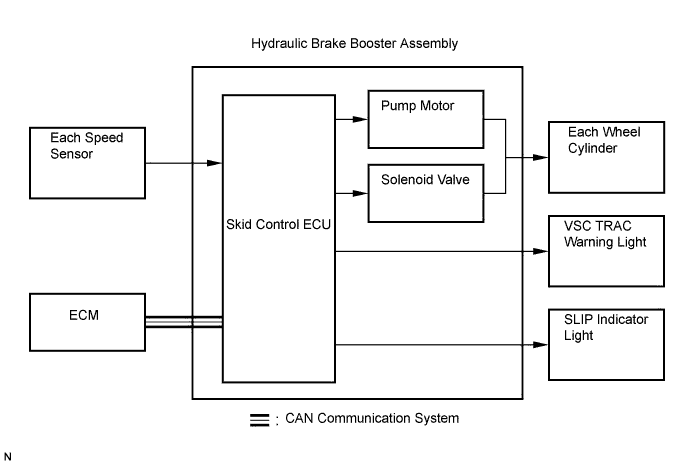
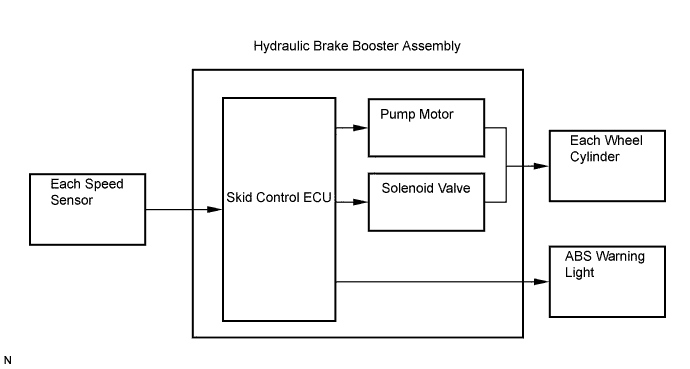
The skid control ECU detects wheel lock condition by receiving vehicle speed signals from each speed sensor, and sends control signals to the pump motor and solenoid valve. The pump motor and solenoid valve avoid wheel lock by controlling the oil pressure of each wheel cylinder.
The ABS warning light comes on when the ABS system is malfunctioning.
EBD (Electronic Brake force Distribution)
The EBD control utilizes ABS, realizing proper brake force distribution between the front and rear wheels in accordance with driving conditions.
In addition, when braking while cornering, it also controls the brake forces of the right and left wheels, helping to maintain vehicle behavior.
Operation description
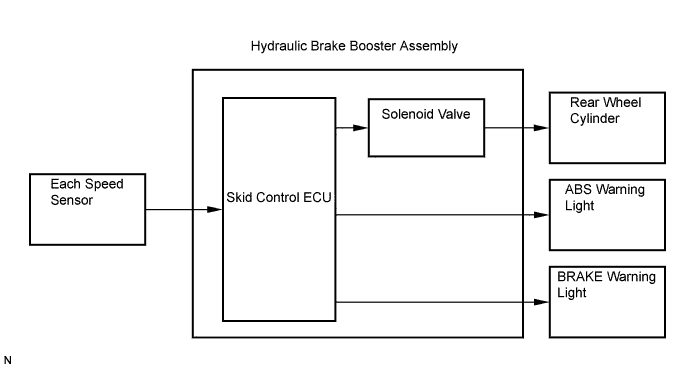
The skid control ECU receives the speed signal from each speed sensor to detect the slip condition of the wheels and sends the control signal to the solenoid.
The solenoid valve controls oil pressure of the rear wheel cylinder and splits the control power properly between the rear wheels and the right and left wheels.
Both of the ABS and BRAKE warning lights come on to indicate a malfunction in the EBD system.
BA (Brake Assist)
The primary purpose of the brake assist system is to provide an auxiliary brake force to assist the driver who cannot generate a large enough brake force during emergency braking, thus helping to maximize the vehicle's braking performance.
Operation description
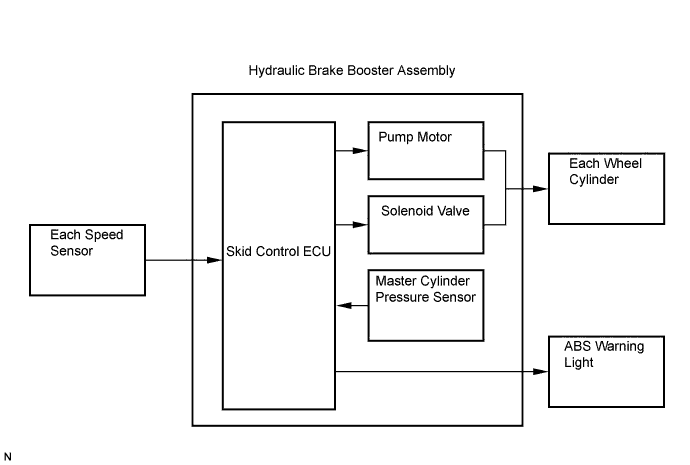
The skid control ECU receives the speed signal from each speed sensor and the oil pressure signal from the master cylinder pressure sensor to determine whether brake assist is necessary or not. If brake assist is deemed necessary, the ECU sends control signals to the pump motor and solenoid. The pump and the solenoid valve then control the pressure applied to each wheel cylinder.
The ABS warning light comes on to indicate a malfunction in the BA system.
VSC (Vehicle Stability Control)
The VSC system helps prevent the vehicle from slipping sideways as a result of strong front wheel skid or strong rear wheel skid during cornering.
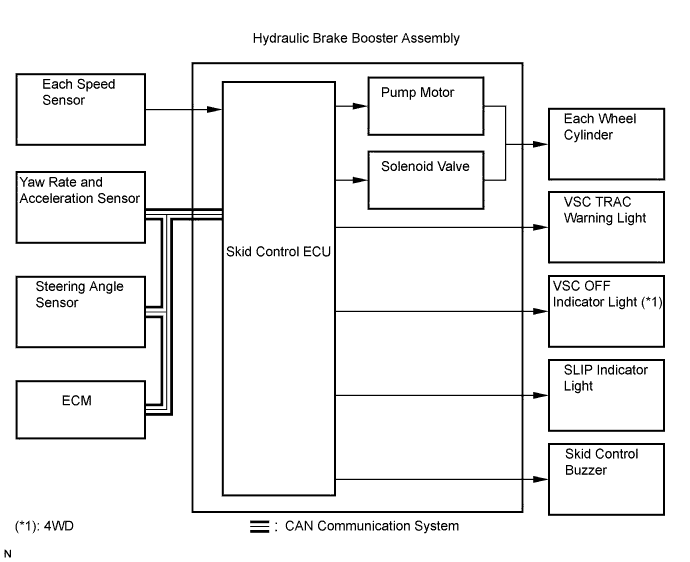
Operation description
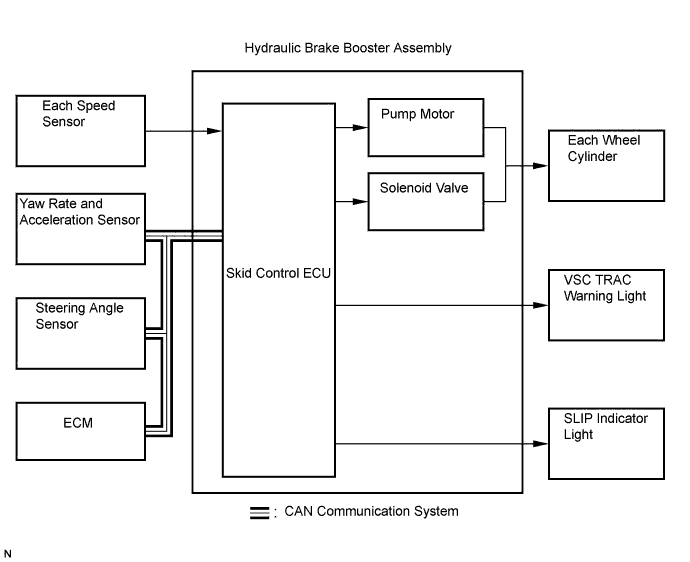
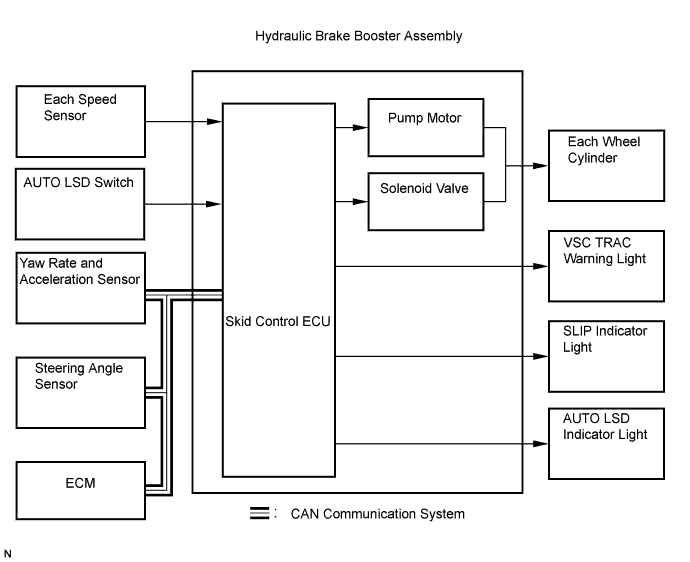
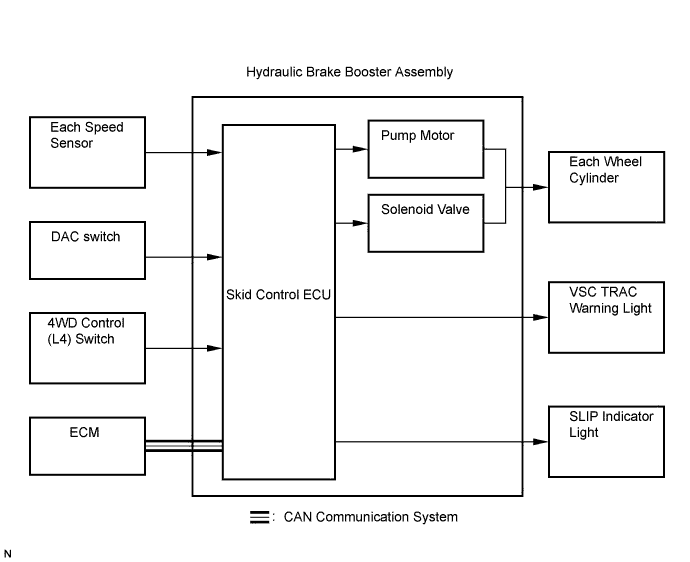
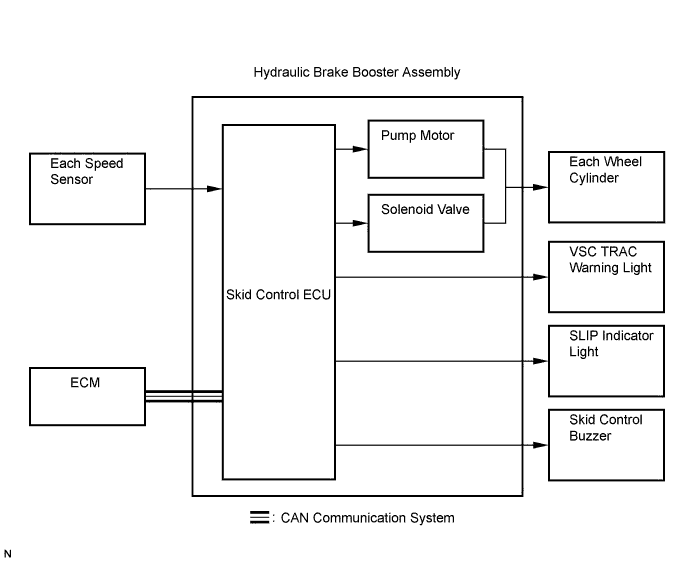
The skid control ECU determines vehicle condition by receiving signals from the speed sensor, yaw rate and acceleration sensor and steering angle sensor. The skid control ECU controls engine torque through the ECM via CAN communication, and oil pressure through the pump and solenoid valve.
The SLIP indicator light blinks and the skid control buzzer sounds when the system is operating. Both of the VSC TRAC warning light and the VSC OFF indicator light (4WD) come on to indicate a malfunction in the VSC system.