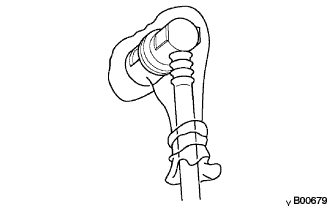
When disconnecting the high fuel pressure line, a large amount of gasoline will spill out, so observe the following procedures:
Disconnect the fuel pump tube .
Drain the fuel remained inside the fuel pump tube.
Do not damage the disconnected pipe and connector, and prevent intrusion of foreign objects by covering them with a plastic bag.
Place a container under the connection.
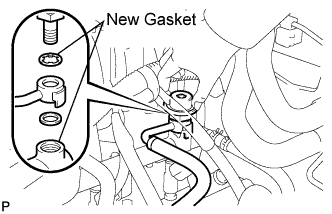
When connecting the union bolt (fuel pressure pulsation damper) on the high pressure pipe union, observe the following procedures:
Always use new gaskets.
Tighten the union bolt by hand.
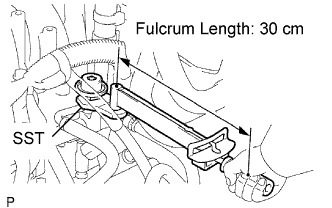
Using SST, tighten the union bolt to the specified torque.
- SST
- 09612-24014
(09617-24011)
-
Torque:
- for use with SST:
- 33 N*m{
340 kgf*cm
, 24 ft.*lbf
}
- 39 N*m{
400 kgf*cm
, 29 ft.*lbf
}
- HINT:
- Use a torque wrench with a fulcrum length of 30 cm (11.81 in.).
Observe the following precautions when removing and installing the injectors:
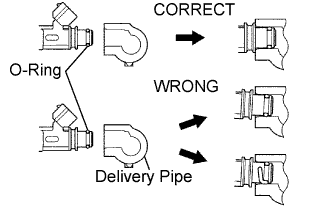
Never reuse the O-ring.
When placing a new O-ring on the injector, do not damage the O-ring.
Coat the new O-ring with spindle oil or gasoline before installing. Do not use engine oil, gear oil or brake fluid.
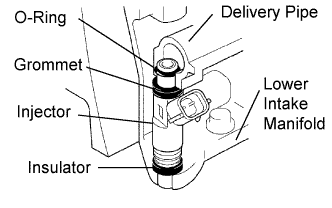
Install the injector to the delivery pipe and lower intake manifold, as shown in the illustration.
- NOTICE:
- Before installing the injector, apply spindle oil or gasoline where the delivery pipe or intake manifold contacts the O-ring of the injector.
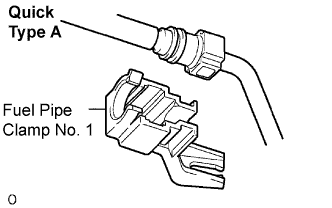
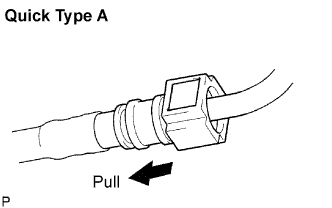
Observe the following precautions when disconnecting the fuel tube connector (Quick type A):
Remove the fuel pipe clamp No. 1.
Check that there is no dirt on the pipe and around the connector before disconnecting them. Clean them if necessary.
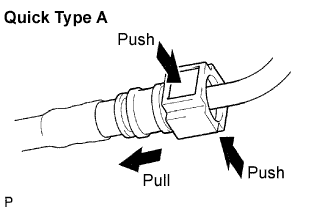
Disconnect them by hand.
When the connector and the pipe are stuck, pinch the fuel pipe with your fingers and push the fuel tube connector to the fuel pipe by pressing the release buttons, then pull the connector out of the pipe.
Check that there is no dirt or other foreign objects on the seal surface of the disconnected pipe. Clean it away if necessary.
Do not damage the disconnected pipe and connector, and prevent intrusion of foreign objects by covering them with a plastic bag.
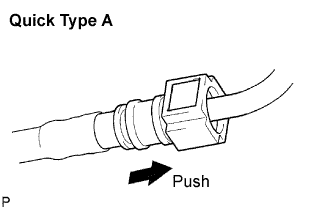
|
Observe the following precautions when connecting the fuel tube connector (Quick Type A):
Check that there is no damage or foreign objects in the connected part of the pipe.
Match the axis of the connector with the axis of the pipe, and push into the connector until the connector makes a "click" sound. In case that the connection is tight, apply a small amount of fresh engine oil to the tip of the pipe.
After finishing the connection, check if the pipe and the connector are securely connected by pulling them.
Check for fuel leaks.
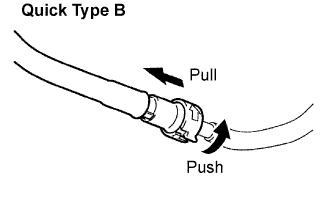
|
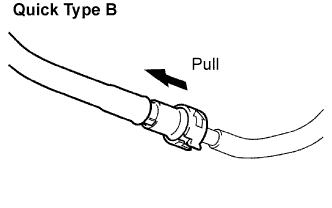
Observe the following precautions when disconnecting the fuel tube connector (Quick type B):
Check if there is any dirt on the pipe and around the connector before disconnecting them. Clean the dirt away if necessary.
Disconnect them by hand.
When the connector and the pipe are stuck, push and pull the connector. Disconnect and pull it out. Do not use any tool at this time.
Check if there is any dirt or other foreign objects on the seal surface of the disconnected pipe. Clean it away if necessary.
Do not damage the disconnected pipe and connector, and prevent intrusion of foreign objects by covering them with a plastic bag.
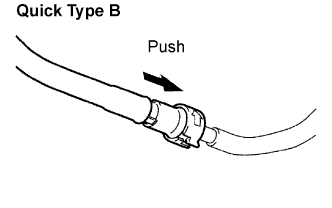
|
Observe the following precautions when connecting the fuel tube connector (Quick type B):
Match the axis of the connector with the axis of the pipe, and push in the connector until the connector makes a "click" sound. In case that the connection is tight, apply a small amount of new engine oil to the tip of the pipe.
After finishing the connection, check if the pipe and the connector are securely connected by pulling them.
Check for fuel leaks.
|
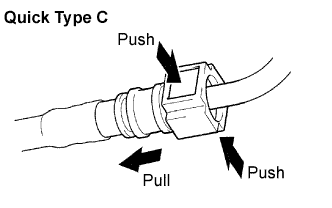
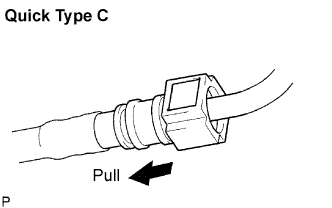
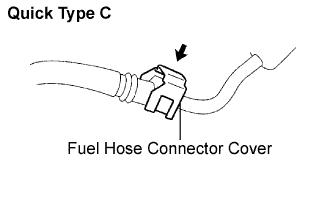
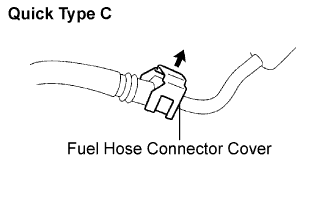
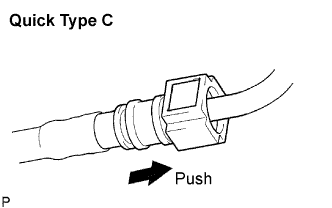
Observe the following precautions when disconnecting the fuel tube connector (Quick type C):
Pull the fuel hose connector cover up to release the lock.
Check that there is no dirt in the pipe and around the connector before disconnecting them. Clean the dirt away if necessary.
Be sure to disconnect them by hand.
When the connector and the pipe are stuck, pinch the fuel pipe between the hands, and push and pull the connector. Disconnect and pull it out. Do not use any tool at this time.
Check if there is any dirt or other foreign objects on the seal surface of the disconnected pipe. Clean it away if necessary.
Do not damage the disconnected pipe and connector, and prevent intrusion of foreign objects by covering them with a plastic bag.
|
Observe the following precautions when connecting the fuel tube connector (Quick Type C):
Check that there is no damage or foreign objects in the connected part of the pipe.
Match the axis of the connector with the axis of the pipe, and push into the connector until the connector makes a "click" sound. In case that the connection is tight, apply a small amount of fresh engine oil to the tip of the pipe.
After finishing the connection, check if the pipe and the connector are securely connected by pulling them.
Lock the fuel hose connector cover.
- HINT:
- If the fuel tube is not completely connected, the half connection prevention connector prevents the fuel hose connector cover from being locked.
Check for fuel leaks.
Observe the following precautions when handling a nylon tube:
- CAUTION:
- Do not twist the connection part of the nylon tube and the quick connector by force when connecting them.
- Do not twist the nylon tube.
- Do not remove the EPDM protector on the outside of the nylon tube.
- Do not close the piping with the nylon tube by bending it.