Home › ENGINE ยท 1GR-FE › COOLING › RADIATOR

RADIATOR > INSTALLATION

for Preparation Click here


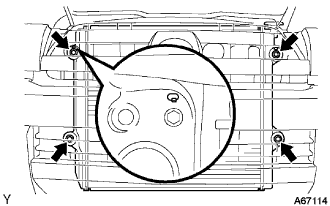
1. INSTALL RADIATOR ASSEMBLY


    A067114
  1. Insert the tabs of the radiator support through the radiator service holes.

  1. Install the radiator assembly with the 4 bolts.

    Torque:
    18 N*m{ 184 kgf*cm , 13 ft.*lbf }


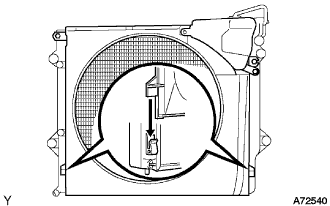
2. INSTALL FAN SHROUD


    A072540
  1. Insert the tabs in the slots shown in the illustration, attach the fan shroud with the 3 bolts.

    Torque:
    5.0 N*m{ 51 kgf*cm , 44 in.*lbf }


3. ADD ENGINE COOLANT
  1. Slowly fill the system with engine coolant.

    Capacity:
    9.8 liters (10.4 Us qts, 8.6 Imp. qts)

    HINT:
    1. Use of improper coolants may damage the engine cooling system.
    2. Use only Toyota Super Long Life Coolant or similar high quality ethylene glycol based non-silicate, non-amine, non-nitrite, and non-borate coolant with long-life hybrid organic acid technology (coolant with long-life hybrid organic acid technology consists of a combination of low phosphates and organic acids).
    3. New Toyota vehicles are filled with Toyota Super Long Life Coolant (color is pink, premixed ethylene glycol concentration is approximately 50 % and freezing temperature is -35°C (-31°F)). When replacing the coolant, Toyota Super Long Life Coolant is recommended.
    4. Observe the coolant level inside the radiator by pressing the inlet and outlet radiator hoses several times by hand. If the coolant level goes down, add the coolant.

    NOTICE:
    Do not substitute plain water for engine coolant.

  1. Install the radiator cap securely.

  1. Bleed the cooling system.

    1. Open the heater water valve while warming up the engine.

    2. Maintain the engine speed at 2,000 to 2,500 rpm and warm up the engine.

  1. Stop the engine and wait until the coolant cools down.

  1. Add coolant into the reservoir until the coolant level is FULL.


4. INSPECT ENGINE COOLANT LEAKAGE
  1. Fill the radiator with coolant and attach a radiator cap tester.

  1. Pump it to 118 kPa (1.2 kgf/cm2 17.1 psi), then check for leakage.