 |
Fill the clutch fluid.
- Fluid:
- SAE J1703 or FMVSS No. 116 DOT3
- NOTICE:
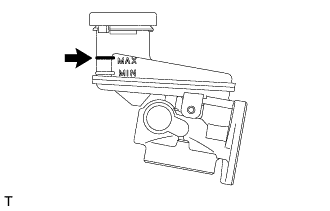
- Add clutch fluid to keep the level between the MIN and MAX lines of the master cylinder reservoir sub-assembly while bleeding the clutch.
CLUTCH FLUID > REPLACEMENT |
| 1. FILL CLUTCH FLUID |
|
Fill the clutch fluid.
| 2. REPLACE CLUTCH FLUID |
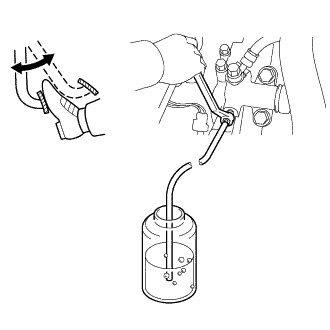 |
Connect a vinyl tube to the clutch release cylinder bleeder plug.
Depress the clutch pedal several times, and then loosen the clutch release cylinder bleeder plug with the pedal depressed (Step A).
Depress the clutch pedal several times to force the clutch fluid out through the clutch release cylinder bleeder plug until the new clutch fluid starts coming out.
When the new clutch fluid comes out, tighten the clutch release cylinder bleeder plug with the pedal depressed.
Repeat the above procedure to bleed the air out of the clutch line for each wheel.
| 3. INSPECT FOR CLUTCH FLUID |
| 4. INSPECT CLUTCH FLUID LEVEL |
|
Check the clutch fluid level.
If clutch fluid level is lower than the MIN line, check for leaks and inspect the clutch lines. If necessary, refill the master cylinder reservoir sub-assembly with clutch fluid to the MAX line after repair or replacement.