ON-VEHICLE INSPECTION
Inspection · Vehicles built from Oct 2006
| INSPECT COMPRESSOR FOR METALLIC SOUND |

Check if there is abnormal metallic sound from the compressor when the A/C switch is on and the compressor operates.
If abnormal metallic sound is heard, replace the compressor and magnetic clutch.
| INSPECT REFRIGERANT PRESSURE WITH MANIFOLD GAUGE SET |
- HINT:
- This is a method where a manifold gauge set is used to help locate the problem.
Read the manifold gauge pressure value when the following conditions are established.
Test conditions:- Temperature at the air inlet with the switch set at RECIRC is 30 to 35°C (86 to 95°F)
- Engine is running at 1,500 rpm.
- Blower speed control switch is at "HI".
- Temperature control dial is at "COOL".
- A/C switch is ON.
- Doors are fully open.
- Ignition switch is in a position that enables the AC compressor to run.
Normally functioning refrigeration system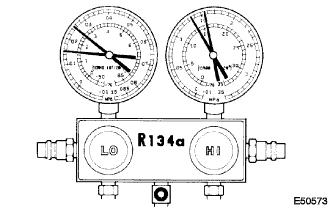

Gauge reading Pressure side
Refrigerant volume
Low
0.15 to 0.25 MPa (1.5 to 2.5 kgf/cm2, 21.3 to 35.5 psi)
High
1.37 to 1.57 MPa (14 to 16 kgf/cm2, 199.1 to 227.5 psi)
Moisture is present in refrigeration system.
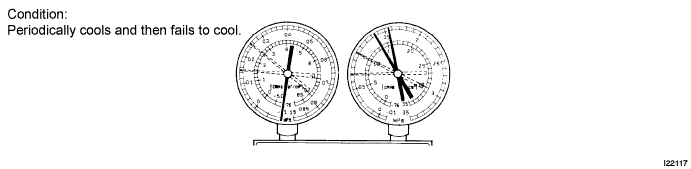
Symptom
Probable Cause
Diagnosis
Corrective Actions
During operation, pressure on low pressure side cycles between normal and vacuum
- Moisture in AC system will freeze at the expansion valve orifice, causing the refrigeration cycle to temporarily stop
- After the system stops, and warms up again, the ice will melt and normal operation will be temporarily restored
- Cooler dryer (integrated into condenser tank) in oversaturated state
- Moisture in refrigeration system freezes at expansion valve orifice and blocks circulation of refrigerant
- Replace cooler dryer
- Remove moisture in system by repeatedly evacuating air
- Supply proper amount of new refrigerant
- Moisture in AC system will freeze at the expansion valve orifice, causing the refrigeration cycle to temporarily stop
Insufficient cooling
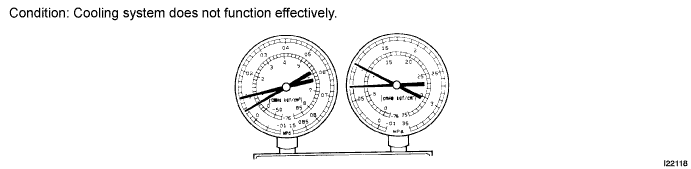
Symptom
Probable Cause
Diagnosis
Corrective Actions
- Pressure is low on both low and high pressure sides
- Bubbles are seen through sight glass continuously
- Insufficient cooling performance
Gas leakage from the refrigeration system
- Insufficient refrigerant
- Refrigerant leaking
- Check for gas leakage and repair if necessary
- Supply proper amount of new refrigerant
- If the gauge indicates a pressure of close to 0, then it will be necessary to evacuate the system after repairing the leak
- Pressure is low on both low and high pressure sides
Poor circulation of refrigerant
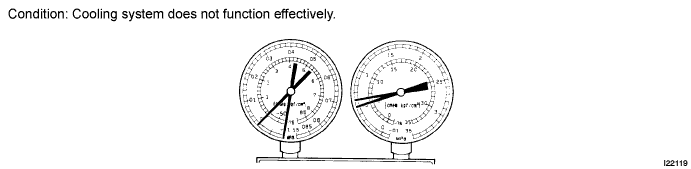
Symptom
Probable Cause
Diagnosis
Corrective Actions
- Pressure is low on both low and high pressure sides
- Frost exists on pipe from condenser to unit
Refrigerant flow is obstructed by dirt inside the pipes of the condenser core
Receiver is clogged
Replace condenser
- Pressure is low on both low and high pressure sides
Refrigerant does not circulate.
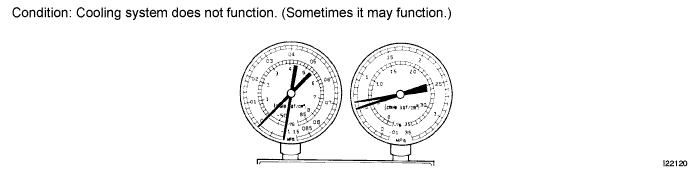
Symptom
Probable Cause
Diagnosis
Corrective Actions
- Vacuum is indicated on low pressure side and very low pressure is indicated on high pressure side
- Frost or condensation is seen on piping on both sides of receiver/drier or expansion valve
- Refrigerant flow is obstructed by moisture or dirt in refrigeration system
- Refrigerant flow is disrupted by gas leaking internally through the expansion valve
Refrigerant does not circulate
- Check the expansion valve
- Replace expansion valve
- Replace condenser
- Evacuate air and supply proper amount of new refrigerant
- For internal gas leak at expansion valve, replace expansion valve
- Vacuum is indicated on low pressure side and very low pressure is indicated on high pressure side
Refrigerant is overcharged or cooling effectiveness of condenser is insufficient.
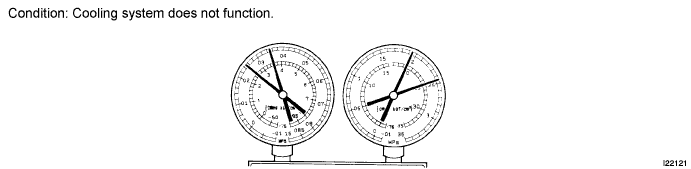
Symptom
Probable Cause
Diagnosis
Corrective Actions
- Pressure is too high on both low and high pressure sides
- No air bubbles are seen through sight glass even when engine rpm lowers
- Unable to develop sufficient performance due to excessive use of refrigeration system
- Cooling effectiveness of condenser is insufficient
- Excessive refrigerant in cycle → excessive refrigerant was added during recharging
- Condenser cooling effectiveness is insufficient → condenser fins are clogged at cooling fan
- Clean condenser
- Check the operation of the condenser cooling fan
- If 1 and 2 are normal state, check the amount of refrigerant and supply proper amount of refrigerant
- Pressure is too high on both low and high pressure sides
Air is present in refrigeration system.
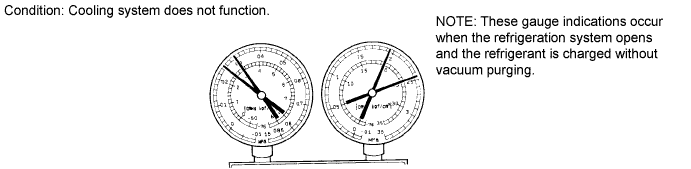
Symptom
Probable Cause
Diagnosis
Corrective Actions
- Pressure is too high on both low and high pressure sides
- The low pressure piping is too hot to touch
- Bubbles can be seen through sight glass
Air in system
- Air present in refrigeration system
- Insufficient vacuum purging
- Check compressor oil to see if it is dirty or insufficient
- Evacuate the system and recharge it with new or purified refrigerant
- Pressure is too high on both low and high pressure sides
Expansion valve malfunction
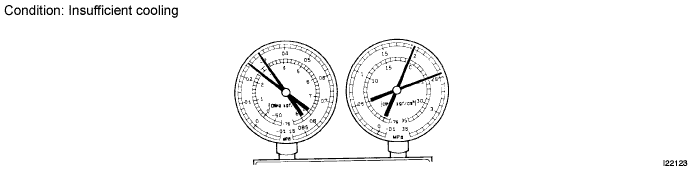
Symptom
Probable Cause
Diagnosis
Corrective Actions
- Pressure is too high on both low and high pressure sides
- Frost or a large amount of condensation on piping on low pressure side
Expansion valve may be sticking
- Excessive refrigerant in low pressure piping
- Expansion valve opened too wide
Check expansion valve
- Pressure is too high on both low and high pressure sides
Insufficient compressor compression
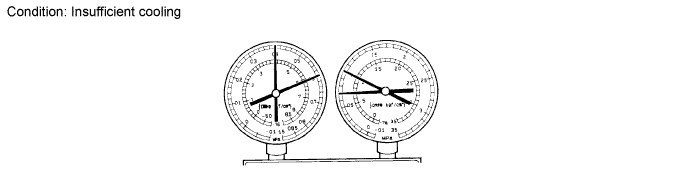
Gauge readings (Reference)Symptom
Probable Cause
Diagnosis
Corrective Actions
- Pressure is too high both on low and high pressure sides
- Pressure is too low on high pressure side
Internal leak in compressor
- Low compression
- Leak from a damaged valve, or parts may be broken
Replace compressor
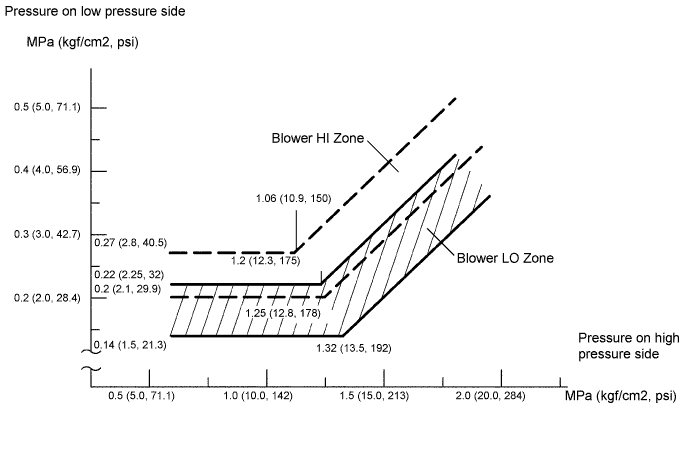
- Pressure is too high both on low and high pressure sides
- Temperature at the air inlet with the switch set at RECIRC is 30 to 35°C (86 to 95°F)
| INSPECT FOR LEAKAGE OF REFRIGERANT |
Using a gas leak detector, check for leakage of refrigerant.
If there is any leakage, replace the compressor and magnetic clutch.
| INSPECT COMPRESSOR AND MAGNETIC CLUTCH |
Check operation of the compressor and magnetic clutch.
Start the engine.
Inspect the compressor and magnetic clutch.
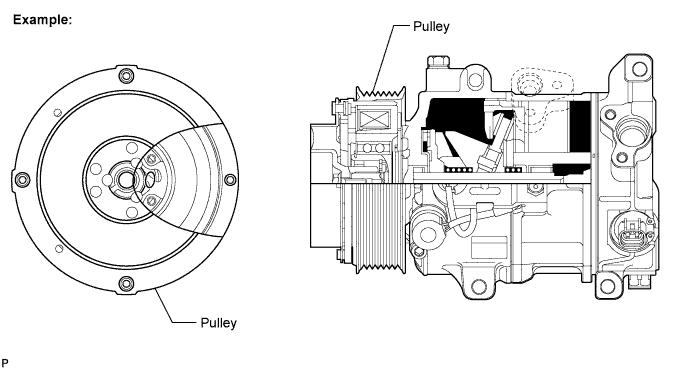
- Standard:
- The compressor shaft rotates along with the pulley.