PARKING ASSIST MONITOR SYSTEM > GENERAL |
| OUTLINE |
The parking assist monitor system consists of the rear monitor and parking guide lines to assist the driver in parking the vehicle.
The parking assist monitor system has a rear television camera assembly mounted on the luggage compartment door to display a view of the area behind the vehicle on the multi-display.
This system consists of the rear television camera assembly, the parking assist ECU and the multi-display.
| MAIN FEATURES |
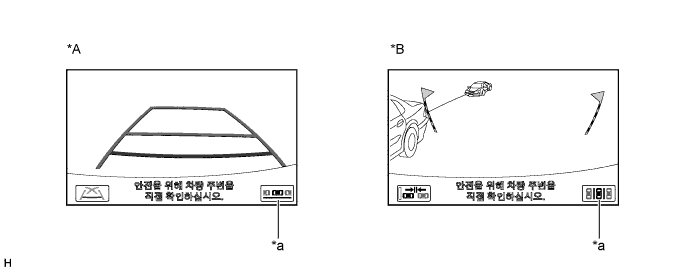
The parking assist monitor system can display either manual assist or parallel parking assist modes.
Manual assist is used for parking the vehicle in a garage or parking space.
Parallel parking assist is used when parallel parking the vehicle.
Pressing the assist mode button can change the assist mode. The initial (default) setting is set to manual parking assist.

| *A | Manual Assist | *B | Parallel Parking Assist |
| *a | Assist Mode Button | - | - |
| PRECAUTION |
Ignition Switch Expressions
The type of ignition switch used on this model differs depending on the specifications of the vehicle. The expressions listed in the table below are used in this section.
| Expression | Ignition Switch (Position) | Engine Switch (Condition) |
| Ignition Switch off | LOCK | Off |
| Ignition Switch ACC | ACC | On (ACC) |
| Ignition Switch ON | ON | On (IG) |
| Engine Start | START | Start |
General Precautions
Do not rely entirely on the parking assist monitor system. When backing up, drive the vehicle as carefully as you would drive one that is not equipped with the parking assist monitor system.
Back up slowly by depressing the brake pedal to adjust the speed.
Never attempt to back up the vehicle only by observing the screen. If you do so, you could unexpectedly crash the vehicle or cause an accident because the image on the screen could differ from the actual situation. While backing up, also make sure to use the inside and outside rear view mirrors in order to directly verify the safety of the rear and surrounding areas.
If the luggage compartment door is open, only the image from the rear television camera assembly and a warning message are displayed on the screen. Operate the system only with the luggage compartment door completely closed.
Rear Television Camera Precautions
Do not expose the rear television camera assembly to a strong impact or force, as it will alter the orientation of the camera and cause improper operation.
The area covered by the rear television camera assembly is limited. The rear television camera assembly does not show objects close to either corner of the bumper or show items under the bumper. The clearance distance that appears on the screen is different from the actual distance because the rear television camera assembly uses a wide-angle lens.
The camera is unable to capture a clear image if the glass in front of the lens is dirty. Therefore, clean the glass if it has water drops, snow, or dirt on it.
In the following cases, it may become difficult to see the images on the screen, but this is not a malfunction:
When the camera is used under fluorescent lights, sodium lights, or mercury lights etc., the lights and the illuminated area may appear to flicker.
When washing the vehicle with a high-pressure washer, do not spray water on the rear television camera assembly or surrounding area. High-pressure water can damage the camera.
Road Condition Precautions
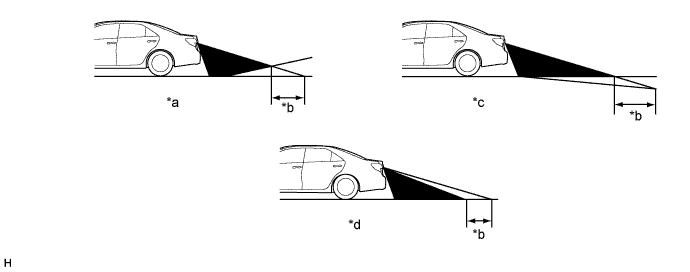
Depending on the number of occupants, the load conditions, the slope of the road, and bumps in the road, a disparity may occur between the display indication and the actual distance on the road surface. Operate the vehicle carefully.

| *a | Steep Uphill Incline behind Vehicle | *b | Disparity |
| *c | Steep Downhill Incline behind Vehicle | *d | Vehicle Posture Changed by Passengers and Load |
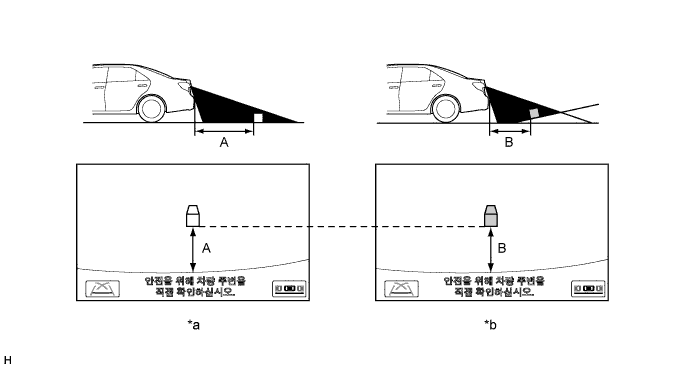
If a steep uphill incline is behind the vehicle, an obstacle appears to be further away than it actually is, as shown in the illustration below.

| *a | Screen Image in Case A | *b | Screen Image in Case B |
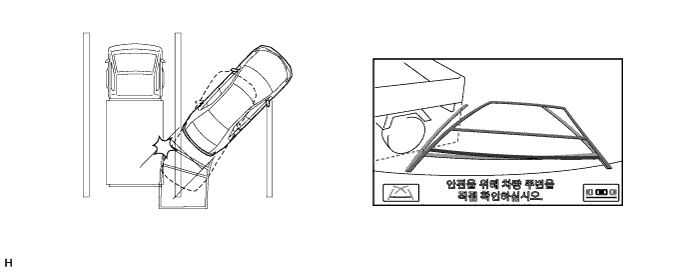
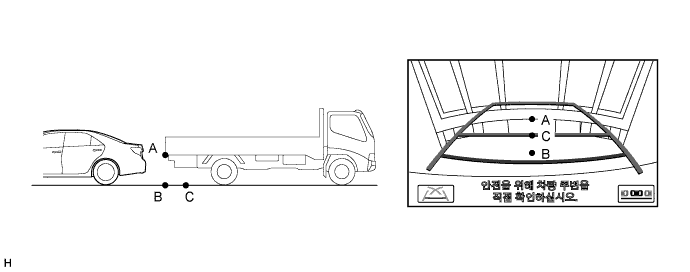
Precautions for 3-Dimensional Obstacles
Drive carefully when any 3-dimensional objects such as walls or vehicles are behind the vehicle as the distance and estimated guide lines are provided based on the road surface.