THEFT DETERRENT / KEYLESS ENTRY SMART ENTRY AND START SYSTEM(for Entry Function) Key Luggage Compartment Lock-in Prevention Function does not Operate
DESCRIPTION
If the entry luggage compartment lock-in prevention function does not operate, there may be a problem with the communication between the No. 3 indoor electrical key antenna assembly (inside luggage compartment) and electrical key transmitter sub-assembly, wave interference or a malfunction in the certification ECU (smart key ECU assembly).
WIRING DIAGRAM
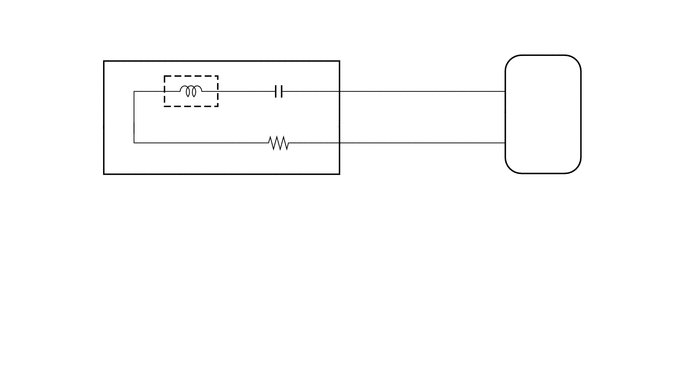
CAUTION / NOTICE / HINT
- NOTICE:
- ·
The smart entry and start system (for Entry Function) uses the CAN communication system and LIN communication system. First inspect the communication systems by following How to Proceed with Troubleshooting. Troubleshoot the smart entry and start system (for Entry Function) after confirming that the communication systems are functioning properly.
·When using the intelligent tester with the engine switch off to troubleshoot:
Connect the intelligent tester to the DLC3 and turn a courtesy light switch on and off at 1.5-second intervals until communication between the intelligent tester and vehicle begins.
·Check that there are no electrical key transmitter sub-assemblies in the vehicle.
·Before performing the inspection, check that DTC B1242 (wireless door lock control) is not output (See page Vehicle Interior>DOOR LOCK>WIRELESS DOOR LOCK CONTROL SYSTEM(w/ Smart Entry and Start System)>DTC CHECK / CLEAR).
·Before replacing the certification ECU (smart key ECU assembly), refer to the smart entry and start system (for Entry Function) precaution (See page Vehicle Interior>THEFT DETERRENT / KEYLESS ENTRY>SMART ENTRY AND START SYSTEM(for Entry Function)>PRECAUTION).
·After repair, confirm that no DTCs are output by performing the "DTC Output Confirmation Operation".
PROCEDURE
Check that the entry luggage compartment open function operates.
- Result:
Result Proceed to Entry luggage compartment door open function operates A Entry luggage compartment door open function does not operate B
A
B
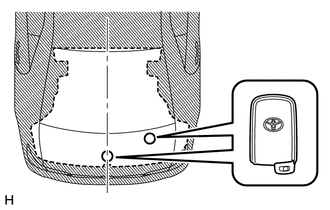
| *a | Inspection Point |
Bring the electrical key transmitter sub-assembly near the No. 3 indoor electrical key antenna assembly (inside luggage compartment), and check that the entry luggage compartment lock-in prevention function operates.
- NOTICE:
-
If the electrical key transmitter sub-assembly is brought within 0.2 m (0.656 ft.) of the No. 3 indoor electrical key antenna assembly (inside luggage compartment), communication is not possible.
- HINT:
- ·
When the electrical key transmitter sub-assembly is brought near the No. 3 indoor electrical key antenna assembly (inside luggage compartment), the possibility of wave interference decreases, and it can be determined if wave interference is causing the problem symptom.
·If the operation check is normal, the possibility of wave interference is high. Also, added vehicle components may cause wave interference. If installed, remove them and perform the operation check.
- OK:
Entry functions operate normally.
- Result:
Proceed to OK NG
OK
NG
Check the following antennas in the key diagnostic mode.
| *a | Inspection Point |
Select either channel 1 or channel 2 and inspect the key diagnostic mode for each channel.
Check the No. 3 indoor electrical key antenna assembly (inside luggage compartment):
When the electrical key transmitter sub-assembly is at either inspection point, check that the wireless buzzer sounds.
- HINT:
- ·
Place the key in the luggage area.
·If the buzzer sounds, it can be determined that the No. 3 indoor electrical key antenna assembly (inside luggage compartment) is operating normally.
·If the buzzer sounds with [CH1] displayed but not with [CH2], the electrical key transmitter sub-assembly cannot be detected by channel 2 due to a malfunction, such as wave interference.
- OK:
Wireless door lock buzzer sounds.
- Result:
Proceed to OK NG
OK
NG
Disconnect the O1 certification ECU (smart key ECU assembly) connector.
Disconnect the N38 No. 3 indoor electrical key antenna assembly (inside luggage compartment) connector.
Measure the resistance according to the value(s) in the table below.
- Standard Resistance:
Tester Connection Condition Specified Condition O1-9 (CLG7) - N38-1 (ANTE7) Always Below 1 Ω O1-8 (CG7B) - N38-3 (CLGB) Always Below 1 Ω O1-9 (CLG7) or N38-1 (ANTE7) - Body ground Always 10 kΩ or higher O1-8 (CG7B) or N38-3 (CLGB) - Body ground Always 10 kΩ or higher
- Result:
Proceed to OK NG
OK
NG
Connect the O1 certification ECU (smart key ECU assembly) connector.
Disconnect the N38 No. 3 indoor electrical key antenna assembly (inside luggage compartment) connector.
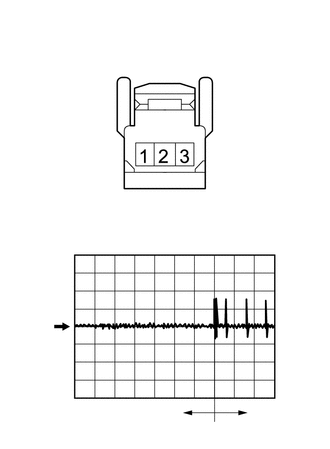
| *1 | Waveform |
| *a | Front view of wire harness connector
(to No. 3 Indoor Electrical Key Antenna Assembly (inside luggage compartment)) |
| *b | Driver door lock sensor not touched |
| *c | Driver door lock sensor touched |
Measure the check for pulses according to the value(s) in the table below.
- OK:
Tester Connection Switch Condition Tool Setting Specified Condition N38-1 (ANTE7) - N38-3 (CLGB) Procedure:
1.Engine switch off
2.Electrical key transmitter sub-assembly not inside vehicle
3.All doors closed
4.Driver door lock sensor not touched → touched
2 V/DIV., 500 ms/DIV. Pulse generation (See waveform)
- Result:
Proceed to OK NG
OK
NG
Replace the No. 3 indoor electrical key antenna assembly (inside luggage compartment).
- Result:
Proceed to NEXT
NEXT
Check that the entry luggage compartment lock-in prevention function operates normally.
- OK:
Entry luggage compartment lock-in prevention function operates normally.
- Result:
Proceed to OK NG
OK
NG