WORK NOTICES AND PRECAUTIONS > NOTICE FOR HYBRID SYSTEM |
| PRECAUTIONS FOR HIGH-VOLTAGE CIRCUIT INSPECTION AND SERVICE |
Technicians must undergo special training to be able to service and inspect the high-voltage system.
All high-voltage wire harnesses and connectors are colored orange. The HV battery and other high-voltage components have "High Voltage" caution labels. Do not carelessly touch these wires or components.
When there is a problem with the wire harness or connector of a high-voltage circuit, repairs to the harness or connector should not be attempted. Replace damaged or malfunctioning high voltage cables or connectors.
Before inspecting or servicing the high-voltage system, be sure to follow all safety measures, such as wearing insulated gloves and removing the service plug to prevent electrocution. Carry the removed service plug in your pocket to prevent other technicians from accidentally reconnecting it while you are servicing the vehicle.
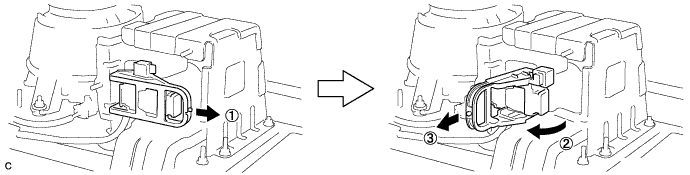
After removing the service plug grip, wait 10 minutes before touching any of the high-voltage connectors and terminals.
Before using insulated gloves, be sure to check them for cracks, tears and other types of damage by performing the following procedure.
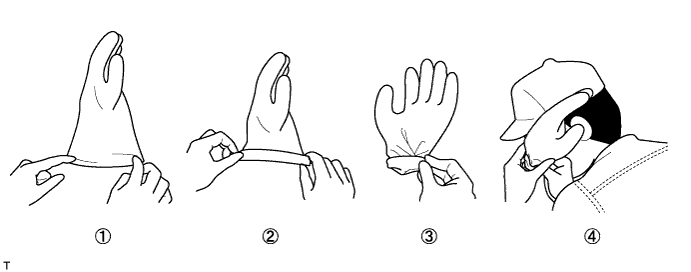
When servicing the vehicle, do not carry metal objects like mechanical pencils or rulers that can be dropped accidentally and cause a short circuit.
Before touching a bare high-voltage terminal, wear insulated gloves and use a tester to make sure that the terminal voltage is 0 V.
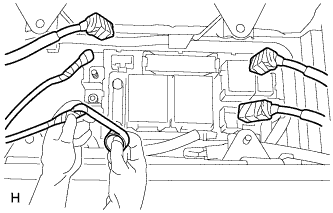
![]() |
After disconnecting or exposing a high-voltage connector or terminal, insulate it immediately using insulating tape.
Bolts and nuts for high-voltage terminals should be tightened firmly to the specified torque. Both insufficient and excessive torque can cause failure.
Use the "CAUTION: HIGH VOLTAGE DO NOT TOUCH" sign to notify other technicians that the high-voltage system is being inspected and/or repaired.
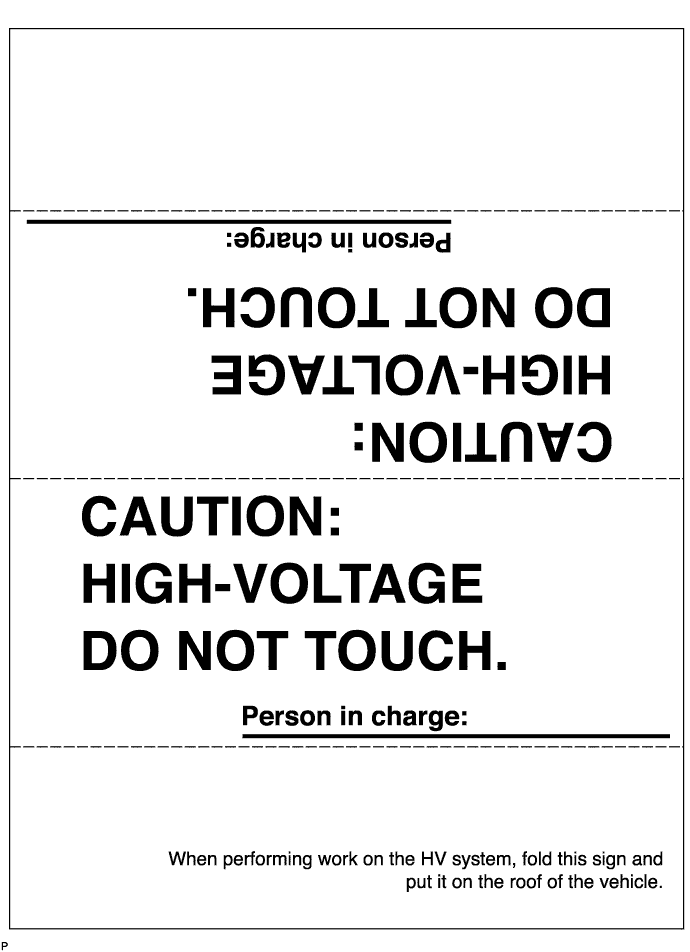
After servicing the high-voltage system and before reinstalling the service plug, check again that you have not left a part or tool inside, that the high-voltage terminals are firmly tightened, and that the connectors are correctly connected.
When performing work involving high-voltage wires, use either a tool wrapped with vinyl insulation tape or a insulated tool.
When installing hybrid system components such as the HV battery, make sure that the polarity of all connections is correct.
| ACTIONS TO BE TAKEN FOR VEHICLES DAMAGED BY IMPACT |
Items to be prepared for the accident site
Actions to be taken at the accident site
Check the vicinity of the HV battery for any leakage of the electrolyte.
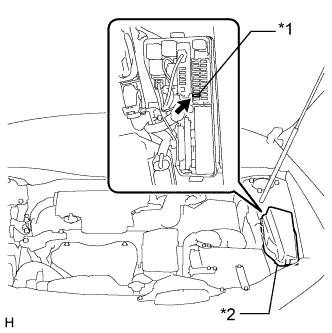
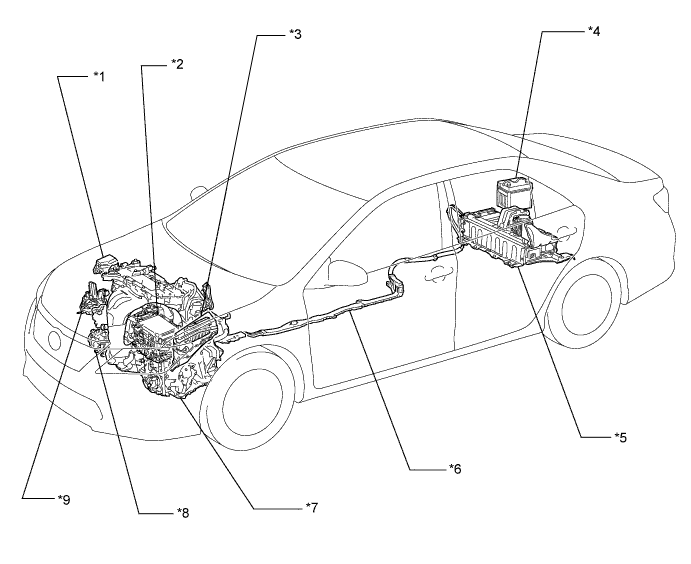
If damage to any of the high-voltage components and cables is suspected, cut the high-voltage circuit using the following procedure.

| *1 | No. 2 Engine Room Relay Block | *2 | Inverter with Converter Assembly |
| *3 | Engine Room Relay Block and Junction Block Assembly | *4 | Auxiliary Battery |
| *5 | HV battery | *6 | No. 4 Floor Wire |
| *7 | Hybrid Vehicle Transaxle Assembly | *8 | Compressor with Motor Assembly |
| *9 | Inverter Water Pump Assembly | - | - |
![]() |
Turn the power switch off.
| *1 | IG2-MAIN Fuse |
| *2 | Engine Room Relay Block and Junction Block Assembly |
Disconnect the cable from the negative (-) auxiliary battery terminal.
Wear insulated gloves and then remove the service plug grip.
Moving the damaged vehicle
If any of the following conditions is met, tow the vehicle away using a tow truck.
Park the vehicle in a safe place.
Apply the parking brake, and then push the P.
Turn the power switch off, and disconnect the cable from the negative (-) auxiliary battery terminal.
Remove the service plug grip while wearing insulated gloves.
Actions required after moving the damaged vehicle
Procedure
If you see any liquid on the road surface, it could be highly alkaline electrolyte leakage.
Wear rubber gloves and goggles, neutralize the liquid with saturated boric acid solution, and then apply red litmus paper to the liquid. Check that the paper does not turn blue. Wipe up the neutralized liquid with a shop rag or piece of cloth.
Items to be prepared (when repairing a damaged vehicle)
Precautions to be observed when servicing a damaged vehicle
Wear insulated or rubber gloves, goggles and safety shoes.
Check the HV battery and immediate area for any electrolyte leakage.
Do not touch any bare cables that could be high voltage cables. If a cable must be touched or if accidental contact is possible, follow the following instructions: 1) wear insulated gloves and goggles, 2) measure the voltage between the cable and body ground using an electrical tester, and 3) insulate the cable using insulating tape.
If damage to any of the high-voltage components and cables is suspected, cut the high-voltage circuit using the procedure below.
![]() |
Turn the power switch off.
| *1 | IG2-MAIN Fuse |
| *2 | Engine Room Relay Block and Junction Block Assembly |
Disconnect the cable from the negative (-) auxiliary battery terminal.
Wear insulated gloves, and then remove the service plug.
Precautions to be taken when disposing of an HV battery
When disposing of an HV battery, make sure to return it through an authorized collection agent who is capable of handling it safely. If the HV battery is returned via the manufacturer specified route, it will be returned properly and in a safe manner by an authorized collection agent.
Precautions to be observed when towing
Tow the damaged vehicle with its front and rear wheels lifted off the ground.
Towing with the 4 wheels on the ground
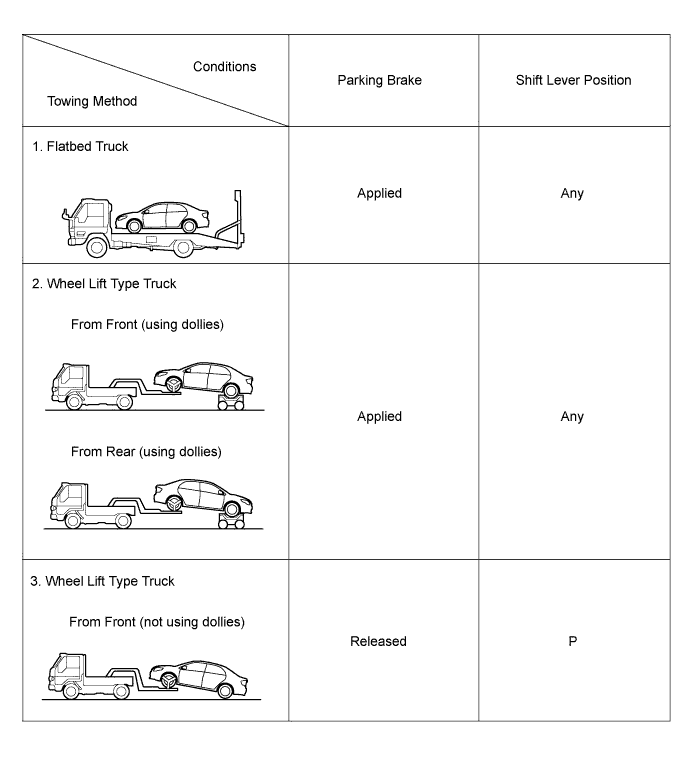
| PRECAUTIONS FOR TOWING FRONT WHEEL DRIVE VEHICLES |
Use one of the following methods to tow the vehicle.
If the vehicle has trouble with the chassis or drivetrain, use method 1 (flatbed truck).

If a tow truck is not available, in an emergency the vehicle may be temporarily towed using a cable or chain secured to the emergency towing eyelet(s). This should only be attempted on hard surfaced roads for short distances below 30 km/h (19 mph). A driver must be in the vehicle to steer and operate the brakes. The vehicle's wheels, drivetrain, axles, steering and brakes must be in good condition.
Emergency towing procedure
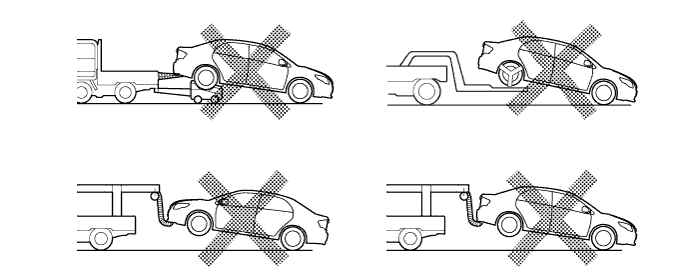
The towing methods shown below are dangerous and can damage the vehicle, so do not use them.

Do not tow the vehicle facing rearward with the front wheels on the ground.
Do not use a sling-type towing method either from the front or rear.