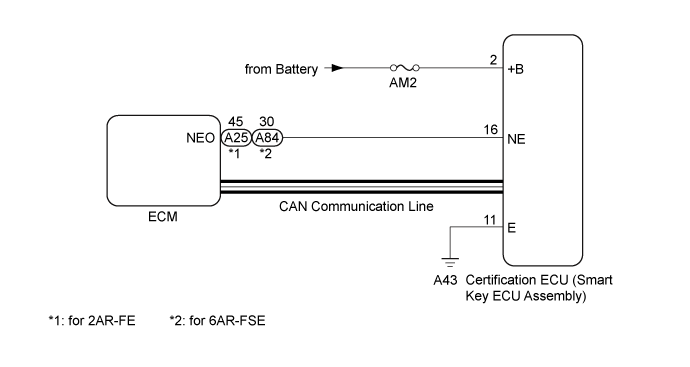
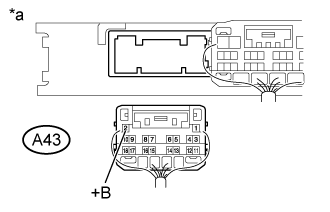
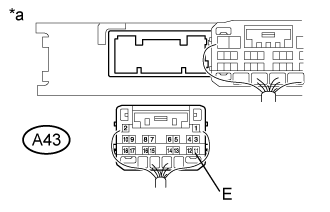
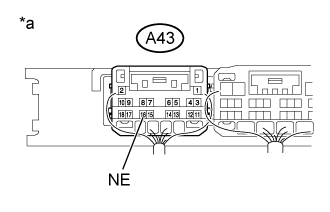
- When the signal sent via either the direct line or CAN communication is malfunctioning and indicates no vehicle speed, there is no effect on vehicle behavior. (A malfunction is detected after the engine switch is turned on (IG).)
- When the signal sent via either direct line or CAN communication is malfunctioning and indicates that the vehicle is moving, the engine cannot be started. However, the engine can be started after the engine switch has been turned off.
| - When the signal sent via either direct line or CAN communication is malfunctioning and indicates no vehicle speed, there is no effect on vehicle behavior.
- When the signal sent via either direct line or CAN communication is malfunctioning and indicates that the vehicle is moving:
- If the following conditions are met, it is determined that the malfunction is not in CAN communication but in the direct line (NE).
- When the engine switch is pressed, the system controls the engine based on the starter OFF permission flag (perfect injection signal judgment) via CAN communication, causing the engine to stop cranking.
- When the engine switch is pressed and held, the system controls the engine based on the engine speed signal via CAN communication, causing the engine to stop cranking.
- If the following conditions are met, it is determined that the malfunction is not in the direct line (NE) but in CAN communication.
- When the engine switch is pressed, the system controls the engine based on the engine speed signal via direct line, causing the engine to stop cranking.
- When the engine switch is pressed and held, the system controls the engine based on the engine speed signal via direct line, causing the engine to stop cranking.
- If the following conditions are met, it is determined that there is a malfunction in both CAN communication and the direct line (NE).
- When the engine switch is pressed, the engine stops cranking after 6 seconds.
- When the engine switch is pressed and held, the engine remains cranking for up to 30 seconds.
|