N04C-VQ ENGINE CONTROL ECD SYSTEM CONTROL FUEL INJECTION CONTROL
FUNCTION
General
The ECM transmits signals to the injector via the EDU (Electronic Driver Unit) in order to control the fuel injection timing and injection volume.
A constant fuel pressure, which is required by the injectors to properly inject fuel, is maintained by optimally controlling the fuel pressure.
The fuel pressure sensor detects the pressure in the common-rail assembly and the injection or supply pump assembly delivers fuel in order to attain the target pressure in the common-rail assembly.
Pilot injection is a method that provides auxiliary fuel injection intakes place. The purpose of pilot injection is to gently start the combustion of the fuel of the main injection in order to reduce combustion noise.
Fuel Pressure Control
The ECM calculates the target injection pressure in accordance with the throttle valve position and the engine speed. Based on the value of the fuel pressure sensor, the ECM controls the fuel delivery volume of the suction control valve in the injection or supply pump assembly in order to attain the target pressure in the common-rail assembly.
Multiple Injection Control
The EDU (Electronic Driver Unit), which is capable of generating a high voltage and charging quickly, is used to actuate the pressurized fuel injectors at high speeds and deliver high-precision multiple injections.
Multiple injection control divides the injection of fuel into the following stages: pilot injection and main injection. This enhances combustion efficiency and fuel economy, and achieves low noise.
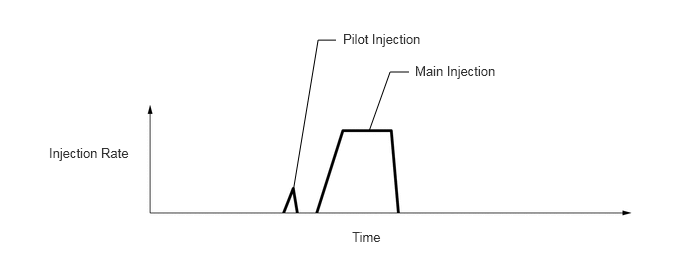
| Injection Type | Control | Result |
|---|---|---|
| Pilot Injection | Injects fuel slightly ahead of the main injection. | Achieves low noise |
| Main Injection | Injects fuel for normal combustion. | Achieves high torque |
Idle Speed Control
Idle speed control regulates the fuel injection volume in order to attain an optimal engine speed during idling.
Correction
The system corrects the injection timing and injection volume of the main injection and the pilot injection in accordance with the signals provided by the sensors.
| Correction Items | Correction |
|---|---|
| Intake Air Temperature Correction | When the intake air temperature is low, this type of correction increases the fuel volume to compensate for the high air density. |
| Post-warm-up Fuel Increase Correction | When the water temperature is low, this type of correction increases the fuel volume to ensure proper drivability while the engine is cold. |
| Intake Air Pressure Correction | When the intake air mass is low, this type of correction reduces the fuel volume. |
Fuel Cut-off
Deceleration Fuel Cut-off
When the vehicle is decelerating and the engine speed is idle engine speed or higher, this control stops the injection of fuel in order to achieve better fuel economy. The engine speed for fuel cut-off and restoration will be high when the water temperature is low.
Fuel Cut-off According to Engine Speed
When the engine speed is 3650 rpm or higher, this control stops the injection of fuel to prevent the engine from over-revving.