N04C-VQ COOLING COOLANT REPLACEMENT
PROCEDURE

 1.DRAIN ENGINE COOLANT
- CAUTION:
-
To avoid the danger of being burned, do not remove the radiator cap sub-assembly while the engine and radiator are still hot. Thermal expansion will cause hot engine coolant and steam to blow out from the radiator assembly.
Remove the engine service hole cover mat.
Remove the No. 2 engine service hole cover assembly.
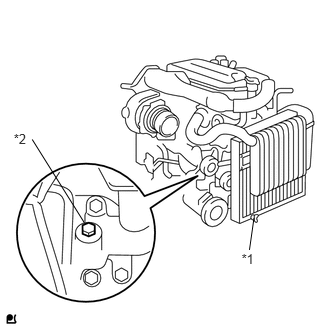
Loosen the radiator drain plug.
| *1 | Radiator Drain Plug |
| *2 | Engine Drain Plug |
Remove the radiator cap sub-assembly.
Loosen the engine drain plug.
Drain the coolant from the radiator reservoir.
Tighten the 2 drain plugs.
- Torque:
- for the engine drain plug:
27 N*m (275 kgf*cm, 20 ft.*lbf)
- for the radiator drain plug:
2.0 N*m (20 kgf*cm, 18 ft.*lbf)
2.ADD ENGINE COOLANT
Pour coolant into the radiator until it is full.
| w/o Heater | 13.0 liters (13.7 US qts, 11.4 Imp. qts) |
| w/ Front heater | 13.2 liters (13.9 US qts, 11.6 Imp. qts) |
| w/ Front and rear heaters | 14.1 liters (14.9 US qts, 12.4 Imp. qts) |
- NOTICE:
-
Never use water as a substitute for engine coolant.
- HINT:
- ·
TOYOTA vehicles are filled with TOYOTA SLLC at the factory. In order to avoid damage to the engine cooling system and other technical problems, only use TOYOTA SLLC or similar high quality ethylene glycol based non-silicate, non-amine, non-nitrite, non-borate coolant with long-life hybrid organic acid technology (coolant with long-life hybrid organic acid technology is a combination of low phosphates and organic acids).
·Contact your TOYOTA dealer for further details.
Check the coolant level inside the radiator by squeezing the inlet and outlet radiator hoses several times by hand. If the coolant level goes down, add coolant.
- CAUTION:
- When pressing the radiator hoses:
- ·
Wear protective gloves.
·Be careful as the radiator hoses are hot.
·Keep your hands away from the radiator fan.
Install the radiator cap sub-assembly securely.
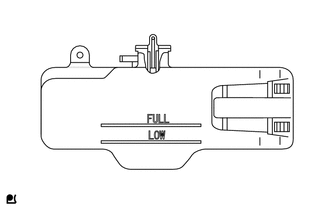
Slowly pour coolant into the radiator reservoir until it reaches the FULL line.
Bleed air from the cooling system.
Warm up the engine until the thermostat opens.
While the thermostat is open, circulate the coolant for several minutes.
- HINT:
-
The thermostat open timing can be confirmed by pressing the inlet radiator hose by hand, and checking when the engine coolant starts to flow inside the hose.
Maintain the engine speed at 2500 to 3000 rpm.
Press the inlet and outlet radiator hoses several times by hand to bleed air.
- CAUTION:
- When pressing the radiator hoses:
- ·
Wear protective gloves.
·Be careful as the radiator hoses are hot.
·Keep your hands away from the radiator fan.
Stop the engine and wait until the coolant cools down.
Remove the radiator cap sub-assembly and check the coolant level inside the radiator assembly.
If the coolant level has dropped, add coolant until the radiator is full.
Check the coolant level inside the radiator reservoir again. If it is below the full level, add coolant.
Install the No. 2 engine service hole cover.
Install the engine service hole cover mat.
3.INSPECT FOR COOLANT LEAK