1HZ LUBRICATION LUBRICATION SYSTEM DESCRIPTION
A fully pressurized, fully filtered lubrication system has been adopted for this engine.
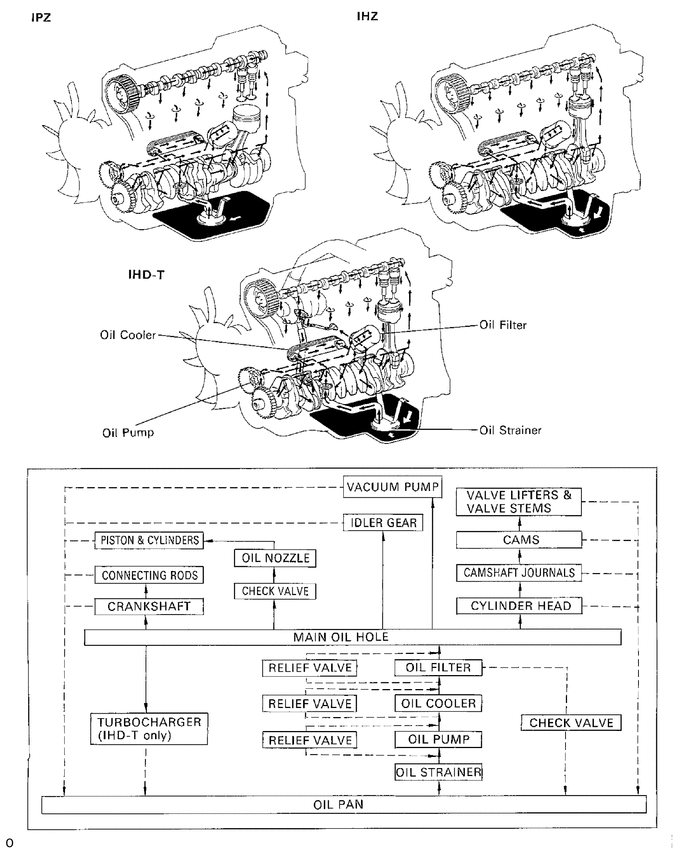
A pressure feeding lubrication system has been adopted to supply oil to the moving parts of this engine. The lubrication system consists of an oil pan, oil pump, oil filter and other external parts which supply oil to the moving parts in the engine block. The oil circuit is shown in the illustration at the top of the previous page. Oil from the oil pan is pumped up by the oil pump. After it passes through the oil filter, it is fed through the various oil holes in the crankshaft and cylinder block. After passing through the cylinder block and performing its lubricating function, the oil is returned by gravity to the oil pan. A dipstick on the center left side of the cylinder block is provided to check the oil level.
OIL PUMP
The oil pump pumps up oil from the oil pan and sends it under pressure to the various parts of the engine. An oil strainer is mounted in front of the inlet to the oil pump to remove impurities. The oil pump itself is a trochoid type pump, which uses a drive rotor and driven rotor inside the pump body. When the drive rotor rotates, the driven rotor rotates in the same direction. The axis of the driven rotor shaft is different from the center of the driven rotor, so when both rotors rotate, the space between the two rotors changes. Oil is drawn in when the space widens and is discharged when the space becomes narrow.
OIL PRESSURE REGULATOR (RELIEF VALVE)
At high engine speeds, the oil pump supplies more oil to each part that is necessary. For this reason, an oil pressure regulator which works to prevent oversupply of oil is installed on the oil pump. During normal oil supply, a coil spring and valve keep the by-pass closed, but when too much oil is being supplied, the pressure becomes extremely high, overpowering the force of the spring and opening the valves. This allows the excess oil to flow through the valve and return to the inlet of the oil pump.
OIL FILTER
The oil filter is a full flow type filter with a built-in paper filter element. Particles of metal from wear, airborn dirt, carbon and other impurities can get in the oil during use and could cause accelerated wear or siezing if allowed to circulate through the engine. The oil filter, integrated into the oil line, removes these impurities as the oil passes through it. The filter is mounted outside the engine to simplify replacement of the filter element. A relief valve is also included ahead of the filter element to relieve the high oil pressure in case the filter element becomes clogged with impurities. The relief valve opens when the oil pressure overpowers the force of the spring. Oil passing through the relief valve by-passes the oil filter and flows directly into the main oil hole in the engine.