AIRBAG SYSTEM > SYSTEM DESCRIPTION |
| GENERAL |
In conjunction with impact absorbing structure for a frontal collision, the SRS (Supplemental Restraint System) driver airbag and front passenger airbag were designed to supplement seat belts in the event of a frontal collision in order to help reduce shock to the head and chest of the driver and front passenger. This system is a 3-sensor type airbag system to detect the impact during a frontal collision using the center airbag sensor assembly and front airbag sensors. It also operates the airbag system and seat belt pretensioner.
In order to detect the extent of the collision during the initial stages of the collision in further detail, the front airbag sensors have been changed from mechanical type to electrical type deceleration sensors.
| CONSTRUCTION AND OPERATION |
FRONT AIRBAG SENSOR
The front airbag sensors are installed on the right and left radiator supports respectively.
The front airbag sensor consists of the deceleration sensor.
The deceleration sensor is built into the front airbag sensor, and the distortion that is created in the sensor is converted into an electric signal based on the vehicle deceleration rate during a frontal collision. Accordingly, the extent of the initial collision can be detected in detail.
CENTER AIRBAG SENSOR ASSEMBLY
General
Deceleration sensor and ignition control circuit
Safing sensor
Electronic safing sensor
Backup power source
Diagnostic circuit
Memory circuit
SRS WARNING LIGHT
The SRS warning light is located on the combination meter. It comes on to inform the driver of system trouble when a malfunction is detected in self-diagnosis of the center airbag sensor assembly. Under normal operating conditions when the ignition switch is turned to the ON position, it comes on for approximately 6 seconds and then goes off.
| DEPLOYMENT CONDITION |
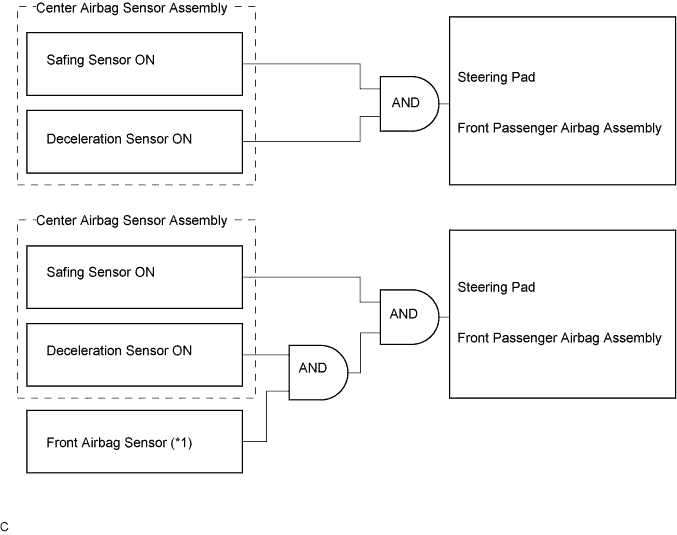
The center airbag sensor assembly determines whether or not ignition is necessary based on signals from the deceleration sensor and the front airbag sensor (*1). If the safing sensor turns on simultaneously, current flows to the squibs to deploy the SRS as shown in the illustration below.