7GR-FKS ENGINE CONTROL SFI SYSTEM CONTROL ACOUSTIC CONTROL INDUCTION SYSTEM (ACIS) CONTROL
FUNCTION
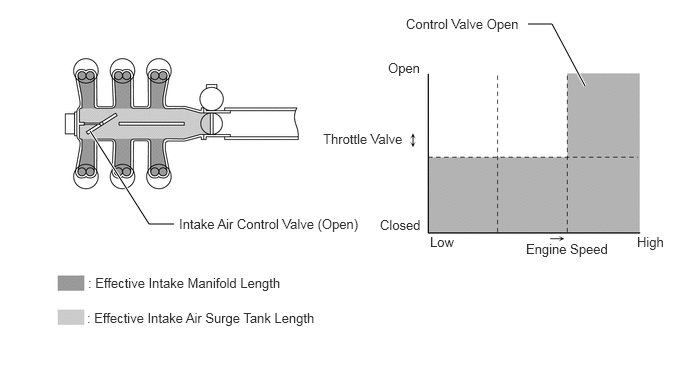
The Acoustic Control Induction System (ACIS) uses a bulkhead to divide the intake manifold, creating 2 stages. The intake air control valve in the bulkhead is opened or closed to vary the effective length of the intake manifold in accordance with the engine speed and throttle valve opening angle. This increases the power output in all ranges from low to high speed.
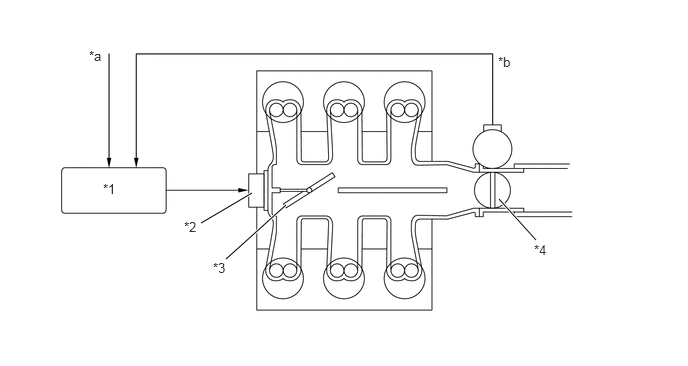
| *1 | ECM | *2 | ACIS Actuator (Intake Air Control Valve Actuator) |
| *3 | Intake Air Control Valve | *4 | Throttle Valve |
| *a | Crankshaft Position Sensor Signal | *b | Throttle Opening Angle |
OPERATION
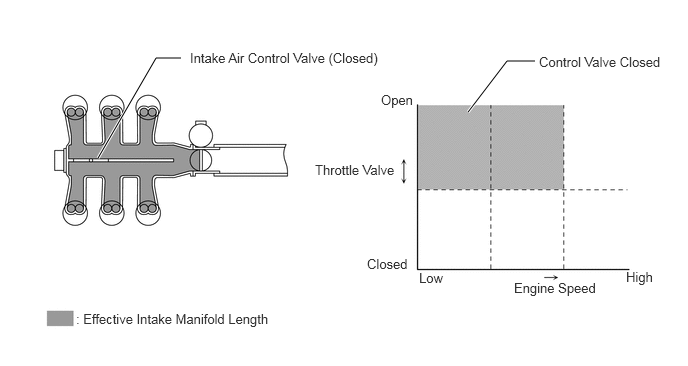
While the engine is running at low or medium speed under high load, the ECM causes the ACIS actuator to close the intake air control valve. As a result, the effective length of the intake manifold is lengthened and the intake efficiency, in the medium speed range, is improved due to the dynamic effect (inertia) of the intake air, thereby increasing power output.
Under any condition except when the engine is running at low or medium speed under high load, the ECM causes the ACIS actuator to open the intake air control valve. When the intake air control valve is open, the effective length of the intake air surge tank assembly is shortened and peak intake efficiency is shifted to the low-to-high engine speed range, providing greater output at low-tohigh engine speeds.