1GD-FTV ENGINE CONTROL ECD SYSTEM(w/o EGR Cooler) REGISTRATION
PROCEDURE

 1. LEARNING VALUES CONFIRMATION
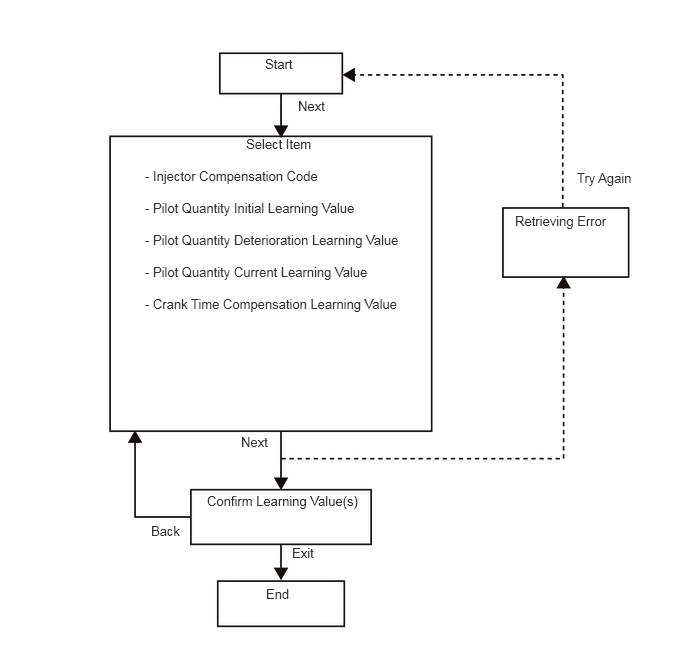
This procedure uses the GTS to display the learned values (injector compensation code, pilot quantity initial learning value, pilot quantity deterioration learning value, pilot quantity current learning value and crank time compensation learning value) stored in the ECM.
- HINT:
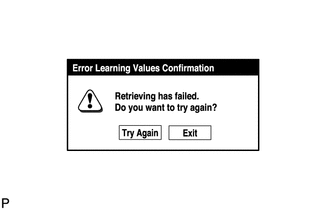
A malfunction may occur when reading the values if there is a problem with the ECM, a wire harness or the connection to the DLC3. If the wire harnesses and the connection to the DLC3 are inspected and found to be normal, the ECM may be malfunctioning.
Connect the GTS to the DLC3.
Turn the ignition switch to ON and turn the GTS on.
- NOTICE:
-
Do not start the engine.
Enter the following menus: Powertrain / Engine / Utility / Learning Values Confirmation.
- Powertrain > Engine > Utility
-
Tester Display Learning Values Confirmation - 50005 372 4599
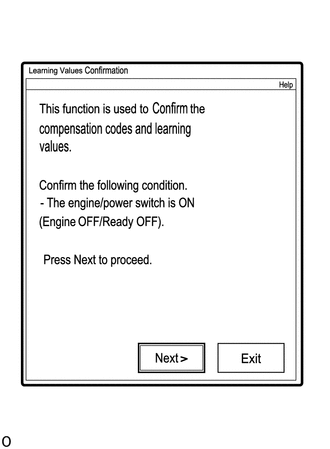
Press "Next".
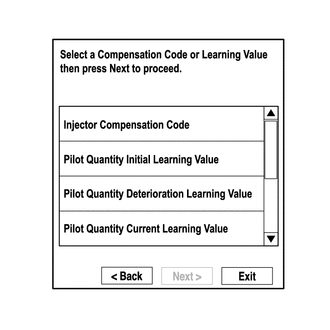
Select the value to confirm and press "Next".
When the next screen is displayed, confirm the contents and press "Exit".
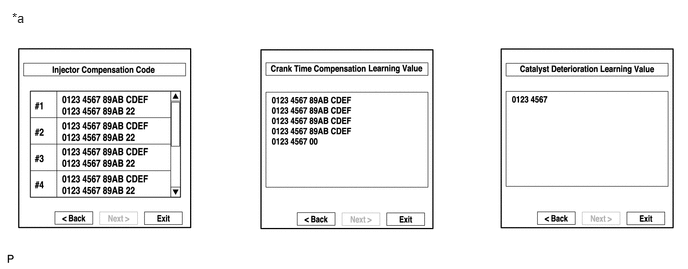
| *a | Example | - | - |
2. LEARNING VALUES SAVE
This procedure uses the GTS to save the learned values (injector compensation code, pilot quantity initial learning value, pilot quantity deterioration learning value, pilot quantity current learning value and crank time compensation learning value) stored in the ECM in the GTS depending on the components being replaced.
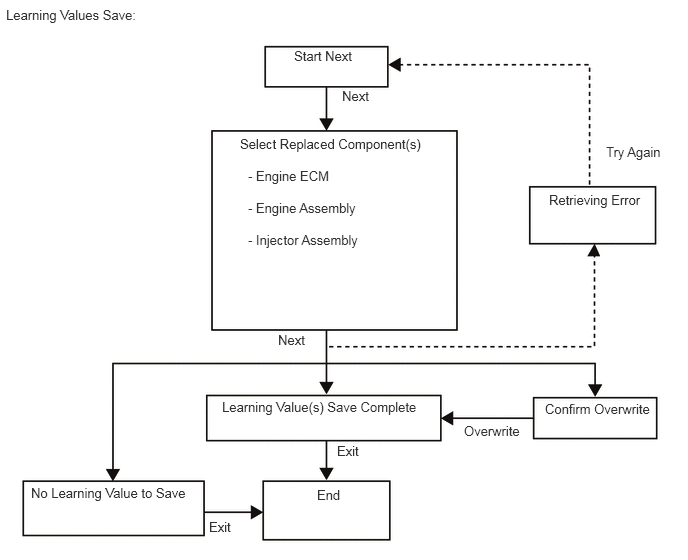
- HINT:
- ·
When replacing the engine assembly, injector assembly, exhaust manifold converter sub-assembly or the air fuel ratio sensor together with the ECM, this function automatically determines the data which can be transferred (old data) and saves the data in the GTS.
·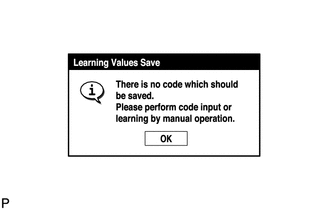
When there is no data to read from the ECM, manually perform the procedure to register each compensation code and learning value in the ECM.
·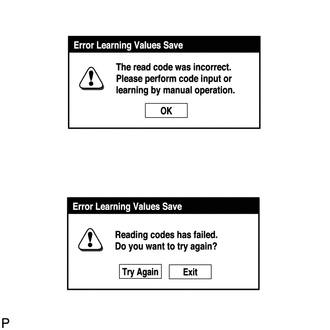
A malfunction may occur when reading the values if there is a problem with the ECM, a wire harness or the connection to the DLC3. If the wire harnesses and the connection to the DLC3 are inspected and found to be normal, the ECM may be malfunctioning.
Connect the GTS to the DLC3.
Turn the ignition switch to ON and turn the GTS on.
- NOTICE:
-
Do not start the engine.
Enter the following menus: Powertrain / Engine / Utility / Learning Values Save.
- Powertrain > Engine > Utility
-
Tester Display Learning Values Save - 50005 372 4597
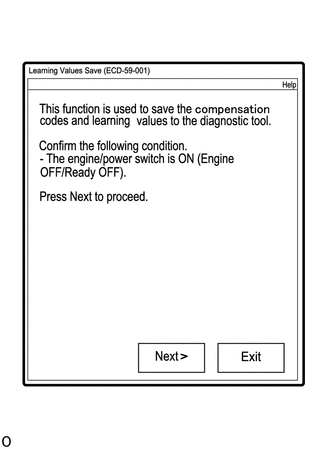
Press "Next".
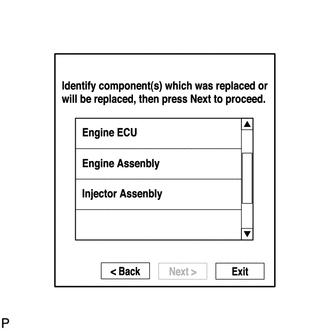
Select any components being replaced and press "Next". If no applicable components are displayed, press "Next" without selecting anything.
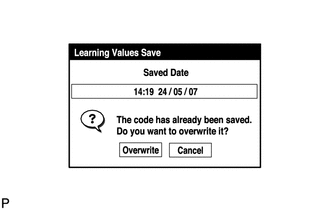
If the overwrite confirmation screen is displayed, press "Overwrite".
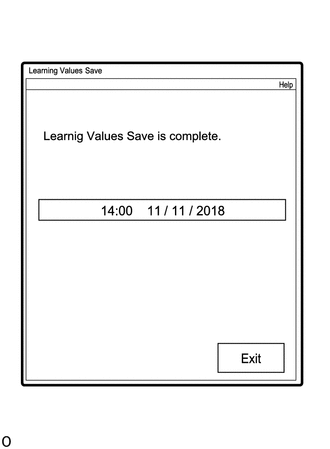
When the operation is finished, confirm the date and time of the save operation, and press "Exit".
3. LEARNING VALUES WRITE
This procedure uses the GTS to write all of the learned values (injector compensation code, pilot quantity initial learning value, pilot quantity deterioration learning value, pilot quantity current learning value and crank time compensation learning value) stored in the GTS to the ECM.
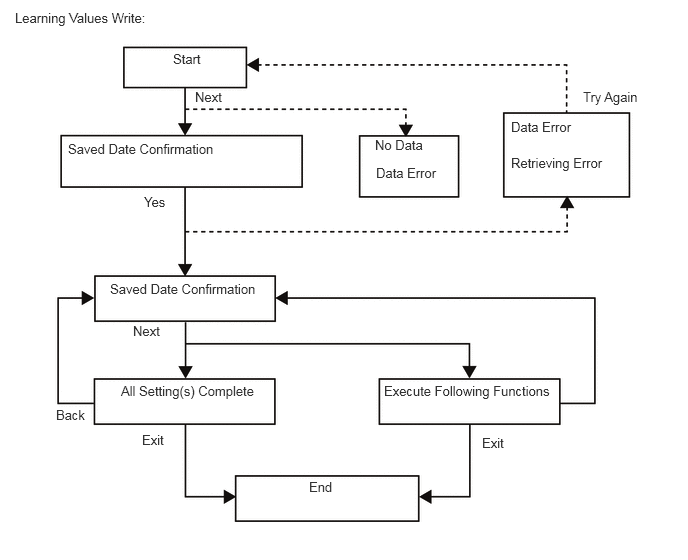
- HINT:
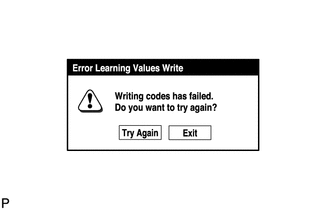
A malfunction may occur when writing the values if there is a problem with the ECM, a wire harness or the connection to the DLC3. If the wire harnesses and the connection to the DLC3 are inspected and found to be normal, the ECM may be malfunctioning.
Connect the GTS to the DLC3.
Turn the ignition switch to ON and turn the GTS on.
- NOTICE:
-
Do not start the engine.
Enter the following menus: Powertrain / Engine / Utility / Learning Values Write.
- Powertrain > Engine > Utility
-
Tester Display Learning Values Write - 50005 372 4598
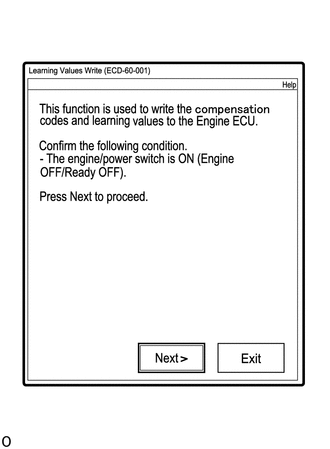
Press "Next".
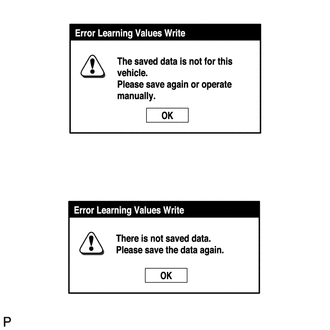
When Error Learning Values Save is displayed, perform Learning Values Save again or write the values using Injector Compensation.
- HINT:
- ·
If Learning Values Save is performed again, the values can only be written using Injector Compensation. Therefore, record the injector compensation code through Learning Values Confirmation.
·If Learning Values Write cannot be performed, write the values using Injector Compensation.
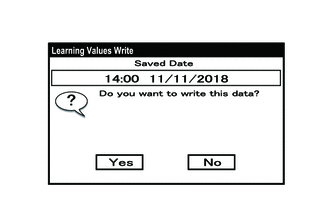
Confirm the date and time of the save operation, and then press "Yes".
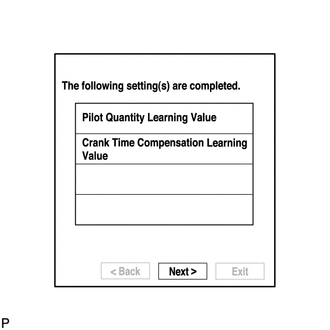
Confirm the contents, and then press "Next".
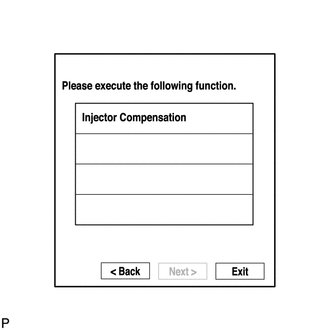
If any instructions are displayed on the GTS, manually perform the procedure to register each applicable compensation code or learning value in the ECM.
Clear the DTCs.
4. INPUT INJECTOR COMPENSATION CODE(S) INTO ECM
- NOTICE:
- ·
When an injector assembly is replaced, the new injector compensation code must be input into the ECM. When the ECM is replaced, all of the existing injector compensation codes must be input into the new ECM.
·Injector compensation codes are unique, 30-digit, alphanumeric values printed on the head portion of each injector assembly. If an incorrect injector compensation code is input into the ECM, the engine assembly may rattle or engine idling may become rough. In addition, engine failure may occur and the life of the engine may be shortened.
·If the injector compensation code is not input correctly, P062F00 is stored. If pilot quantity learning is not completed, P062F46 is stored.
·When an injector compensation code is input into the ECM, the pilot quantity learning values stored in the ECM are initialized. Also, DTC P062F46 is stored when the pilot quantity learning values are initialized.
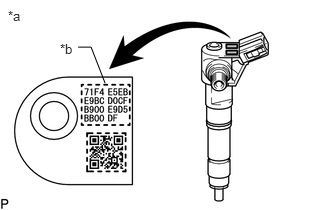
| *a | Example |
| *b | Injector Compensation Code |
After replacing injector assembly with new one, input compensation code of the injector assembly into the ECM as follows:
- HINT:
- ·
Each injector assembly has different fuel injection characteristics. In order to optimize the fuel injections, the ECM uses the compensation codes to balance the different fuel injections between each injector assembly.
·When only one or more injector assemblies are replaced, input the injector compensation code(s), perform pilot quantity learning, and then clear the DTCs.
·When the ignition switch is turned to ON after replacing the ECM, DTC P062F00 and P062F46 is stored. This indicates that the injector compensation code(s) need to be registered. Manually clear the DTC upon completion of pilot quantity learning.
Input the compensation code(s), which is/are imprinted on the head portion(s) of the new injector(s), into the GTS.
Input the new compensation code(s) into the ECM using the GTS.
Turn the GTS off and turn the ignition switch off.
Wait for at least 30 seconds.
Turn the ignition switch to ON and turn the GTS on.
Perform pilot quantity learning.
Clear the DTC P062F00 and P062F46 stored in the ECM using the GTS.
- Powertrain > Engine > Clear DTCs
- 50002 372
- NOTICE:
-
If the DTCs are cleared without performing pilot quantity learning, DTC P062F46 is stored the next time the ignition switch is turned to ON.
Register compensation codes.
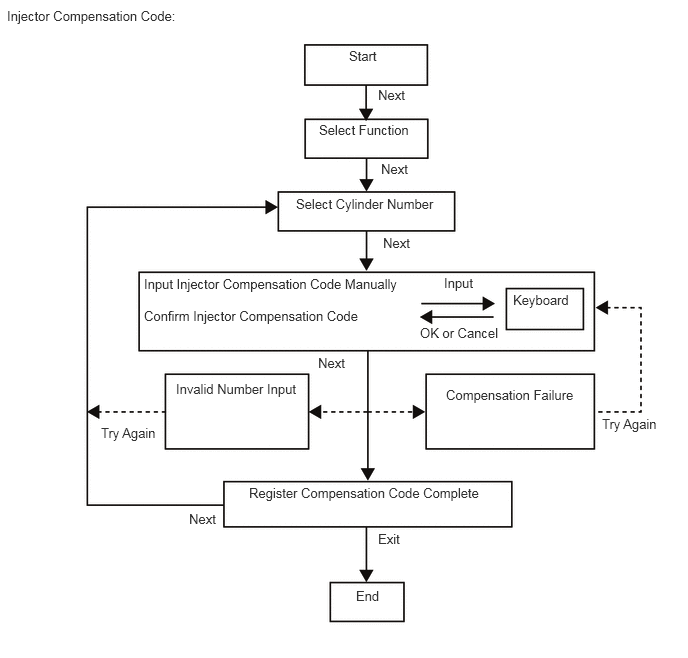
Connect the GTS to the DLC3.
Turn the ignition switch to ON.
- NOTICE:
-
Do not start the engine.
Turn the GTS on.
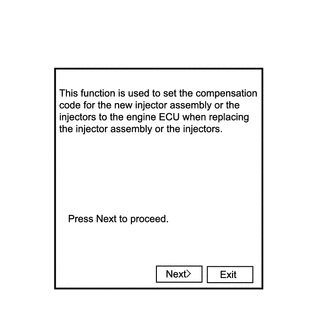
Enter the following menus: Powertrain / Engine / Utility / Injector Compensation.
- Powertrain > Engine > Utility
-
Tester Display Injector Compensation - 50005 372 4596
Press "Next".
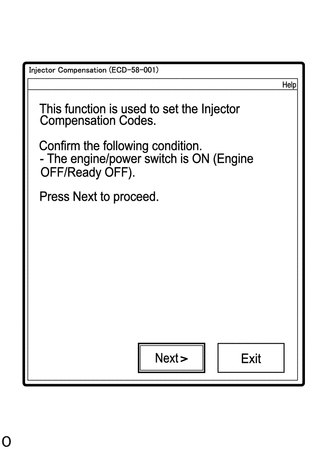
Press "Next" again to proceed.
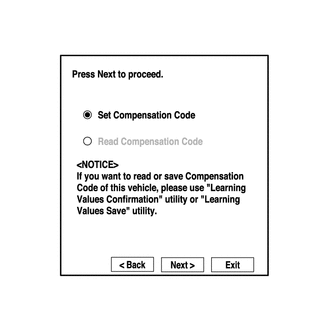
Select "Set Compensation Code".
Press "Next".
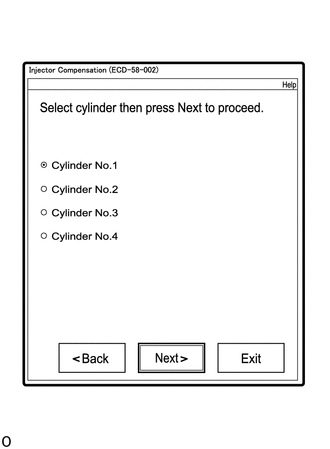
Select the number of the cylinder corresponding to the injector compensation code that you want to register.
Press "Next".
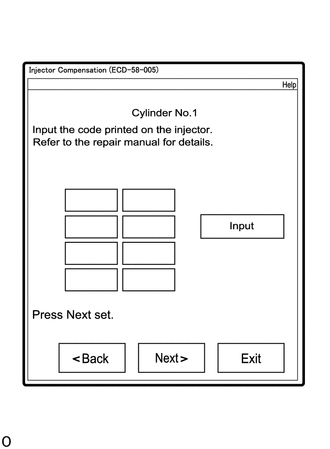
Register compensation code.
Press "Input".
Manually input the cylinder compensation code using the GTS keyboard. The code is a 30-digit, alphanumeric value printed on the injector assembly head portion.
- HINT:
-
Each injector compensation code is unique. The compensation code for each selected cylinder must be input into the GTS correctly.
Confirm that the compensation code for the selected cylinder is correct, and then press "OK".
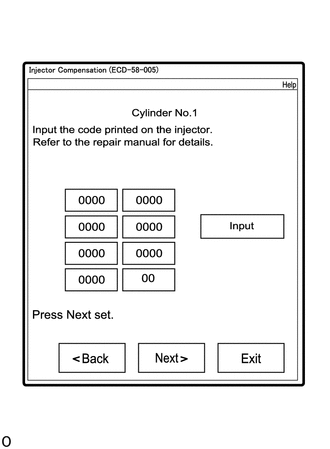
Check that the compensation code displayed on the screen is correct by comparing it with the 30-digit alphanumeric value on the head portion of the injector assembly.
- NOTICE:
-
If an incorrect injector compensation code is input into the ECM, the engine may rattle or engine idling may become rough. In addition, engine failure may occur and the life of the engine may be shortened.
- HINT:
- ·
If a wrong compensation code is input or read, return to the Input Value screen by pressing "Input".
·The saving process may fail due to a problem with the wire harness or a bad connection with the DLC3. Check the wire harness and DLC3 connection. If no problem is found with either, the ECM may be malfunctioning. Check the ECM and repeat this operation.
Press "Next" to register the compensation code in the ECM.
- HINT:
- ·
If the registration process fails, the compensation code may be incorrect. Check the compensation code again.
·If the input compensation code fails to register even though it is input correctly, there may be a problem with the wire harness or a bad connection with the DLC3. Check the wire harness and DLC3 connection. If no problem is found with either, the ECM may be malfunctioning. Check the ECM and restart this operation.
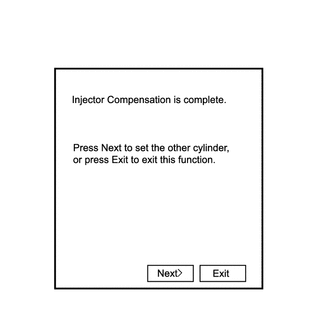
If you want to continue with other compensation code registrations, press "Next". To finish the registration, press "Exit".
Turn the ignition switch off, and then turn the GTS off.
Wait for at least 30 seconds.
Turn the ignition switch to ON, and then turn the GTS on.
Perform pilot quantity learning.
Clear the DTC P062F00 and P062F46 stored in the ECM using the GTS.
- Powertrain > Engine > Clear DTCs
- 50002 372
- NOTICE:
-
If the DTCs are cleared without performing pilot quantity learning, DTC P062F46 is stored the next time the ignition switch is turned to ON.
5. PILOT QUANTITY LEARNING
- NOTICE:
-
Driving conditions during "Pilot Quantity Learning" using the GTS differ from normal as the EGR remains constantly ON. As a result, leaving the engine idling during "Pilot Quantity Learning" for long periods of time may damage the engine. Therefore, perform "Pilot Quantity Learning" immediately after the engine is warmed up (within approximately 20 minutes).
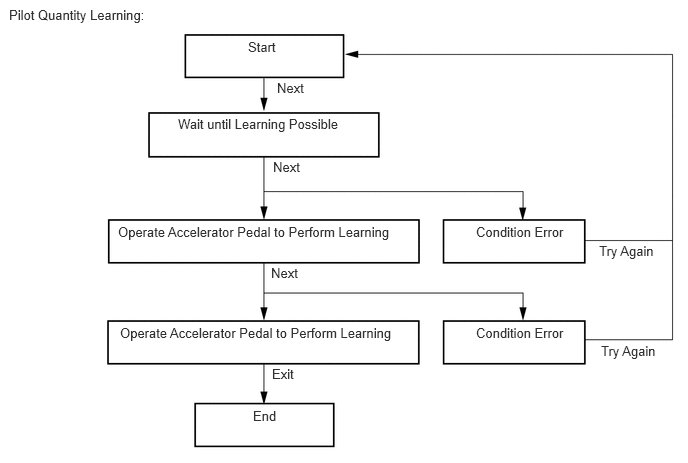
"Pilot Quantity Learning" is performed when injector assemblies have been replaced and injector compensation codes have been registered. "Pilot Quantity Learning (Detail)" is performed when there are engine problems but no DTCs are output and the technician wishes to clear the learned values and have the vehicle relearn the values.
This procedure uses the GTS to perform "Pilot Quantity Learning".
When replacing the injector assembly, engine or ECM, perform this procedure after performing injector compensation (manual ID code registration).
- NOTICE:
-
After completing this procedure, clear the DTCs using the GTS.
- HINT:
- ·
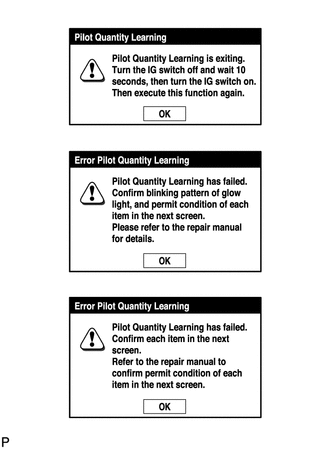
If "Exit" is pressed during the step where the accelerator pedal is operated and "Pilot Quantity Learning" is canceled, turn the ignition switch off, wait 10 seconds, check the vehicle condition, and then perform learning again.
·If an error occurs during learning, check the vehicle condition after turning the ignition switch off, and then perform learning again.
·If learning is canceled and DTCs are output due to excessive racing of the engine (depressing the accelerator pedal for 2 seconds or more), turn the ignition switch off, and then perform learning again.
·A communication malfunction may occur if there is a problem with the ECM, a wire harness or the connection to the DLC3. If the wire harnesses and the connection to the DLC3 are inspected and found to be normal, the ECM may be malfunctioning.
Connect the GTS to the DLC3.
Start the engine.
Turn the GTS on.
Enter the following menus: Powertrain / Engine / Utility / Pilot Quantity Learning.
- Powertrain > Engine > Utility
-
Tester Display Pilot Quantity Learning - 50005 372 4569
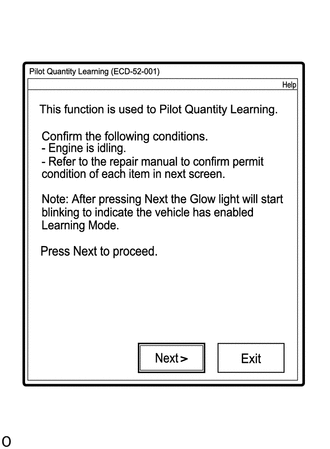
Press "Next".
Confirm the condition of the engine and wait until learning can be performed.
| GTS Display | Standard |
|---|---|
| Coolant Temperature | 70 to 100°C |
| Intake Air Temperature | 10 to 120°C |
| Battery Voltage | 10 V or higher |
| Atmospheric Pressure | 70 kPa or higher |
| Pilot Quantity Learning | READY |
- HINT:
- ·
If the values deviate from the standard above, "Pilot Quantity Learning" enters a standby state or is canceled.
·When the essential conditions to perform learning are met, the screen will change automatically.
·Using the GTS, make sure that DTCs other than DTC P062F46 are not output.
·DTC P062F00 and P062F46 is stored when the value registered in the ECM for an input injector compensation code and/or pilot quantity learning value is the initial value.
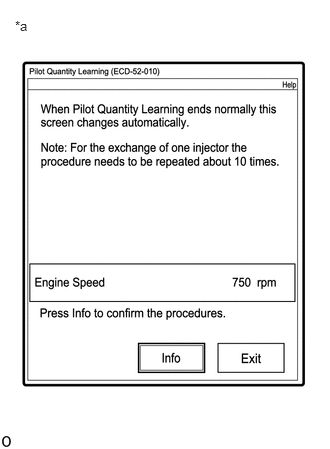
| *a | Example |
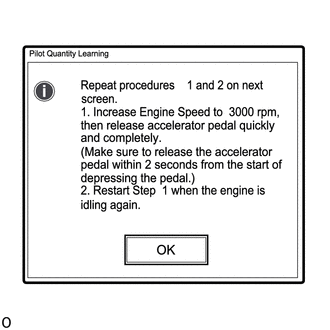
Follow the prompts on the screen and repeat the following procedure until the screen changes: Starting with the engine idling, race the engine until the engine speed is 3000 rpm or higher for no more than 2 seconds, and then let the engine return to idling.
- HINT:
- ·
After confirming that the engine speed has reached 3000 rpm, completely release the accelerator pedal in order for the throttle opening amount to become 0%.
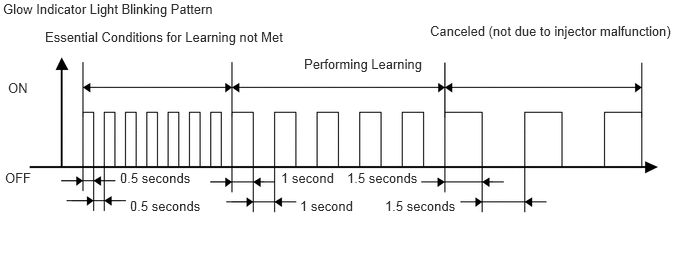
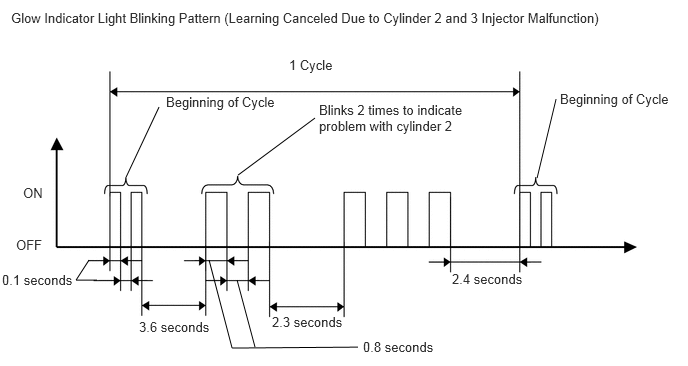
·It is possible to confirm the status of the learning operation during "Pilot Quantity Learning" by observing the blinking pattern of the glow indicator light.
| Learning Status | Glow Indicator Light Condition |
|---|---|
| Conditions essential to start learning have not been met | Blinking at 0.5 second intervals |
| Conditions essential to start learning have been met | Blinking at 1 second intervals |
| During racing (learning is being performed) | Blinking at 1 second intervals |
| Learning is finished | Off |
| Learning has been canceled | Blinking at 1.5 second intervals |
| Learning has been canceled (malfunctioning cylinder is indicated by blinking pattern) | Blinking at 0.8 second intervals (2.3 second intervals between each set of blinks representing the number of a malfunctioning cylinder) |
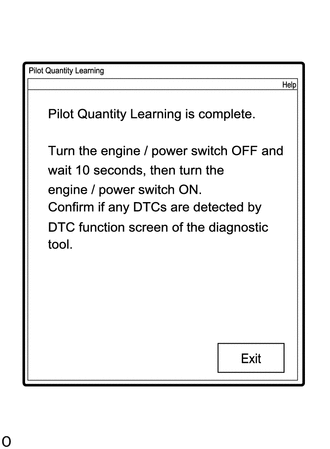
When the screen changes, press "Exit".
Turn the ignition switch off, and then turn the GTS off.
Wait for at least 10 seconds.
Turn the ignition switch to ON, and then turn the GTS on.
Clear the DTCs.
- Powertrain > Engine > Clear DTCs
- 50002 372
Turn the ignition switch off.
- NOTICE:
-
Do not disconnect the cable from the negative (-) battery terminal for 30 seconds after turning the ignition switch off.
- HINT:
- ·
The EFI MAIN relay turns off after the learned value is stored in the ECM.
·After the EFI MAIN relay turns off, wait for 30 seconds or more before turning the ignition switch off.
6. PILOT QUANTITY LEARNING (DETAIL)
- NOTICE:
-
Driving conditions during "Pilot Quantity Learning" using the GTS differ from normal as the EGR remains constantly ON. As a result, leaving the engine idling during "Pilot Quantity Learning" for long periods of time may damage the engine. Therefore, perform "Pilot Quantity Learning" immediately after the engine is warmed up (within approximately 20 minutes).
"Pilot Quantity Learning" is performed when injector assemblies have been replaced and injector compensation codes have been registered. "Pilot Quantity Learning (Detail)" is performed when there are engine problems but no DTCs are output and the technician wishes to clear the learned values and have the vehicle relearn the values.
It takes time to clear the learned values and perform learning for all cylinders.
This procedure uses the GTS to perform "Pilot Quantity Learning (Detail)".
When replacing the injector assembly, engine or ECM, perform this procedure after performing injector compensation (manual ID code registration).
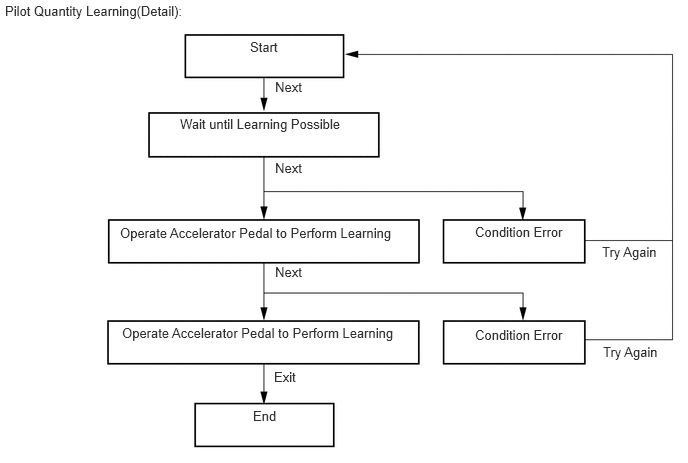
- NOTICE:
-
After completing this procedure, clear the DTCs using the GTS.
- HINT:
- ·
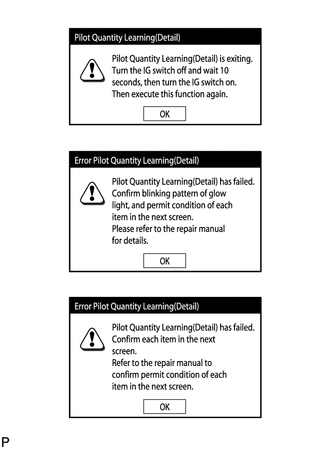
If "Exit" is pressed during the step where the accelerator pedal is operated and "Pilot Quantity Learning (Detail)" is canceled, turn the ignition switch off, wait 10 seconds, check the vehicle condition, and then perform learning again.
·If an error occurs during learning, check the vehicle condition after turning the ignition switch off, and then perform learning again.
·If learning is canceled and DTCs are output due to excessive racing of the engine (depressing the accelerator pedal for 2 seconds or more), turn the ignition switch off, and then perform learning again.
·A communication malfunction may occur if there is a problem with the ECM, a wire harness or the connection to the DLC3. If the wire harnesses and the connection to the DLC3 are inspected and found to be normal, the ECM may be malfunctioning.
Connect the GTS to the DLC3.
Start the engine.
Turn the GTS on.
Enter the following menus: Powertrain / Engine / Utility / Pilot Quantity Learning (Detail).
- Powertrain > Engine > Utility
-
Tester Display Pilot Quantity Learning (Detail) - 50005 372 4570
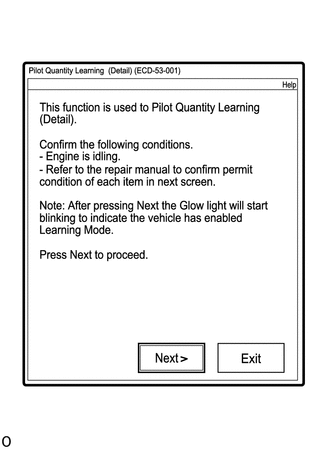
Press "Next".
Confirm the condition of the engine and wait until learning can be performed.
| GTS Display | Standard |
|---|---|
| Coolant Temperature | 70 to 100°C |
| Intake Air Temperature | 10 to 120°C |
| Battery Voltage | 10 V or higher |
| Atmospheric Pressure | 70 kPa or higher |
| Pilot Quantity State Learning | READY |
- HINT:
- ·
If the values deviate from the standard above, "Pilot Quantity Learning" enters a standby state or is canceled.
·When the essential conditions to perform learning are met, the screen will change automatically.
·Using the GTS, make sure that DTCs other than DTC P062F46 are not output.
·DTC P062F00 and P062F46 is stored when the value registered in the ECM for an input injector compensation code and/or pilot quantity learning value is the initial value.
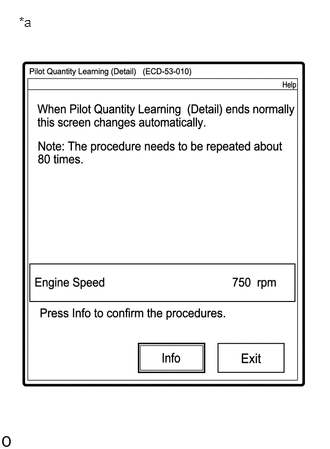
| *a | Example |
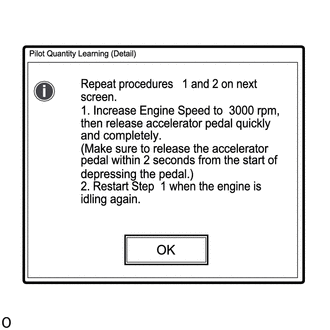
Follow the prompts on the screen and repeat the following procedure until the screen changes: Starting with the engine idling, race the engine until the engine speed is 3000 rpm or higher for no more than 2 seconds, and then let the engine return to idling.
- HINT:
- ·
After confirming that the engine speed has reached 3000 rpm, completely release the accelerator pedal in order for the throttle opening amount to become 0%.
·It is possible to confirm the status of the learning operation during "Pilot Quantity Learning (Detail)" by observing the blinking pattern of the glow indicator light.
| Learning Status | Glow Indicator Light Condition |
|---|---|
| Conditions essential to start learning have not been met | Blinking at 0.5 second intervals |
| Conditions essential to start learning have been met | Blinking at 1 second intervals |
| During racing (learning is being performed) | Blinking at 1 second intervals |
| Learning is finished | Off |
| Learning has been canceled | Blinking at 1.5 second intervals |
| Learning has been canceled (malfunctioning cylinder is indicated by blinking pattern) | Blinking at 0.8 second intervals (2.3 second intervals between each set of blinks representing the number of a malfunctioning cylinder) |
When the screen changes, press "Exit".
Turn the ignition switch off, and then turn the GTS off.
Wait for at least 10 seconds.
Turn the ignition switch to ON, and then turn the GTS on.
Clear the DTCs.
- Powertrain > Engine > Clear DTCs
- 50002 372
Turn the ignition switch off.
- NOTICE:
-
Do not disconnect the cable from the negative (-) battery terminal for 30 seconds after turning the ignition switch off.
- HINT:
- ·
The EFI MAIN relay turns off after the learned value is stored in the ECM.
·After the EFI MAIN relay turns off, wait for 30 seconds or more before turning the ignition switch off.
7. DESCRIPTION OF VIN
- NOTICE:
-
The Vehicle Identification Number (VIN) or frame number must be written into a replacement ECM.
- HINT:
-
The VIN is a 17-digit alphanumeric vehicle identification number. The GTS is required to register the VIN.
This registration section consists of 2 parts: Read VIN or Frame Number and Write VIN or Frame Number.
Read VIN or Frame Number: This procedure allows the VIN or frame number stored in the ECM to be read in order to confirm that the VINs or frame numbers, provided on the vehicle body and stored in the vehicle ECM, are the same.
Write VIN or Frame Number: This procedure allows the VIN or frame number to be written into the ECM. If the ECM is replaced, or the ECM VIN or frame number and vehicle VIN or frame number do not match, the VIN or frame number can be registered, or overwritten in the ECM by following this procedure.
8. READ VIN OR FRAME NUMBER
Confirm the vehicle VIN or frame number.
Connect the GTS to the DLC3.
Turn the ignition switch to ON.
Turn the GTS on.
Enter the following menus: Powertrain / Engine / Utility / VIN / VIN Read.
- Powertrain > Engine > Utility
-
Tester Display VIN - 50005 372 2384
According to the display on the GTS, read the frame number or VIN stored in the ECM.
9. WRITE VIN OR FRAME NUMBER
Confirm the vehicle VIN or frame number.
Connect the GTS to the DLC3.
Turn the ignition switch to ON.
Turn the GTS on.
Enter the following menus: Powertrain / Engine / Utility / VIN / VIN Write.
- Powertrain > Engine > Utility
-
Tester Display VIN - 50005 372 2384
According to the display on the GTS, write the vehicle frame number or VIN to the ECM.