BRAKE SYSTEM (OTHER) BRAKE FLUID(for HV Model) BLEEDING
CAUTION / NOTICE / HINT
- NOTICE:
- ·
Perform air bleeding with the shift lever in P and the parking brake applied.
·Perform air bleeding while maintaining the brake fluid level between the MAX and MIN lines on the brake fluid reservoir.
·If the brake fluid reservoir becomes empty, air will enter the hose and brake booster with accumulator pump assembly and it may become difficult to replace brake fluid.
·When performing air bleeding, the accumulator pressure drop may cause a buzzer to sound. As this is not a malfunction, continue with the air bleeding procedure.
·If air bleeding is performed, a C145151 or C125600 DTC may be stored. Clear the DTCs after performing air bleeding or whenever specified by a procedure.
·Make sure to release the parking brake before performing the "Linear Valve Offset Learning" (linear solenoid valve offset learning).
·Do not allow brake fluid to contact any painted surface. If brake fluid leaks onto any painted surface, immediately wash it off.
·When performing air bleeding, do not continuously operate the pump motor for more than 100 seconds. If the pump motor is operated for more than 100 seconds, release the brake pedal to stop operation of the pump in order to prevent damage to the pump motor.
·As brake fluid may overflow from the reservoir when brake fluid is released from the accumulator, do not invert and place the brake fluid bottle on the reservoir filler opening.
·Do not use vacuum to bleed air from the brake system.
- HINT:
-
As the ECB (Electronically Controlled Brake system) contains complicated brake fluid passages, dissolved gases in the brake fluid may form bubbles as the brake fluid pressure decreases.
·When bleeding air, select the suitable procedure according to the table below.
Replaced/Installed Item Work Procedure Flexible hose (front/rear) Bleed brake line Disc brake cylinder assembly (front/rear) Brake master cylinder reservoir assembly Bleed brake system Brake master cylinder with pump assembly Brake booster with accumulator pump assembly Brake booster with master cylinder assembly Brake actuator assembly
- HINT:
-
There are 2 ways of brake line bleeding: using the GTS or not using the GTS.
PROCEDURE

 1.BLEED BRAKE LINE (When Using the GTS)
Fill the reservoir with brake fluid.
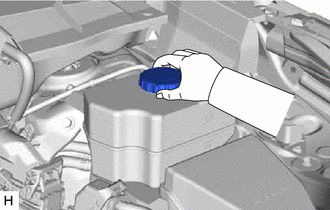
Remove the brake master cylinder reservoir filler cap assembly.
Add brake fluid to the reservoir until the fluid level is between the MAX and MIN lines on the brake fluid reservoir.
- Brake Fluid:
SAE J1703 or FMVSS No. 116 DOT3
SAE J1704 or FMVSS No. 116 DOT4
Bleed the brake line.
Bleed the brake line following the instructions on the GTS.
- Chassis > Brake/EPB > Utility
-
Tester Display Brake Line Air Bleeding - 50005 435 6119
- HINT:
-
When the brake pedal is released, the piston inside the master cylinder may take longer than the brake pedal to return to its original position. Therefore, make sure to wait for 1 second or more between each depression of the brake pedal.
After air bleeding, tighten each bleeder plug.
- Torque:
- 8.3 N*m (85 kgf*cm, 73 in.*lbf)
Install the brake master cylinder reservoir filler cap assembly.
Inspect for brake fluid leaks.
2.BLEED BRAKE LINE (When Not Using the GTS)
- NOTICE:
- ·
Performing the following procedure enters ECB (Electronically Controlled Brake system) Deactivate Mode without using the GTS.
·ECB (Electronically Controlled Brake system) Deactivate Mode allows the brake lines to be bled without using the GTS.
·The brake warning light blinks (yellow) to indicate that ECB (Electronically Controlled Brake system) Deactivate Mode is selected.
·Be sure to confirm that the brake warning light is blinking (yellow) throughout the brake line bleeding procedure.
·If any of the following conditions are met, ECB (Electronically Controlled Brake system) Deactivate Mode is canceled and the brake warning light (yellow) turns off. Do not allow ECB (Electronically Controlled Brake system) Deactivate Mode to be canceled while bleeding the brake lines or DTCs may be stored.
The shift lever is moved from P to any other position. The ignition switch is turned to ON (READY). The ignition switch is turned off. The parking brake is released. The vehicle speed is more than 0 km/h (0 mph).
·Do not rotate any brake disc while ECB (Electronically Controlled Brake system) Deactivate Mode is selected.
·Although the brake warning light (yellow) will blink and a buzzer will sound while performing brake line bleeding, this is not a malfunction.
Remove all 4 wheels.
Enter ECB (Electronically Controlled Brake system) Deactivate Mode.
Perform the procedure listed below within 1 minute.
Turn the ignition switch to ON with the shift lever in P and parking brake applied.
Move the shift lever to N and then depress the brake pedal more than 8 times within 5 seconds.
Move the shift lever to P and then depress the brake pedal more than 8 times within 5 seconds.
Move the shift lever to N and then depress the brake pedal more than 8 times within 5 seconds.
Move the shift lever to P.
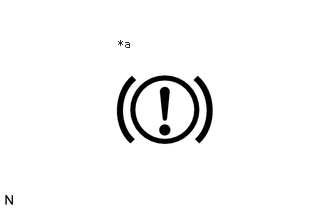
| *a | Brake Warning Light (Yellow) |
Check that the brake warning light is blinking (yellow).
Fill the reservoir with brake fluid.
Remove the brake master cylinder reservoir filler cap assembly.
Add brake fluid to the reservoir until the fluid level is between the MAX and MIN lines on the brake fluid reservoir.
- Brake Fluid:
SAE J1703 or FMVSS No. 116 DOT3
SAE J1704 or FMVSS No. 116 DOT4
Bleed the brake lines.
Connect a vinyl tube to the bleeder plug of the front disc brake cylinder assembly RH.
Depress the brake pedal several times with approximately 1 second between each depression, and then loosen the bleeder plug with the pedal depressed.*1
When brake fluid stops coming out, tighten the bleeder plug and then release the brake pedal for 1 second or more.*2
- HINT:
-
When the brake pedal is released, the piston inside the master cylinder may take longer than the brake pedal to return to its original position. Therefore, make sure to wait for 1 second or more between each depression of the brake pedal.
Repeat steps *1 and *2 until all the air in the brake fluid is completely bled out.
Tighten the bleeder plug completely.
- Torque:
- 8.3 N*m (85 kgf*cm, 73 in.*lbf)
Bleed the brake lines from the front disc brake cylinder assembly LH using the same procedure as for the RH side.
Connect a vinyl tube to the bleeder plug of the rear disc brake cylinder assembly LH.
Depress the brake pedal several times with approximately 1 second between each depression, and then loosen the bleeder plug with the pedal depressed.*3
When brake fluid stops coming out, tighten the bleeder plug and then release the brake pedal for 1 second or more.*4
- HINT:
-
When the brake pedal is released, the piston inside the master cylinder may take longer than the brake pedal to return to its original position. Therefore, make sure to wait for 1 second or more between each depression of the brake pedal.
Repeat steps *3 and *4 until all the air in the brake fluid is completely bled out.
Tighten the bleeder plug completely.
- Torque:
- 8.3 N*m (85 kgf*cm, 73 in.*lbf)
Bleed the brake lines from the rear disc brake cylinder assembly RH using the same procedure as for the LH side.
Turn the ignition switch off.
Inspect for brake fluid leaks.
Adjust the brake fluid level in the reservoir.
Click hereBrake>BRAKE SYSTEM (OTHER)>BRAKE FLUID (for HV Model)>ON-VEHICLE INSPECTION
Install the brake master cylinder reservoir filler cap assembly.
Install all 4 wheels.
3.BLEED BRAKE SYSTEM
- CAUTION:
-
-
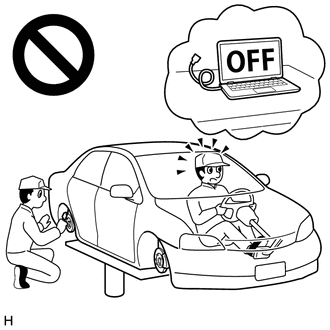
The GTS must be used for bleeding the brake system. If not used, the air bleeding will be incomplete, which is hazardous and may lead to an accident.
Fill the reservoir with brake fluid.
Remove the brake master cylinder reservoir filler cap assembly.
Add brake fluid to the reservoir until the fluid level is between the MAX and MIN lines on the brake fluid reservoir.
- Brake Fluid:
SAE J1703 or FMVSS No. 116 DOT3
SAE J1704 or FMVSS No. 116 DOT4
Bleed the brake system.
Bleed the brake system following the instructions on the GTS.
- Chassis > Brake/EPB > Utility
-
Tester Display Brake System Air Bleeding - 50005 435 6120
- NOTICE:
-
Before following the instructions on the GTS to perform linear valve offset calibration, release the parking brake. When calibration is complete, immediately apply the parking brake.
- HINT:
-
When the brake pedal is released, the piston inside the master cylinder may take longer than the brake pedal to return to its original position. Therefore, make sure to wait for 1 second or more between each depression of the brake pedal.
After air bleeding, tighten each bleeder plug.
- Torque:
- 8.3 N*m (85 kgf*cm, 73 in.*lbf)
Install the brake master cylinder reservoir filler cap assembly.
Inspect for brake fluid leaks.