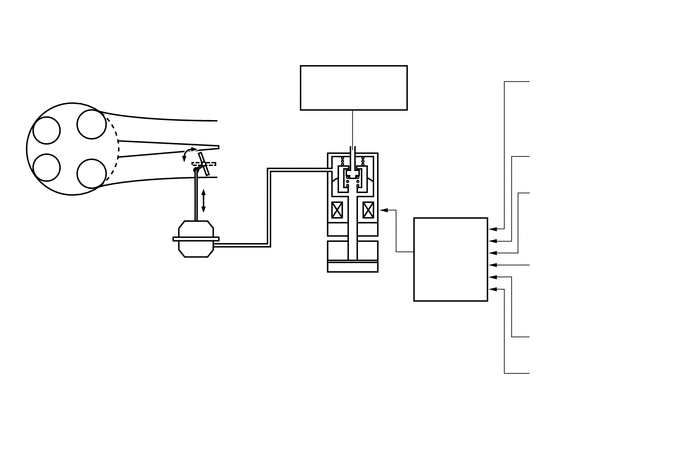
1KD-FTV ENGINE CONTROL ECD SYSTEM DETAILS SWIRL CONTROL
OPERATION
On the models compliant with EURO 4 and Tier 1.5 emission regulations, swirl control carries out the following controls:
The ECM determines the swirl control valve position based on the engine conditions (engine speed and accelerator pedal effort). Then, it switches the vacuum applied to the actuator diaphragm via the VSV, in order to open and close the swirl control valve.
On a cold engine, the ECM fully closes the swirl control valve to reduce the amount of white smoke emissions.
In the low engine speed range, the ECM closes the swirl control valve to strengthen the swirl in the combustion chamber, thus promoting the mixture of fuel and air and stabilizing combustion.
In the middle engine speed range, the ECM opens the swirl control valve to the semi-open position.
In the high engine speed range, the ECM fully opens the swirl control valve.
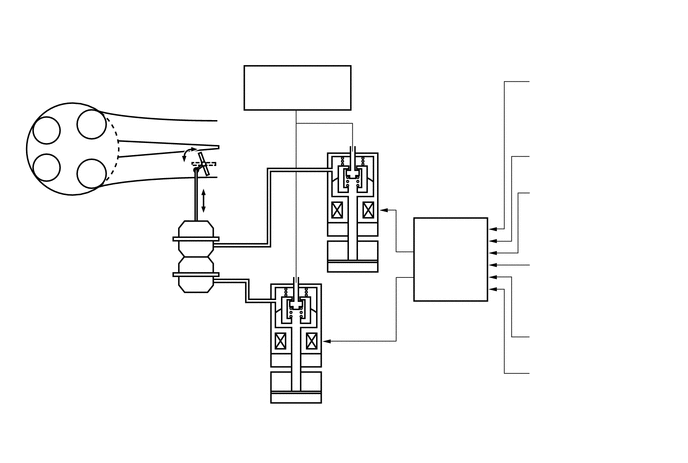
Except on the models compliant with EURO 4 and Tier 1.5 emission regulations, swirl control carries out the following controls:
The ECM determines the swirl control valve position based on the engine conditions (engine speed and accelerator pedal effort). Then, it switches the vacuum applied to the actuator diaphragm via the VSV, in order to open and close the swirl control valve.
On a cold engine, the ECM fully closes the swirl control valve to reduce the amount of white smoke emissions.
In the low engine speed range, the ECM closes the swirl control valve to strengthen the swirl in the combustion chamber, thus promoting the mixture of fuel and air and stabilizing combustion.
When the engine speed increases to the low or middle-speed range, the ECM fully opens the swirl control valve.