1KD-FTV ENGINE CONTROL ECD SYSTEM(for DPF) P2002 Particulate Trap Efficiency Below Threshold (Bank1)
DESCRIPTION
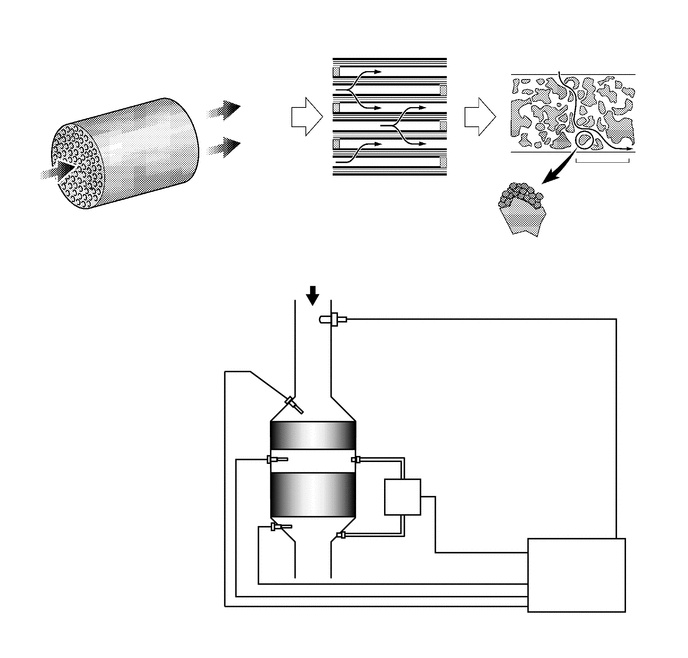
- HINT:
- ·
For more information on the Diesel Particulate Filter (DPF) catalytic converter, refer to the following procedures (See page Engine / Hybrid System>1KD-FTV ENGINE CONTROL>ECD SYSTEM(for DPF)>SYSTEM DESCRIPTION).
·If P2002 is present, refer to the DTC table for Diesel Particulate Filter System (See page Engine / Hybrid System>1KD-FTV ENGINE CONTROL>ECD SYSTEM(for DPF)>SYSTEM DESCRIPTION).
- HINT:
-
The DPF catalyst has an ability to reduce particulate matter (PM), hydrocarbons (HC) and carbon monoxides (CO). The DPF catalyst is a monolithic type catalyst. Alternating passages in the catalyst have either their inlet or outlet blocked. This forces the exhaust gasses to flow through the walls of the passages (see illustration above). Due to the flow of the exhaust gasses through micro-cavities in the passage walls, it is called a "wall flow" type converter.
| DTC No. | Detection Item | DTC Detection Condition | Trouble Area | MIL | Memory |
|---|---|---|---|---|---|
| P2002 | Particulate Trap Efficiency Below Threshold (Bank1) | The Catalyst Record exceeds the threshold (Thermal deterioration malfunction)
(1 trip detection logic). |
Front exhaust pipe assembly (DPF catalytic converter) | Comes on | DTC stored |
| DTC No. | Data List |
|---|---|
| P2002 | DPF Thermal Deteriorate |
CONFIRMATION DRIVING PATTERN
| DTC Detection Drive Pattern | - |
MONITOR DESCRIPTION
In order to detect abnormality in the DPF catalytic converter, the ECM monitors the exhaust gas temperature as well as differential pressure in front of and behind the DPF catalyst.
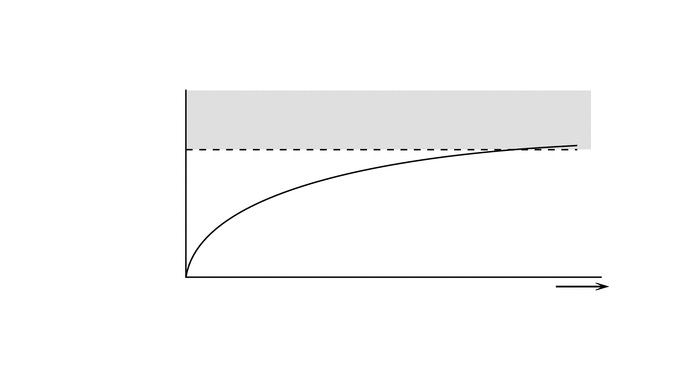
Furthermore, the ECM calculates and integrates the Catalyst Record of catalyst thermal deterioration data with the catalyst temperature. If Catalyst Record exceeds the threshold, the ECM interprets this as a malfunction in the DPF catalyst and illuminates the MIL.
CAUTION / NOTICE / HINT
- NOTICE:
- ·
After replacing the DPF catalyst, clear the thermal deterioration data stored in the ECM.
·Inspect the fuses of circuits related to this system before performing the following inspection procedure.
·After replacing the ECM, the new ECM needs registration (See page Engine / Hybrid System>1KD-FTV ENGINE CONTROL>ECD SYSTEM(for DPF)>REGISTRATION) and initialization (See page Engine / Hybrid System>1KD-FTV ENGINE CONTROL>ECD SYSTEM(for DPF)>INITIALIZATION).
·After replacing the fuel supply pump assembly, the ECM needs initialization (See page Engine / Hybrid System>1KD-FTV ENGINE CONTROL>ECD SYSTEM(for DPF)>INITIALIZATION).
·After replacing an injector assembly, the ECM needs registration (See page Engine / Hybrid System>1KD-FTV ENGINE CONTROL>ECD SYSTEM(for DPF)>REGISTRATION).
- HINT:
-
Read freeze frame data using the intelligent tester. Freeze frame data records the engine condition when malfunctions are detected. When troubleshooting, freeze frame data can help determine if the vehicle was moving or stationary, if the engine was warmed up or not, and other data from the time the malfunction occurred.
PROCEDURE
- HINT:
-
When the front exhaust pipe assembly is replaced, the catalyst record of DPF thermal deterioration stored in the ECM must be cleared.
Replace the front exhaust pipe assembly.
Click hereEngine / Hybrid System>1KD-FTV INTAKE / EXHAUST>EXHAUST PIPE(w/ DPF)>REMOVAL
- Result:
Proceed to NEXT
NEXT
Connect the intelligent tester to the DLC3.
Turn the ignition switch to ON and turn the tester on.
Enter the menu options in this order: Powertrain / Engine and ECT / Utility / Catalyst Record Clear.
- Powertrain > Engine > Utility
-
Tester Display Catalyst Record Clear - 50005 61 178
- Result:
Proceed to NEXT
NEXT