Impact Absorbing Structure for Frontal Collision
A structure that ensures collision energy absorption efficiency, dissipates impact, and minimizes cabin deformation during a frontal collision has been achieved.
- An engine under brace sub-assembly is used in the lower front portion of the frame. In the event of a frontal collision, the impact energy is transmitted to the No. 1 frame crossmember sub-assembly through the engine under brace sub-assembly. Thus, the moment of the backward rotation at the No. 1 frame crossmember sub-assembly occurs in combination with the moment of the forward rotation at the suspension arm support sub-assembly. This helps minimize the floor deformation caused by the collapse of the suspension arm support sub-assembly.
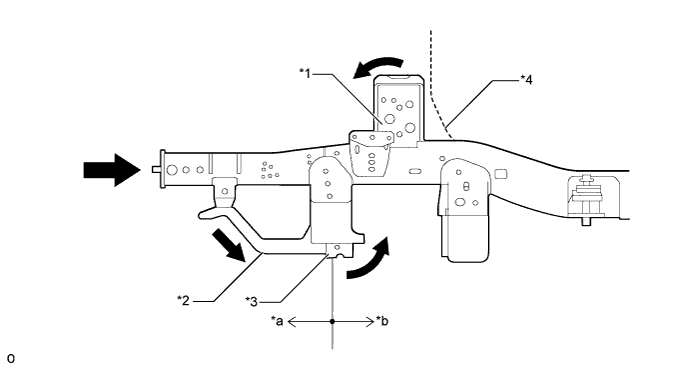
Text in Illustration *1 Suspension Arm Support Sub-assembly *2 Engine Under Brace Sub-assembly *3 No. 1 Frame Crossmember Sub-assembly *4 Floor Panel *a Axial Compression Area *b Moderate Bend Area 
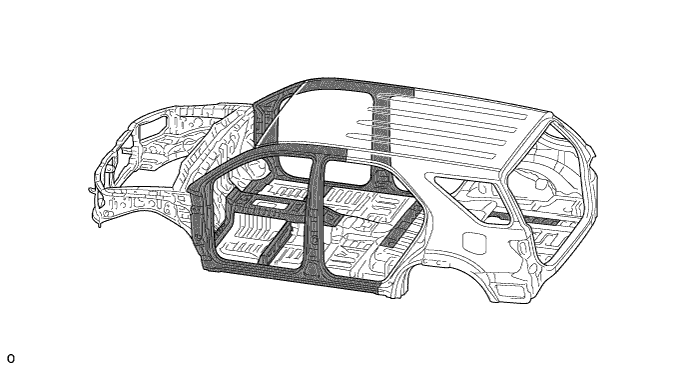
Front Impact Energy - - - The optimally allocated panels and reinforcements allow the front impact energy received from the front end and frame to be dissipated and absorbed by the front pillar, rocker, and floor reinforcement, in order to minimize the deformation of the cabin.
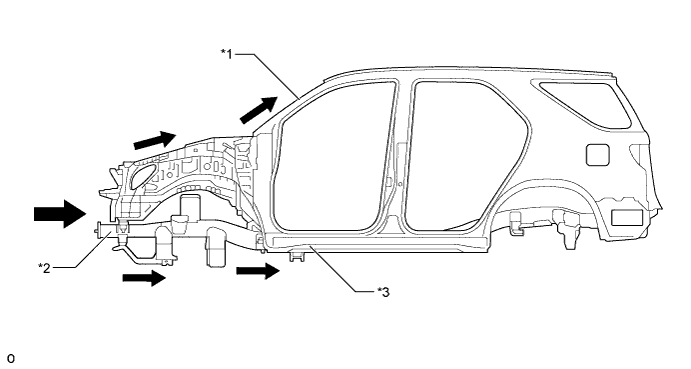
Text in Illustration *1 Front Body Pillar *2 Frame Sub-assembly *3 Rocker - - Front Impact Energy - - - An engine under brace sub-assembly is used in the lower front portion of the frame. In the event of a frontal collision, the impact energy is transmitted to the No. 1 frame crossmember sub-assembly through the engine under brace sub-assembly. Thus, the moment of the backward rotation at the No. 1 frame crossmember sub-assembly occurs in combination with the moment of the forward rotation at the suspension arm support sub-assembly. This helps minimize the floor deformation caused by the collapse of the suspension arm support sub-assembly.
Impact Absorbing Structure for Side Collision
A structure that ensures collision energy absorption efficiency, dissipates impact, and minimizes cabin deformation during a side collision has been achieved.
- Impact energy from a side collision directed to the cabin area is dispersed throughout the body via pillar reinforcements, side impact protection beams, and a floor cross member. This dispersion of energy helps keep the energy directed to the cabin at a minimum level.
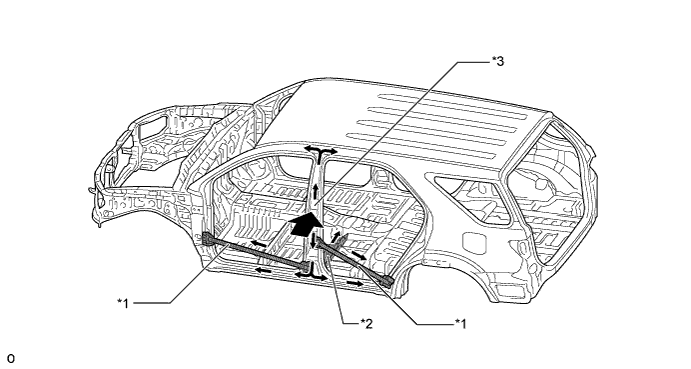
Text in Illustration *1 Side Impact Protection Beam *2 Floor Cross Member *3 Pillar Reinforcement - - Side Impact Energy - - - The head impact protection structure is used. With this type of construction, if the occupant's head hits against the roof side rail and pillar in reaction to a collision, the inner ribs of the roof side rail and pillar collapse to help reduce the impact.
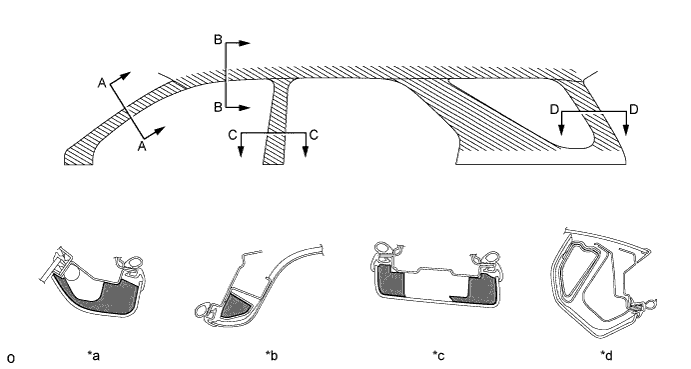
Text in Illustration *a A - A Cross Section *b B - B Cross Section *c C - C Cross Section *d D - D Cross Section 
Head Impact Protection Structure 
Energy Absorbing Rib - Impact energy from a side collision directed to the cabin area is dispersed throughout the body via pillar reinforcements, side impact protection beams, and a floor cross member. This dispersion of energy helps keep the energy directed to the cabin at a minimum level.
Aerodynamics
Front wheel opening extension pads are used on the front fender liner to improve the airflow around the front tires.
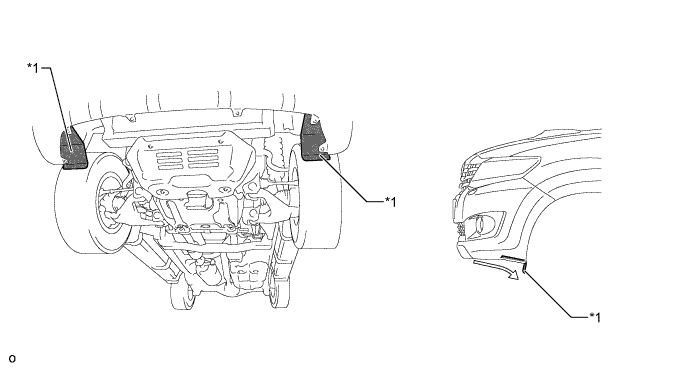
Text in Illustration *1 Front Wheel Opening Extension Pad - - 
Airflow - -