EXTERIOR PANELS / TRIM BODY STRUCTURE GENERAL GENERAL
OUTLINE
Lightweight and Highly Rigid Body
Aluminum, high-strength steel, ultra high-strength steel and hot-stamped steel are used in order to achieve excellent body rigidity and a lightweight body.
Rust-resistant Body
Rust-resistant performance is enhanced by the extensive use of anti-corrosion sheet steel, as well as by an anticorrosion treatment that includes the application of anti-rust wax, sealer and anti-chipping paint to the easily corroded parts such as the hood and fender.
Safety Features
The impact absorbing structure minimizes cabin deformation by effectively helping to absorb the impact energy in the event of a front, side or rear collision. This provides high performance occupant protection.
Aerodynamics
Various types of airflow routing parts that control airflow are provided under the floor, and an undercover is provided to make the under-floor area flat in order to ensure excellent aerodynamic performance.
Low Vibration and Low Noise Body
Effective application of vibration damping and noise suppressant materials reduces mechanical, wind and road noise.
MAIN FEATURES
SILENT DYNAMISM
The vehicle is given a "minimal and serene" structural feel in order to achieve its unparalleled "SILENT" nature, and truly defines a unique dynamic feel of "DYNAMISM".
NEW FR AERO PROPORTION
The design of the body features a flowing shape with the center of gravity pulled completely to the rear.
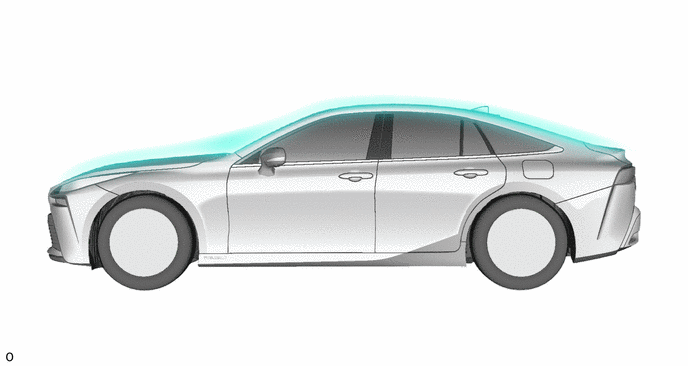
A cabin silhouette integrated with the spoiler for a design that runs continuously and cleanly to the rear.
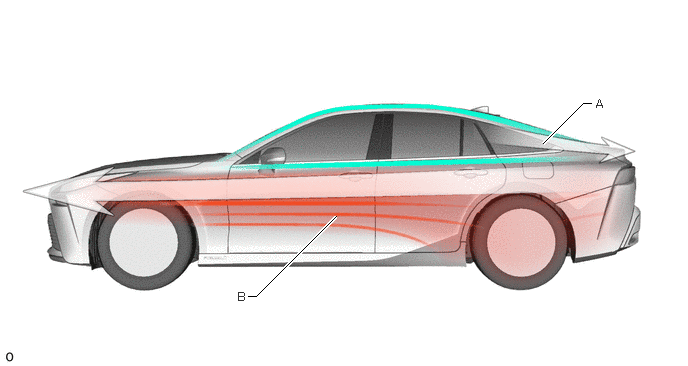
The rear spoiler is fused with the rear end of the cabin, achieving an uninterrupted cabin silhouette that flows to the rear (A in illustration).
A dynamic torso that runs from the rear tires to the front
The cylinder-shaped door cross sections narrow boldly from the rear tires to the front, in pursuit of a dynamic feel for a new FR vehicle design that overflows with dynamic variation while maintaining an underlying horizontal design (B in illustration).
A wide stance with a low center of gravity for both the front and rear surfaces
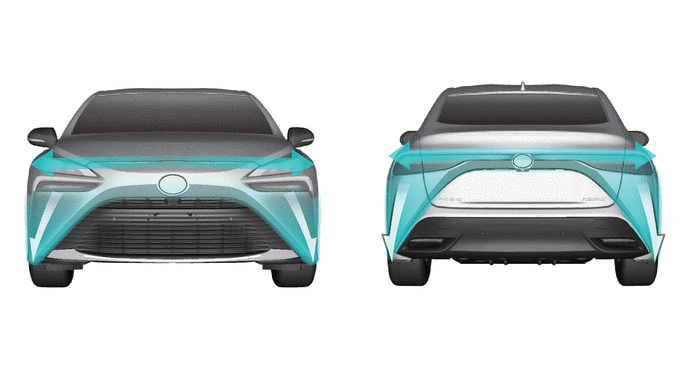
A powerful, wide and stable stance
The overall design of the body has been made uniform with a strong stance that straddles on the ground with boldly protruding solid corners at both the front and rear.
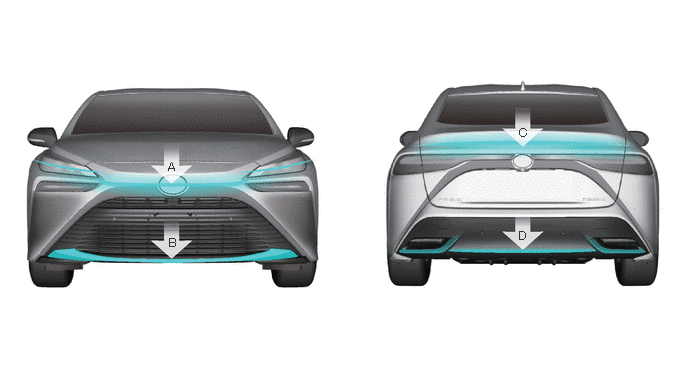
Design elements provide a sense of a low center of gravity
The nose height and emblem are placed below "eye" (headlight) level and the center of gravity of the "face" of the vehicle is sunk down to achieve a lower center of gravity (A in illustration). The plated molding located below the lower edge further enhances the low stance of the vehicle (B in illustration).
The feeling of a high center of gravity of the under body is suppressed by incorporating the spoiler into the cabin and clearly showing its boundary between the under body, even with a higher rear end (C in illustration). The oil cooler openings are positioned on either side of the lower edge of the bumper, and a spoiler shape that receives light is provided in the center, in order to draw attention downward (D in illustration).
From a linear design to a solid design
The previous model of MIRAI expressed its uniqueness as an FCV with its unique character line and rectangular shape. The new MIRAI expresses its uniqueness with a solid dynamic feel achieved by accenting its proportions and cross sections.
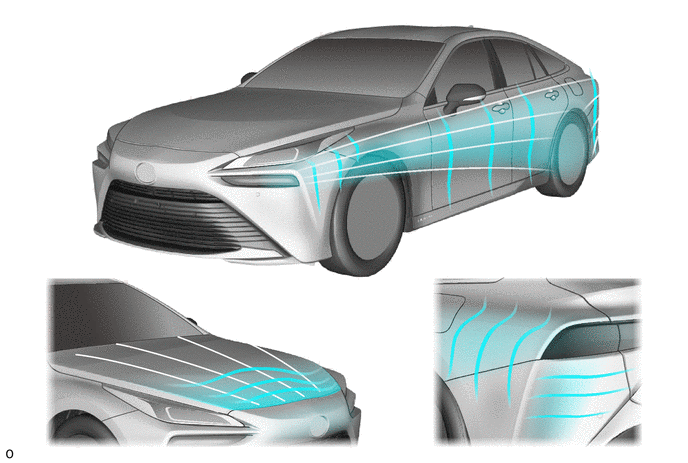
Structure that takes in the flow of air
Smooth side structure with little unevenness designed to prevent the obstruction of airflow
Flat surfaces are provided to the front of the front and rear tires to rectify airflow, helping improve aerodynamic characteristics.
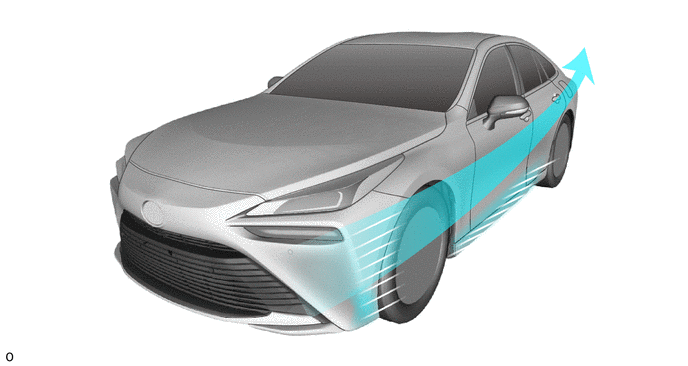
The center silhouette, narrowing of the side surfaces and structure on the lower edge of the rear bumper guide passing air into proper convergence
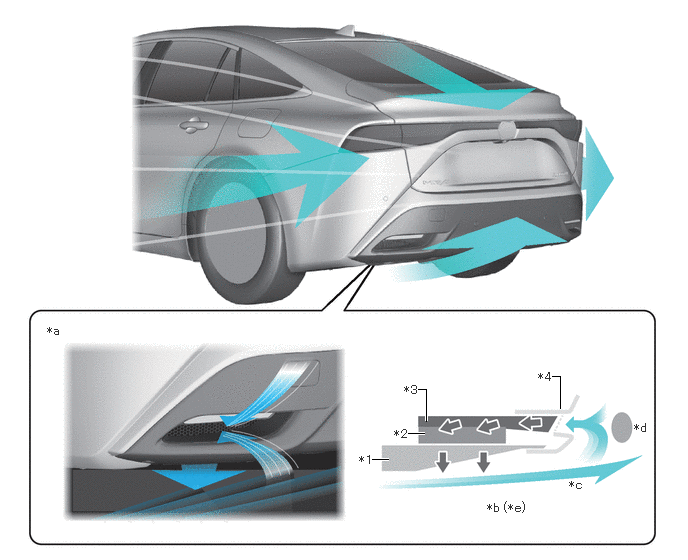
| *1 | Under Cover | *2 | Oil Cooler |
| *3 | Intake Duct | *4 | Bumper |
| *a | Oil cooler openings characterize the rear | *b | Airflow Image |
| *c | Airflow beneath Floor | *d | Negative Pressure |
| *e | Air flowing beneath the floor is pushed from the rear into the oil coolers due to the difference in negative pressure, and exits downward | - | - |
Headlight
Headlight design goals
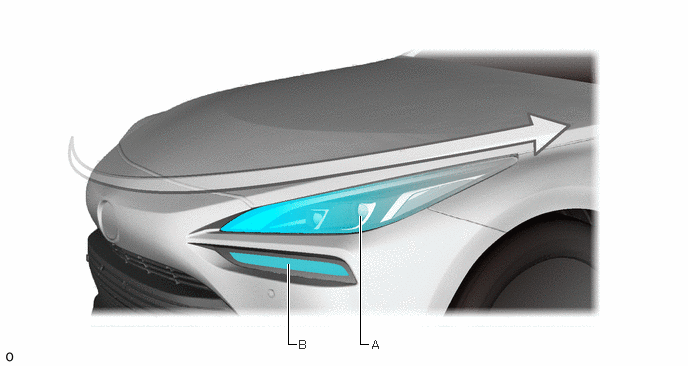
A unique dual-level structure is used, with Toyota's largest class headlights forming sharp, long and thin shapes that seem to flow from the front to the sides on the upper half (A in illustration), and thin-slitted turn indicators that appear wide on the lower half (B in illustration).
Without excessive ornamentation on the extensions, the symbolic characteristics of the daytime running lights that run continuously to the fender (*a in illustration) and L-shaped plating (*b in illustration) result in a simple graphic structure that is recognizable even from far away.
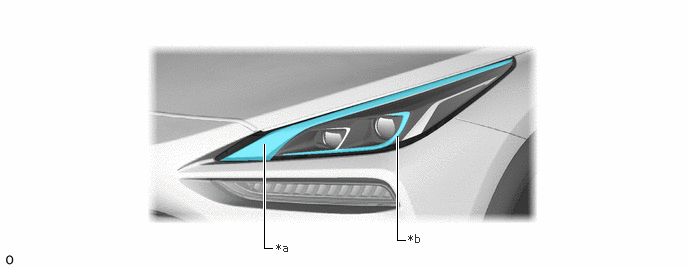
| *a | Long Daytime Running Light Extends to the Fender | *b | L-shaped Plating |
Specification differences
Models with Twin Beam Headlight
The 2-bulb lights are given similar shapes and decorated with L-shaped plating on the outside, for a simple symbolic characteristic.
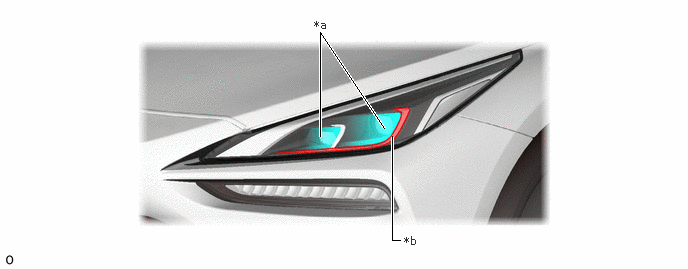
| *a | 2-bulb Light | *b | L-shaped Plating |
Models with Single Beam Headlight
The 1-bulb light is given a cranked edging for a striking appearance. The horizontally based heat sink design is arranged to emphasize a sense of movement flowing to the side and a feeling of depth.
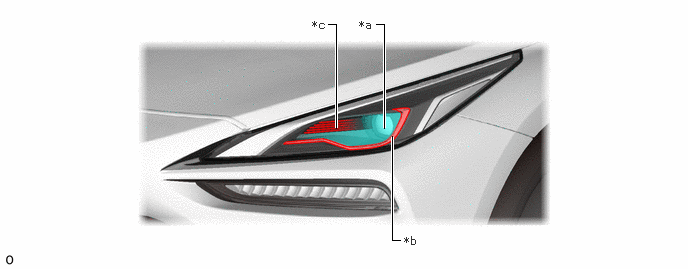
| *a | 1-bulb Light | *b | Cranked Edging |
| *c | Heat Sink | - | - |
Rear combination light
Rear combination light design goals
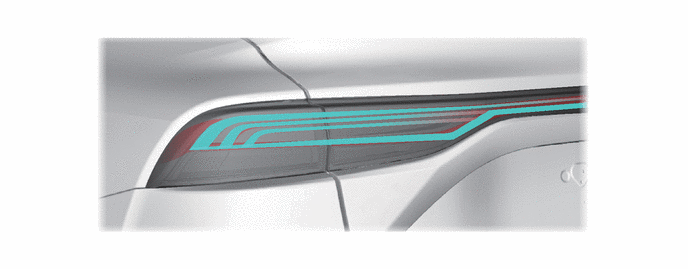
Thin rear combination lights form a horizontal bar that straddles the emblem. The brightness of the lower half containing the rear turn signal lights and back-up lights is reduced to emphasize the thinness of the red lens on the upper half and provide a innovate feel.
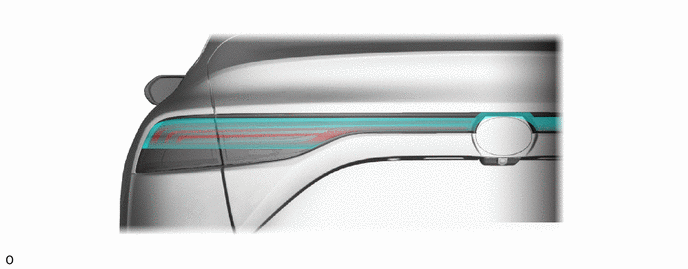
The 3 gradation lines are connected in a single stroke to provide a high quality feel and sense of uniqueness.