SEAT SEAT ASSEMBLY DETAILS FRONT SEAT
CONSTRUCTION
Front Seat Frame
The front seatback frame is made a panel type and the front seat rail is installed to the body, achieving weight reduction.
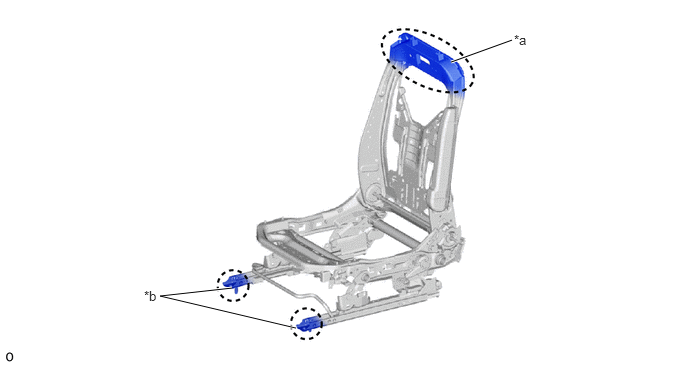
| *a | Panel Type Front Seatback Frame | *b | Directly Installed Front Seat Rail |
The seatback has been made thinner to enlarge the leg space for the rear seat passengers.
Front Seat Cushion and Front Seatback Pad
The urethane pad thickness is optimized and the lifter rod position is moved forward, allowing for a superior fit between the front seat cushion and the bottom of the occupant.
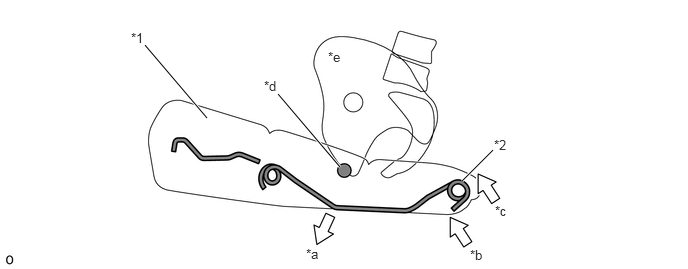
| *1 | Front Seat Cushion Pad | *2 | Lifter Rod |
| *a | Urethane Pad Thickness Increased Below Hip Bone | *b | Urethane Pad Thickness Decreased Behind Bottom |
| *c | Lifter Rod Position Moved Forward | *d | Hip Bone |
| *e | Pelvis | - | - |
The front seatback spring position is moved backward and the bottom edge of the front seatback spring and rear edge of the front seat cushion spring are made highly rigid, achieving a driving posture that reduces driver fatigue.
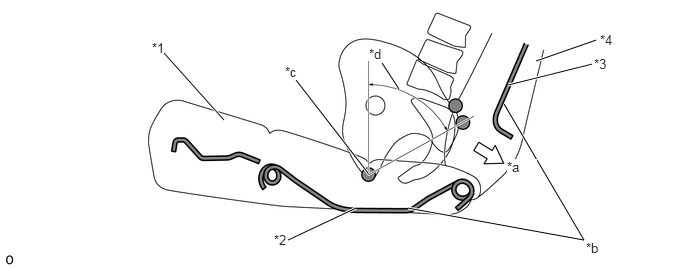
| *1 | Front Seat Cushion Pad | *2 | Front Seat Cushion Spring |
| *3 | Front Seatback Spring | *4 | Front Seatback Pad |
| *a | Front Seatback Spring Moved Backward | *b | High Rigidity Front Seat Cushion Spring Rear Edge and High Rigidity Front Seatback Spring Bottom Edge |
| *c | Hip Bone (Pelvis Center of Rotation) | *d | Pelvic Angle |
Front Seat Headrest
A passive headrest is used for the front seats. In the event of a rear collision, the occupant's back sinks into the backseat. At the same time, the passive headrest holds the head and back to decrease the impact.
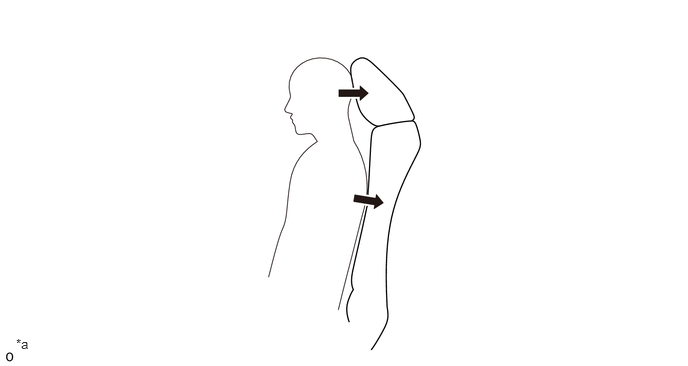
| *a | The illustration shown is examples only. | - | - |