HEATING / AIR CONDITIONING AIR CONDITIONING SYSTEM DETAILS SMOG VENTILATION SENSOR
CONSTRUCTION
The sensor for automatic air recirculation control (smoke sensor) is secured on the microfilter case.
The smoke sensor evaluates the concentration of carbon monoxide and nitrogen oxides in the intake fresh air. In automatic mode, if the smoke sensor detects an exhaust gas value that is too high, the system automatically switches to recirculation mode via the air conditioning amplifier assembly.
Because fresh air is not supplied, recirculation mode can only be used for a limited period of time. When the engine is started and the AUC function is switched on, fresh air is always selected for a few seconds (approximately 40 seconds) due to the warm-up phase of the smoke sensor.
The smoke sensor is supplied with voltage when the PAD mode is active. The sensor element requires an operating temperature of approximately 300°C. The electronics in the smoke sensor control the intermittent operation of the heater voltage. (Varies depending on the nominal and actual temperatures.) The smoke sensor reaches operational readiness after approx. 30 seconds, and responds to ambient air changes.
The smoke sensor converts the detected air quality (also referred to as air grade) into an electrical signal. To simplify processing of this information, the air quality is classified into 10 stages:
Stages 0 to 10 (clean to severely contaminated)
The smoke sensor transmits the corresponding stage as a pulse-width modulated signal to the main body ECU (multiplex network body ECU). The main body ECU (multiplex network body ECU) transmits the digital signal on the CAN bus to the air conditioning amplifier assembly.
The information is updated every second according to the internal measuring interval.
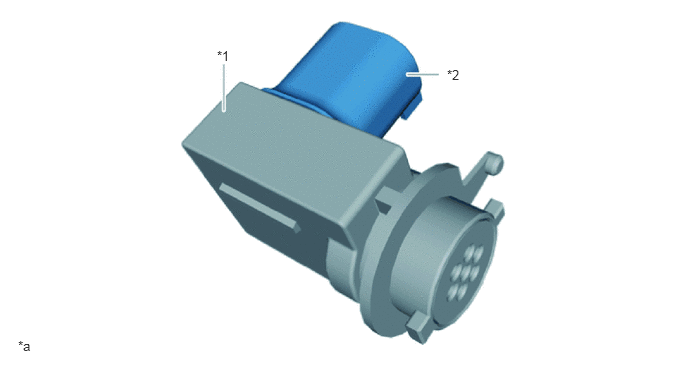
| *1 | Smoke Sensor | *2 | 3-pin Plug Connection |
| *a | Illustration shows a representative example. | - | - |