B48 INTAKE / EXHAUST INTAKE SYSTEM INSPECTION
CAUTION / NOTICE / HINT
Typical turbocharger sub-assembly noise is particularly evident when powerful load reversals take place. If the noise occurs in other operating modes, it may be that the turbocharger sub-assembly is not the only cause of the noise.
PROCEDURE

 1. AIR INTAKE DUCT LEAK
In the event of an air intake duct leak the sound of the operating turbocharger sub-assembly, which is normally dampened by the intake silencer, is easier to hear. The amount of noise that is generated depends on the size of the leak.
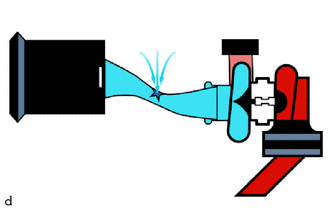
This defect can allow unfiltered air to enter the compressor and cause foreign body damage or vane erosion.
Air intake duct leak.
2. CHARGE AIR DUCT AND CHARGE AIR COOLER LEAK
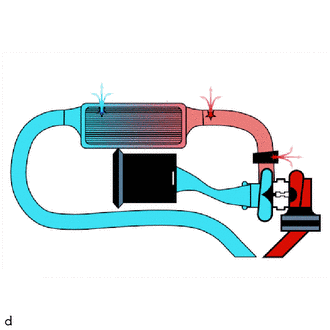
A leak in the charge air duct generates a loud hissing noise or high-pitched whistling noise, which increases together with the turbocharger sub-assembly speed and charging pressure.
Charge air duct leaks
3. EXHAUST LEAKAGE
An exhaust leak at the exhaust manifold or the exhaust gas recirculation pipes (e.g. because of a faulty gasket or distortion) almost always leads to a high-frequency whistling noise, which is often mistakenly thought to be turbocharger sub-assembly noise.
4. FAULT CAUSES ON THE TURBOCHARGER SUB-ASSEMBLY
5. IMBALANCE CAUSED BY FOREIGN BODY DAMAGE
Because of the fast turbocharger sub-assembly rotating speed, even small particles can damage the compressor or turbine wheel. The imbalance resulting from the damage leads to out-of-balance howling. Out-of-balance howling mostly occurs when the speed is quickly reduced after pressing on the accelerator.