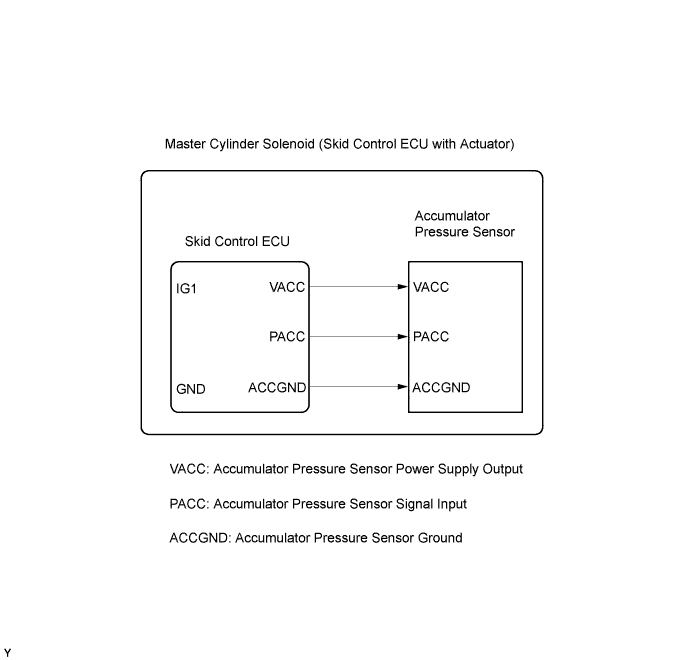
DTC C1256 Accumulator Low Pressure |
| DTC No. | DTC Detecting Condition | Trouble Areas |
| C1256 | Fluid pressure inside the accumulator drops below the specification value. |
|
| 1.RECONFIRM DTC |
Clear the DTCs (Click here).
Turn the ignition switch to OFF.
Depress the brake pedal more than 20 times.
Turn the ignition switch to the ON position.
Wait for 99 seconds.
Check if the same DTCs are recorded.
| Result | Proceed to |
| DTC output | A |
| DTC not output | B |
|
| ||||
| A | |
 |
| 2.CHECK HYDRAULIC CIRCUIT |
Perform hydraulic brake booster on-vehicle inspection (Click here).
|
| ||||
| OK | |
|
| 3.READ VALUE USING DATA LIST (ACCUMULATOR SENSOR) |
Connect Techstream to the DLC3.
Turn the ignition switch to the ON position.
Turn Techstream ON.
Select the "Data List" mode on the Techstream.
| Tester Display | Measurement Item / Range | Normal Condition | Diagnostic Note |
| Accumulator Sensor | Accumulator pressure sensor reading / min.: 0 V, max.: 5 V | 3.58 to 5 V | If value constant regardless of pump operation, accumulator pressure sensor malfunction suspected. |
Check that the accumulator's output value is in the Normal Condition range.
|
| ||||
| OK | |
|
| 4.RECONFIRM DTC |
Clear the DTCs (Click here).
Check if the same DTCs are recorded.
| Result | Proceed to |
| DTC output | A |
| DTC not output | B |
|
| ||||
| A | ||
 | ||
| ||
