EXTERIOR PANELS / TRIM BODY STRUCTURE DETAILS BODY SHELL
CONSTRUCTION
The structure of the front bumper reinforcement has been formed into a B-shaped cross section to reduce the number of reinforcement materials while the strength is maintained. In addition, an open cross sectional shape is used on the radiator support, reducing weight. Furthermore, the front side member and bumper arm has been made as a single unit to eliminate connecting components, achieving a lighter weight.
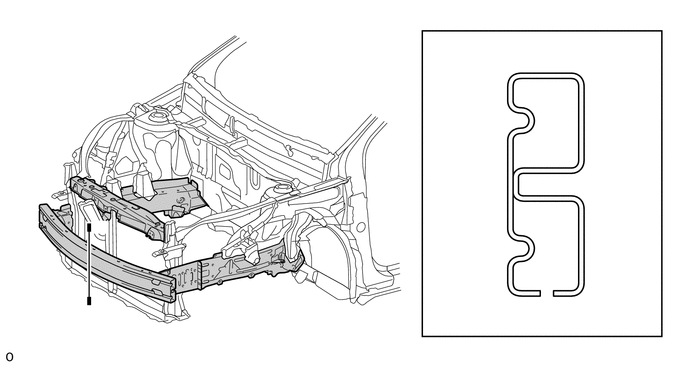
| *1 | Radiator Support | *2 | Front Bumper Reinforcement Sub-assembly |
| *3 | Front Side Member Extension | *4 | Front Side Member Sub-assembly |
| *a | A-A Cross Section | - | - |
Sufficient rigidity has been ensured by using the outer cowl top panel as a framework cross member to smoothly connect the left and right front suspension towers. In this way, good driving stability has been achieved.
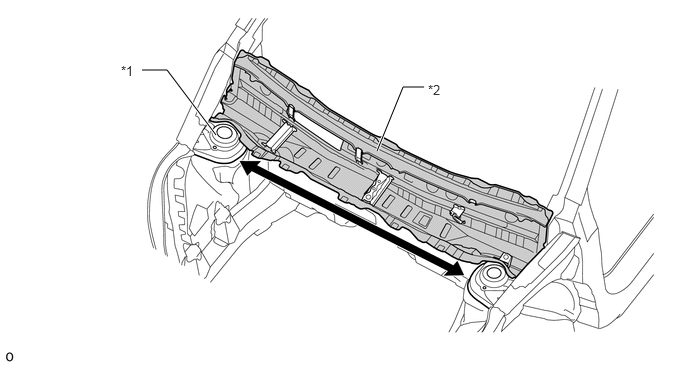
| *1 | Front Spring Support Plate | *2 | Inner Cowl Top Panel |
The thickness of the dash panel and front spring support plates has been increased to enhance the body rigidity, contributing to the maneuvering stability.
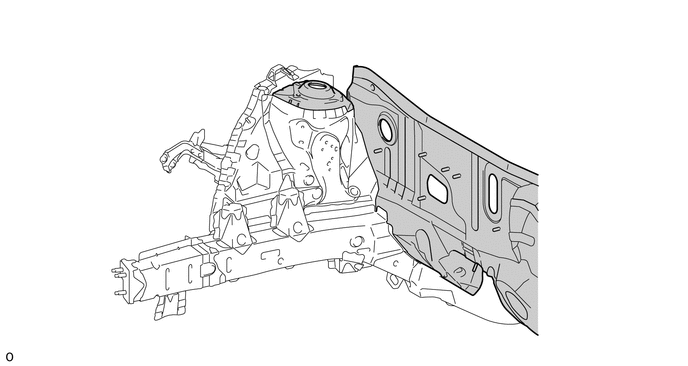
| *1 | Front Spring Support Plate | *2 | Dash Panel Sub-assembly |
Three enlarged braces, one on the center of the floor and on each area where the rear suspensions are mounted, to enhance the whole body torsional rigidity, contributing to the maneuvering stability.
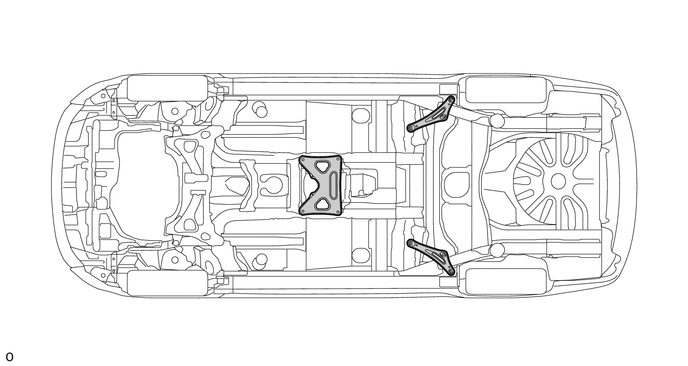
| *1 | Center Brace | *2 | Brace |
The thickness of the strainer panels and upper back panel has been increased. Furthermore, braces have been added. As a result, the rigidity against impacts coming from the suspensions has been further enhanced.
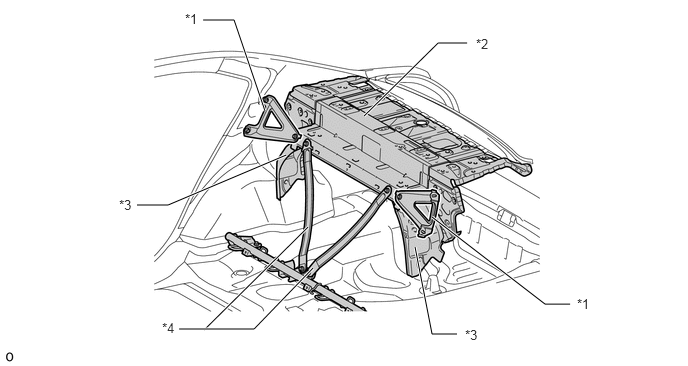
| *1 | Brace | *2 | Upper Back Panel |
| *3 | Strainer Panel | *4 | Room Partition Panel |