EXTERIOR PANELS / TRIM BODY STRUCTURE GENERAL GENERAL
OUTLINE
Safety Features
The impact absorbing structure help reduce cabin deformation by effectively absorbing the impact energy in the event of a front or side collision. This provides high performance occupant protection.
Aerodynamics
Various types of airflow routing parts that control airflow are provided in order to provide excellent aerodynamic performance.
Lightweight and Highly Rigid Body
Using high strength steel sheet and ultra high strength steel sheet ensures a highly rigid body while maintaining a lightweight structure.
Rust-resistant Body
Rust-resistant performance is enhanced by extensive use of anti-corrosion steel sheet, as well as by an anti-corrosion treatment that includes the application of anti-rust wax, sealer and anti-chipping paint to easily corroded parts such as the hood and rocker panel.
Sound Absorbing and Vibration Damping Material
Effective application of vibration damping and noise suppressant materials reduces engine, wind and road noise.
Body Shell
By optimizing the frame joint structure and the positioning of the reinforcement members, the vehicle's rigidity is ensured.
MAIN FEATURES
Exterior Design
Aim of Exterior Design
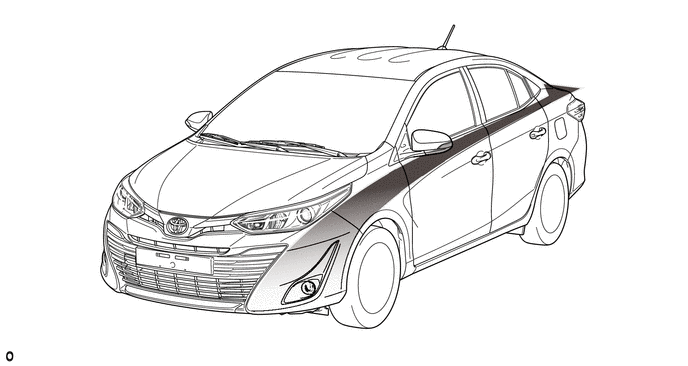
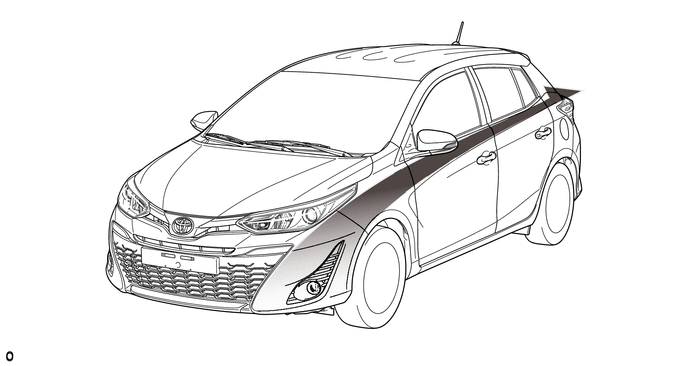
A sense of motion rushing upward from the front to the sides creates an emotional image.
Front Design
The structure of the headlights continuous with the grille evokes a feeling of advanced technology.
The lower bumper is a catamaran shape emphasizing the body color, enhancing the excellent stance and continuity, and giving an unconstrained impression beyond the actual dimensions in order to create an emotional image.
The lower No. 1 radiator grille of the sedan uses a lateral motif to express a feeling of wideness, while the hatchback uses a mesh type to express sportiness.
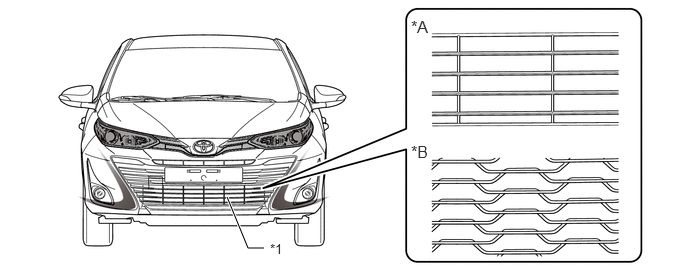
| *A | For Sedan Models | *B | For Hatchback Models |
| *1 | Lower No.1 Radiator Grille | - | - |
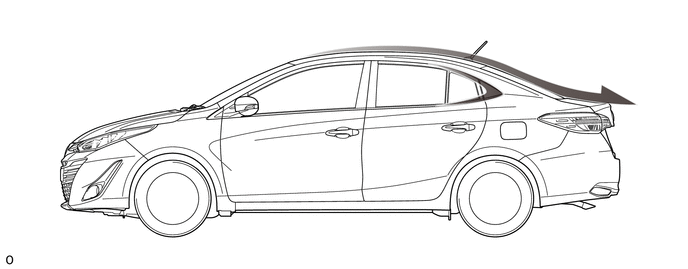
Side Design (For Sedan Models)
The silhouette flowing from the cabin toward the trunk gives an unconstrained impression.
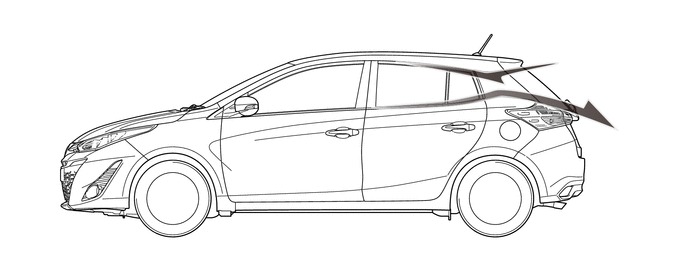
Side Design (For Hatchback Models)
The rear end of the beltline is smooth, giving the same unconstrained impression as the sedan.
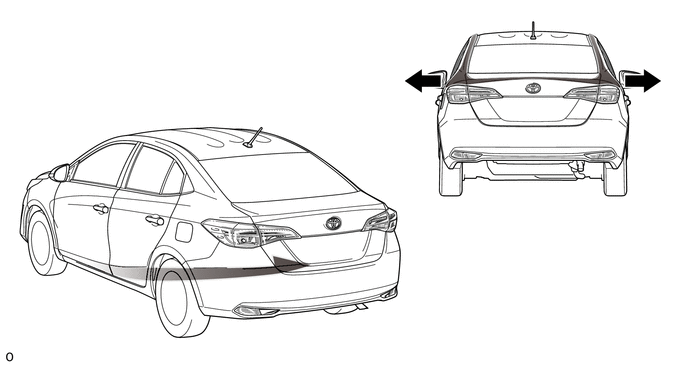
Rear Design (For Sedan Models)
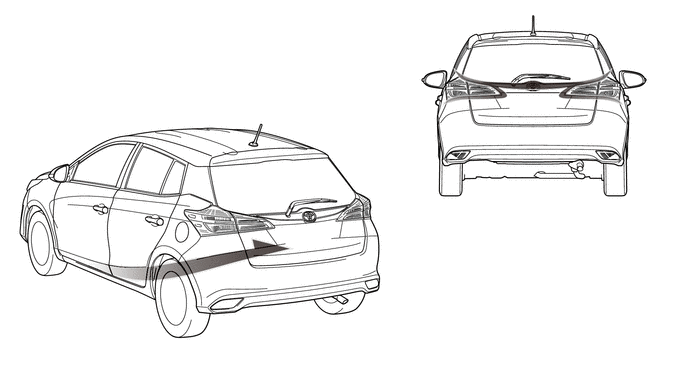
An emotional image is created by the character connecting the sides to the rear, and the rear combination lights that wrap around to the sides.
By moving the cabin roots outward at the rear, enlarging the back window, and adding a rear light to the luggage area, feelings of wideness and advanced technology are created.
Rear Design (For Hatchback Models)
An emotional image is created by the character connecting the sides to the rear, and the rear combination lights that wrap around to the sides.
The rear light located below the back door glass and the black garnishes give an impression of advanced technology and a low center of gravity.