FUEL
FILTER AND PUMP REPLACEMENT
| 1. |
Reduce the internal pressure of the fuel
lines and hoses by completing the following operations.
| A. |
After removing the rear seat cushion,
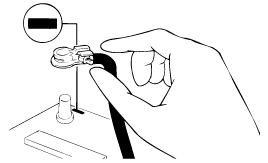
disconnect the fuel pump
harness. |
| B. |
Start the engine. Allow it to stop by
itself, then turn the ignition switch
OFF. |
| C. |
Disconnect the battery negative (-)
terminal. |
| D. |
Connect the fuel pump harness
connector. |
|
| 2. |
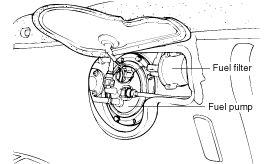
Remove the eye bolts while holding the fuel
filter nuts securely.
|
Cover the fuel filter with a shop
towel to avoid residual gasoline from
splashing. | |
| 3. |
Remove the fuel filter mounting bolts, then
remove the fuel filter from the fuel filter
clamp. |
| 4. |
After replacing the fuel filter, check for
fuel leaks.
|
FUEL
SENDER REPLACEMENT
| 1. |
Remove the fuel tank cap to lower the fuel
tank's internal pressure. |
| 2. |
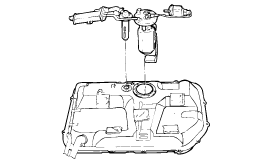
Remove the fuel sender mounting screws, then
remove the fuel sender from the fuel tank.
|
SERVICE
ADJUSTMENT PROCEDURES
|
Before adjusting, check that the spark
plugs, injectors, idle speed control actuator (ISC actuator),
compression etc. are normal. |
CHECK
CONDITIONS
| •
|
Engine coolant temperature is 80 to 95°C
(176 to 205°F). |
| •
|
Lights, electric cooling fan and all
accessories are off. |
| •
|
Transaxle is in neutral ("P" or "N" range
for A/T vehicles). |
| •
|
Steering wheel is in a straight forward
position (Vehicles with power
steering). |
| 1. |
Install a tachometer to the primary coil
side or connect the scan tool to the data link
connector. |
| 2. |
Start and run the engine at curb idle
speed. |
| 3. |
Run the engine for more than 5 seconds at an
engine speed of 2,000 to 3,000 rpm. Then, run the engine at idle for
2 minutes. |
| 4. |
Read the idling rpm.
Idle
speed
SOHC : 800 ± 100
rpm
DOHC : 750 ± 100
rpm
|
|
FUEL
PUMP OPERATING CHECK
| 1. |
Turn the ignition switch
OFF. |
| 2. |
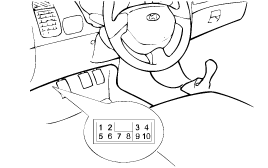
Apply battery voltage to the fuel pump drive
connector to check that the pump operates.
|
The fuel pump is an in-tank type and
its operation is hard to hear without removing the fuel tank
cap.
| |
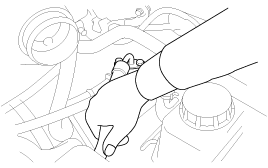
| 3. |
Pinch the hose to check that fuel pressure
is felt.
|
FUEL
PRESSURE TEST
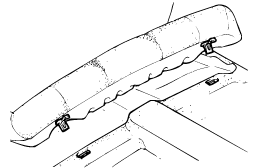
| 1. |
Press the two taps under the rear seat and
raise the seat, then detach the inspection panel of the fuel
pump.
|
| 2. |
To reduce the internal pressure of the fuel
lines and hoses, first start the engine with the fuel pump
disconnected and wait until it stops by itself.
|
Be sure to reduce the fuel pressure
before disconnecting the fuel main pipe and hose, otherwise
fuel will spill out.
| |
| 3. |
Disconnect the battery negative (-) terminal
and then connect the fuel pump harness
connector. |
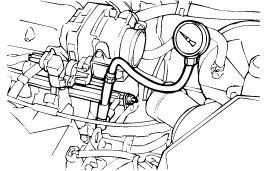
| 4. |
Using the fuel pressure gauge adapter
(09353-24000, 09353-24100, 09353-38000), install the fuel-pressure
gauge to the fuel rail. Tighten the bolt to the specified
torque.
Tightening
Torque
Fuel pressure gauge to fuel filter
:
25 ~ 35 Nm (250 ~ 350 kg·cm, 18 ~ 26
lb·ft)
| |
| 5. |
Connect the battery's negative (-)
terminal. |
| 6. |
Apply battery voltage to the terminal for
the pump drive and activate the fuel pump. Then, with fuel pressure
applied, check that there is no fuel leak from the pressure gauge or
connections. |
| 7. |
Start the engine and let it
idle. |
| 8. |
Measure the fuel pressure.
350 kPa (3.5 kg/cm², 49.8
psi)
| |
| 9. |
If the result of the measurements made in
steps (7) and (8) are not within the standard value, use the table
below to determine the probable cause, and make the necessary
repairs.
Condition
|
Probable
cause
|
Remedy
|
Fuel pressure too low
|
| 2) |
Fuel leak on the return side,
caused by poor seating of the fuel-pressure
regulator. | |
|
Fuel pressure too high
|
| 1) |
Sticking fuel-pressure
regulator. |
| 2) |
Clogged or bent fuel return hose
or pipe. | |
| 2) |
Repair or replace hose or
pipe. | |
|
| 10. |
Stop the engine and check for a change in
the fuel pressure gauge reading, which should hold for approximately
5 minutes. If the gauge indication drops, observe the rate of drop.
Determine and remove the causes according to the following
table.
Condition
|
Probable
cause
|
Remedy
|
Fuel pressure drops slowly after engine is
stopped
|
|
|
Fuel pressure drops immediately after engine is
stopped
|
| 1) |
The check valve within the fuel
pump is open. | |
|
|
| 11. |
Reduce the pressure in the fuel
line. |
| 12. |
Disconnect the hose and the
gauge.
|
Cover the hose connection with a shop
towel to prevent splashing of fuel caused by residual fuel
pressure in the fuel
line. | |
| 13. |
Replace the O-ring at the end of the
hose. |
| 14. |
Connect the fuel hose to the delivery pipe
and tighten with the specified
torque. |
| 15. |
Check for fuel
leaks. |

