| DISASSEMBLY |
| 1. |
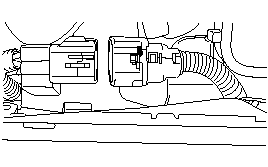
Disconnect the radiator fan motor
connector.
|
| 2. |
Set the temperature of the heater control to
the hot position. |
| 3. |
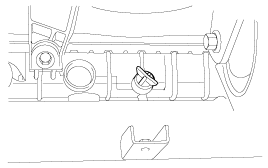
Loosen the radiator drain plug to drain
coolant.
|
| 4. |
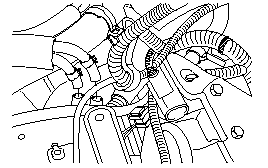
Disconnect the upper and lower hose and
overflow tube. |
| 5. |
For vehicles with automatic transmission,
disconnect the oil cooler hoses from the automatic
transmission.
|

| 6. |
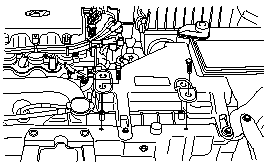
Remove the radiator mounting
bolts.
|
| 7. |
Remove the radiator together with the fan
motor. |
| 8. |
Remove the fan motor from the
radiator. |
| INSPECTION |
| 1. |
Check the radiator for bent, broken or plugged
fins. |
| 2. |
Check the radiator for corrosion, damage, rust
or scale. |
| 3. |
Check the radiator hoses for cracks, damage or
deterioration. |
| 4. |
Check the reservoir tank for
damage. |
| 5. |
Check the radiator cap spring for
damage. |
| 6. |
Test the pressure of the cap using a cooling
system checker. |
| 7. |
Check the radiator cap seal for cracks or
damage. |
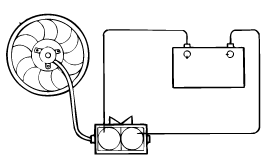
RADIATOR FAN MOTOR
| 1. |
Check that the radiator fan rotates when the
battery voltage is applied to the terminals.
|
| 2. |
Check that abnormal noises are not produced
while the motor is turning. |
| REASSEMBLY |
| 1. |
Fill the radiator and reservoir tank with
clean coolant mixture. |
| 2. |
Run the engine until the thermostat opens, and
then stop the engine. |
| 3. |
Remove the radiator cap, and add coolant up to
the filler neck of the radiator, and then fill the reservoir tank to
the upper level. Replace the radiator
cap. |
| 4. |
Check that there are no leaks from the
radiator, hoses or
connections. |