| COMPONENT LOCATION |
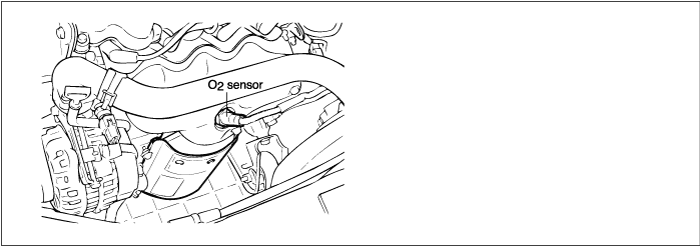
| GENERAL DESCTIPTION |
| DTC DESCRIPTION |
| DTC DETECTING CONDITION |
| Item |
Detecting Condition |
Possible cause |
| Monitoring Strategy |
● Fuel trim limit |
● Faulty ignition
system. ● EVAP PCSV malfunction. ● Faulty fuel injectors. ● Leak in exhaust system. ● Faulty MAP,TPS,ECTS. ● Faulty front HO2S. ● Faulty PCM |
| Threshold value |
● Multiplicative long term value 1,2 : <
0.77 | |
| Enable Conditions |
● Coolant temperature > 70 degC(158
°F) ● Intake air temperature < 80 degC(176 °F) ● Throttle angle < 60 % ● Integrated air mass > 10 grams ● Closed loop control enabled ● No transient control phase ● No canister purge phase ● Engine load1 30-55 % ● Engine load2 > 70 % | |
| Diagnostic Time |
● 25 sec | |
| Fail Safe |
● None |
| MONITOR DTC STATUS |
| 1. |
Connect scantool to Data Link
Connector(DLC). |
| 2. |
Warm up the engine to normal operating
temperature. |
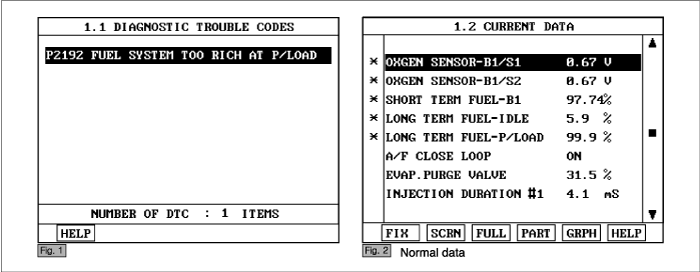
| 3. |
Monitor the "FR HO2S signal" parameter on
the scantool.
Service standard
For front HO2S
-When decelerating suddeniy from 4000rpm :
200mV or less
-When engine is suddenly raced :
600~1000mV
-1500rpm : The fluctuation between 400mV or
less and 600~1000mV |
| 4. |
Is parameter displayed within
specifications?
▶ Fault is intermittent caused by poor
contact in the sensor’s and/or PCM’s connector or was repaired and
PCM memory was not cleared. Thoroughly check connectors for
looseness, poor connection, bending, corrosion,
contamination,deterioration, or damage. Repair or replace as
necessary and then go to "Verification of Vehicle Repair"
procedure.
▶ Go to "W/Harness Inspection"
procedure |


| TERMINAL & CONNECTOR INSPECTION |
| 1. |
Many malfunctions in the electrical system
are caused by poor harness and terminals. Faults can also be caused
by interference from other electrical systems, and mechanical or
chemical damage. |
| 2. |
Thoroughly check connectors for looseness,
poor connection, bending, corrosion, contamination,deterioration, or
damage. |
| 3. |
Has a problem been found?
▶ Repair as necessary and go to
"Verification of vehicle Repair" procedure.
▶ Go to "System inspection"
procedure. |
| SYSTEM INSPECTION |
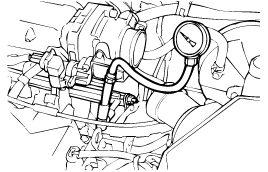
| 1. |
Check for fuel pressure
|
| 2. |
Check for Exhaust system
|
| 3. |
Check for Intake system
Check intake system for leaks, cracks, loose
connection as follwing items :
|
| COMPONENT INSPECTION |
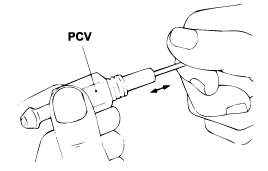
| 1. |
Check for vacuum and PCV
Check for any split, disconnected or
perforated vacuum hoses. Also, check PCV valve for proper
operation.
|
| 2. |
Check for Fuel injector
|
| VERIFICATION OF VEHICLE REPAIR |
| 1. |
Monitor and record the Freeze Frame Data for
the Diagnostic Trouble Code (DTC) which has been
diagnosed. |
| 2. |
Using a Scantool, Clear the
DTCs. |
| 3. |
Operate the vehicle within conditions noted
in the freeze frame data or enable
conditions. |
| 4. |
Monitor that all rediness test have been
verified as "Complete" |
| 5. |
Are any DTCs present ?
▶ Go to the applicable troubleshooting
procedure.
▶ System is performing to specification at
this
time. |