| ENGINE COOLANT REFILLING AND BLEEDING |
Never remove the radiator cap when the
engine is hot.
Serious scalding could be caused by hot
fluid under high pressure escaping from the
radiator. |

When pouring engine coolant, be sure to shut
the relay box lid and not to let coolant spill on the electrical
parts of the paint. If any coolant spills, rinse it off
immediately. |

| 1. |
Slide the heater temperature control lever
to maximum heat. Make sure the engine and radiator are cool to the
touch. |
| 2. |
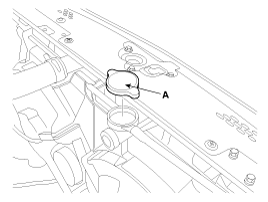
Remove the radiator cap(A).
|
| 3. |
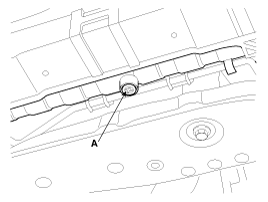
Loosen the drain plug(A), and drain the
coolant.
|
| 4. |
Tighten the radiator drain plug(A)
securely. |
| 5. |
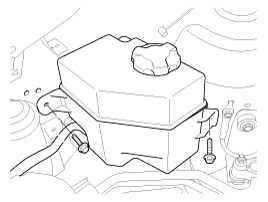
Remove the coolant reservoir tank. Drain the
coolant and reinstall the coolant reservoir tank. Fill the coolant
reservoir tank to the MAX mark with the coolant.
|
| 6. |
Fill the coolant into the radiator to the
base of filler neck. Gently squeeze the upper/lower hoses of
radiator so as to bleed air easily.
|

| 7. |
Start the engine and allow coolant to
circulates.
When the cooling fan operates and coolant
circulates, refill coolant through the radiator filler
neck. |
| 8. |
Repeat step 7 until the cooling fan cycles
on and off three to five times to sufficiently bleed air out of the
cooling system. |
| 9. |
Install the radiator cap and fill the
reservoir tank to the "MAX" line with
coolant. |
| 10. |
Run the vehicle under idle until the cooling
fan operates 2~3 times. |
| 11. |
Stop the engine and allow coolant to
cool. |
| 12. |
Repeat steps 6 to 11 until the coolant level
stays constant and all air is bleed out of the cooling
system.
|
RADIATOR
CAP TESTING
| 1. |
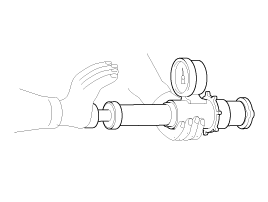
Remove the radiator cap, wet the seal with
coolant, then install it onto pressure tester.
|
| 2. |
Apply a pressure of 93.16 ~ 122.58kpa (0.95
~ 1.25kg/cm², 13.51 ~ 17.78psi) |
| 3. |
Check for a drop in
pressure. |
| 4. |
If the pressure drops, replace the
cap. |
RADIATOR
LEAKGE TEST
| 1. |
Wait until engine is cool, then carefully
remove the radiator cap and fill the radiator with engine coolant,
then install it on the pressure
tester. |
| 2. |
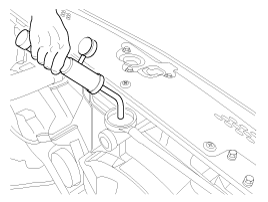
Apply a pressure tester to the radiator and
apply a pressure of 93.16 ~ 122.58kpa (0.95 ~ 1.25kg/cm², 13.51 ~
17.78psi).
|
| 3. |
Inspect for engine coolant leaks and a drop
in pressure. |
| 4. |
Remove the tester and reinstall the radiator
cap.
|