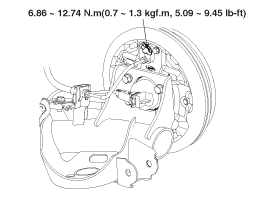
| Removal |
Front
| 1. |
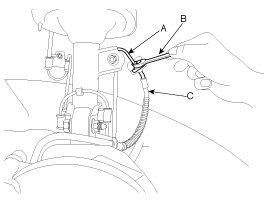
Disconnect the brake hose(C) from the brake
line(A) using a flare-nut wrench(B).
|
| 2. |
Remove the brake hose clip(A), and then remove
the brake hose(B).
|
| 3. |
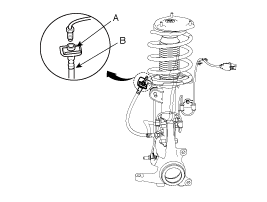
Remove the connector bolt from the caliper,
and disconnect the brake hose from the
caliper. |
Rear
| 1. |
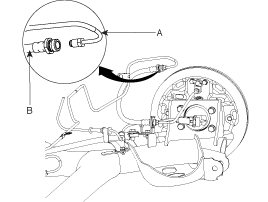
Disconnect the brake hose(B) from the brake
line(A) using a flare-nut.
|
| 2. |
Remove the brake hose(B) from the brake
line(C) using a flare-nut.
|
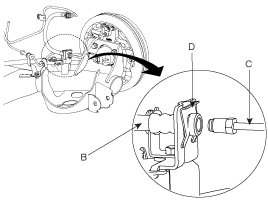
| 3. |
Remove the brake hose dlip(D), and the remove
the brake hose. |
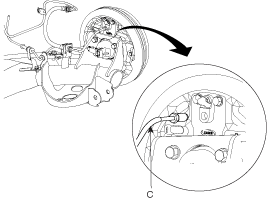
| 4. |
Disconnect the brake tube(C) from the drum
brake using a flare-nut.
|
| Installation |
Front
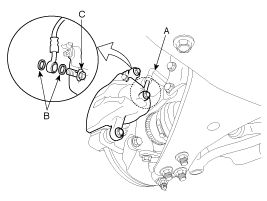
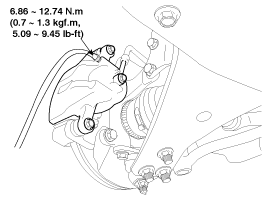
| 1. |
Install a brake hose(A) on the caliper with
tightening brake hose bolt(C) and washer(B).
|
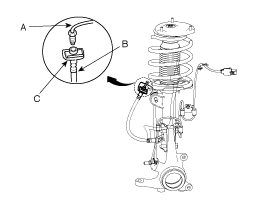
| 2. |
Install the brake hose clip(C) to the brake
hose bracket(B) , then install the brake hose(A).
|
| 3. |
Connect the brake hose to the brake
line. |
| 4. |
After installing the brake hose, bleed the
brake system.
|

Rear
| 1. |
Install a brake tube(C) on the drum brake
using a flare-nut.
|
| 2. |
Install the brake hose clip(D) to brake hose
bracket, the install the brake hose(B).
|
| 3. |
Connect the brake hose(B) to the brake line(A)
using a flare-nut. |
| 4. |
Connect the brake hose to the brake
line(A). |
| 5. |
After installing the brake hose, bleed the
brake system.
|
| Inspection |
| 1. |
Check the brake tubes for cracks, crimps and
corrosion. |
| 2. |
Check the brake hoses for cracks, damaged and
oil leakage. |
| 3. |
Check the brake tube flare nuts for damage and
oil leakage. |
| Brake System Bleeding |
|

| 1. |
Make sure the brake fluid level in the
reservoir is at the MAX (upper) level
line. |
| 2. |
Have someone slowly pump the brake pedal
several times, and then apply steady
pressure. |
| 3. |
Loosen the right-rear brake bleed screw to
allow air to escape from the system. Then tighten the bleed screw
securely. |
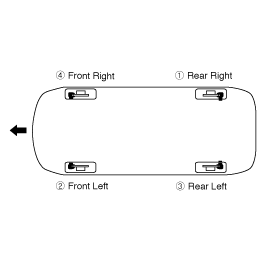
| 4. |
Repeat the procedure for each wheel in the
sequence shown below until air bubbles no longer appear in the
fluid. |
| 5. |
Refill the master cylinder reservoir to the
MAX (upper) level line.
|
| Front Disc Brake : |
| Rear Drum Brake : |