| Inspection |
| 1. |
Disconnect the vacuum hose from the throttle
body, and connect a vacuum pump to the vacuum
hose. |
| 2. |
Check the following points when the engine is
cold [engine coolant temperature 60°C(140°F) or below] and when it
is warm [engine coolant temperature 80°C(176°F) or
higher]. |
When Engine Is Cold
| Engine operating
condition |
Applied vacuum |
Result |
| Idling |
50 kPa (7.3 psi) |
Vacuum is held |
| 3,000
rpm |
When Engine Is Warm
| Engine operating
condition |
Applied vacuum |
Result |
| Idling |
50
kPa (7.3 psi) |
Vacuum is
held |
| Within 3
minutes after engine start at 3,000 rpm |
Try to
apply vacuum |
Vacuum is
released |
| After 3
minutes have passed after engine start at 3,000 rpm |
50
kPa (7.3 psi) |
Vacuum will
be held momentarily, after which, it will be
released |
Purge Control Solenoid Valve(PCSV)
Inspection
When disconnecting the vacuum hose, make an
identification mark on it so that it can be reconnected to its
original position. |

| 1. |
Disconnect the vacuum hose from the solenoid
valve. |
| 2. |
Detach the harness
connector. |
| 3. |
Connect a vacuum pump to the nipple to which
the red-striped vacuum hose was
connected. |
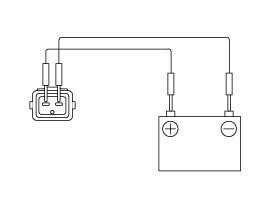
| 4. |
Apply vacuum and check when voltage is applied
to the PCSV and when the voltage is discontinued.
|
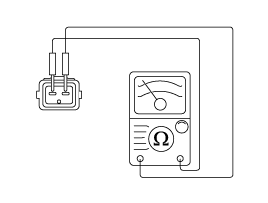
| 5. |
Measure the resistance between the terminals
of the solenoid valve.
|