| Towing |
If the vehicle needs
to be towed, call a professional towing service. Never tow vehicle with
just a rope or chain. It is very dangerous.
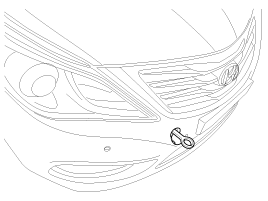
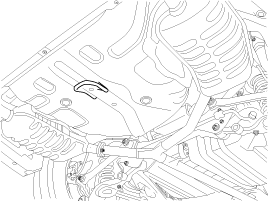
Emergency
Towing
There are three
popular methods of towing a vehicle :
| - |
The operator loads the vehicle on the back
of truck. This is best way of transporting the vehicle.
|
| - |
The tow truck uses two pivoting arms that go
under the tires of the driving axle and lift them off the ground.
The other two wheels remain on the ground.
|
| - |
The tow truck uses metal cables with hooks
on the ends. These hooks go around parts of the frame or suspension,
and the cables lift that end of the vehicle off the ground. The
vehicle's suspension and body can be seriously damaged if this
method of towing is attempted. |
If the vehicle cannot
be transported by flat-bed, should be towed with the wheels of the driving
axle off the ground and do the following :
Manual Transaxle
| • |
Release the parking brake.
|
| • |
Shift the Transaxle to neutral
|
Automatic Transaxle
| • |
Release the parking brake.
|
| • |
Start the engine.
|
| • |
Shift to [D] position, then [N] position.
|
| • |
Turn off the
engine. |
|
