| COMPRESSOR OIL |
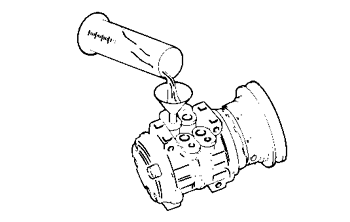
The oil used
to lubricate the compressor circulates in the system while the
compressor is operating. Whenever replacing any component of the system
or when a large amount of gas leakage occurs, add oil to maintain the
original total amount of oil.
|
Single :
140-160g |
HANDLING
OF OIL
| a. |
The oil should be free from moisture, dust,
metal filings, etc. |
| b. |
Do not mix
oils. |
| c. |
The moisture content in the oil increases
when exposed to air for prolonged periods. After use, seal the
container immediately. |
OIL
RETURN OPERATION
To check the
oil level or add oil, idle engine for 20-30 minutes and setting the
heater control set to maximum cooling and blower level, to return the
lubricant to compressor.
CHECKING
AND ADDING COMPRESSOR OIL
In order to
add oil to an operating compressor, check the compressor oil using
the following procedure:
| 1. |
Perform the oil return operation, stop the
engine, discharge the refrigerant, and dismantle the compressor
from vehicle. |
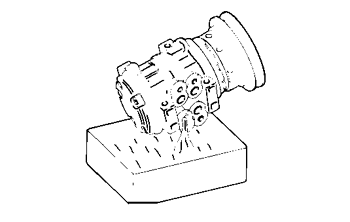
| 2. |
Discharge oil from the system line
outlet.
If compressor is cold, sometimes it can be
hard to drain the oil. Warm up the compressor (approx. 40–50°C)
to drain the oil.
|
| 3. |
Check the amount of the discharged oil. If
it is less than 70cc, it means there is a little leak of oil.
Perform the leakage test on each system connection, and repair
or replace faulty parts if
necessary. |
| 4. |
Check oil for contamination and set the oil
level in the following procedure:
|