| 1. |
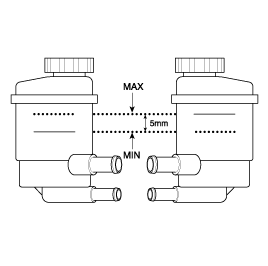
Fill the power steering fluid reservoir up
to the "MAX" position with specified
fluid. |
| 2. |
Jack up the front
wheels. |
| 3. |
Disconnect the ignition coil high tension
cable, and then, while operating the starter motor intermittently
(for 15 to 20 seconds), turn the steering wheel all the way to the
left and then to the right five or six times.
| a. |
When bleeding fluid, replenish with
the fluid so that the level does not fall below the bottom of
the filter. |
| b. |
If air bleeding is done while the
vehicle is idling, the air will be broken up and absorbed into
the fluid. Be sure to do the bleeding only while
cranking. | |
| 4. |
Connect the high tension cable, and then
start the engine (idling). |
| 5. |
Turn the steering wheel to the left and then
to the right, until there are no air bubbles in the oil
reservoir.
Do not hold the steering wheel turned all
the way to either side for more than ten
seconds. |
| 6. |
Confirm that the fluid is not milky and that
the level is between "MAX" and "MIN" mark on the
reservoir. |
| 7. |
Check that there is a little change in the
fluid level when the steering wheel is turned left and
right.
| a. |
If the fluid level varies 5mm (0.2
in.) or more, bleed the system
again. |
| b. |
If the fluid level suddenly rises
after stopping the engine, further bleeding is
required. |
| c. |
Incomplete bleeding will produce a
chattering sound in the pump and noise in the flow control
valve, and lead to decreased durability of the
pump. | |
|