| FUEL PRESSURE TEST |
| 1. |
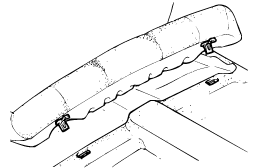
Press the two taps under the rear seat and
raise the seat, then detach the inspection panel of the fuel
pump.
|
| 2. |
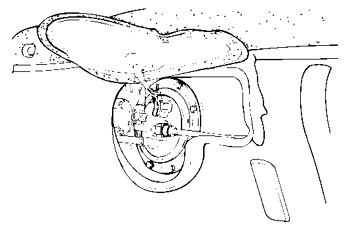
To reduce the internal pressure of the fuel
lines and hoses, first start the engine with the fuel pump
disconnected and wait until it stops by itself.
Be sure to reduce the fuel pressure before
disconnecting the fuel main pipe and hose, otherwise fuel will
spill out.
|
| 3. |
Disconnect the battery negative (-) terminal
and then connect the fuel pump harness
connector. |
| 4. |
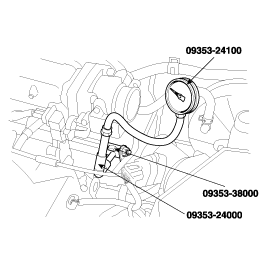
Using the fuel pressure gauge adapter
(09353--24000, 09353--24100, 09353--38000), install the
fuel-pressure gauge to the fuel delivery pipe. Tighten the bolt to
the specified torque. |
|
Tightening Torque
Fuel pressure gauge to fuel delivery
pipe:
25 - 35Nm (250 - 350 kg.cm, 18 - 26
lb.ft) |
| 5. |
Connect the battery's negative (-)
terminal. |
| 6. |
Apply battery voltage to the terminal for
the pump drive and activate the fuel pump. Then, with fuel pressure
applied, check that there is no fuel leak from the pressure gauge
or connections. |
| 7. |
Start the engine and let it
idle. |
| 8. |
Measure the fuel
pressure. |
|
Standard value : 350 kPa (3.5 kg/cm, 49.8
psi) |
| 9. |
If the result of the measurements made in
steps (7) and (8) are not within the standard value, use the table
below to determine the probable cause, and make the necessary
repairs. |
|
Condition |
Probable cause |
Remedy |
|
Fuel pressure too low |
a. Clogged fuel filter
b. Fuel leak on the fuel-pressure regulator
that is assembled on fuel pump, caused by poor seating of the
fuel-pressure regulator |
a. Replace fuel filter.
b. Repair the leak or replace the fuel
pump |
|
Fuel pressure too high |
a. Sticking fuel-pressure
regulator |
a. Repair the leak or replace the fuel
pump. |
| 10. |
Stop the engine and check for a change in
the fuel presure gauge reading, which should hold for approximately
5 minutes. If the gauge indication drops, observe the rate of drop.
Determine and remove the causes according to the following
table. |
|
Condition |
Probable cause |
Remedy |
|
Fuel pressure drops slowly after engine is
stopped. |
a. Injector leak. |
a. Replace injector. |
|
Fuel pressure drops immediately after the
engine is stopped. |
a. The check valve within the fuel pump is
open. |
a. Replace fuel
pump. |
| 11. |
Reduce the pressure in the fuel
line. |
| 12. |
Disconnect the hose and the
gauge. |
Cover the hose
connection with a shop towel to prevent splashing of fuel caused by
residual fuel pressure in the fuel line.
| 13. |
Replace the O-ring at the end of the
hose. |
| 14. |
Connect the fuel hose to the delivery pipe
and tighten to the specified
torque. |
| 15. |
Check for fuel
leaks. |