| INSPECTION |
When a fuse
is blown, there are two probable causes. The two causes can easily be
determined by a visual check after removing the fuses.
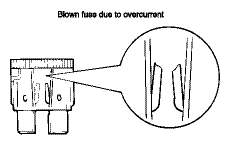
| 1. |
Fuse blown due to over-current.
Prior to replacing the fuse with a new one,
check the circuit for a short and the related parts for abnormal
conditions. Only after the correction of a short or replacement of
abnormal parts should a fuse with the same ampere rating be
installed.
|
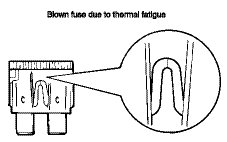
| 2. |
Fuse blown due to repeated on-off
current.
Normally, this type of problem occurs after
a fairly long period of use, and is less frequent than #1 above. In
this case, you may simply replace with a new fuse of the same
capacity.
|
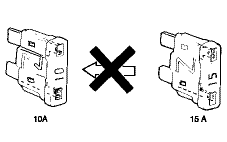
A blade type fuse is
identified by the numbered value in amperes. If the fuse is blown, be sure
to replace a fuse with the same ampere rating. If a fuse of higher
capacity than specified is used, parts may be damaged and a danger of fire
exists. To remove or insert a fuse, use the fuse puller in the fuse
box.