| INSPECTION |
| 1. |
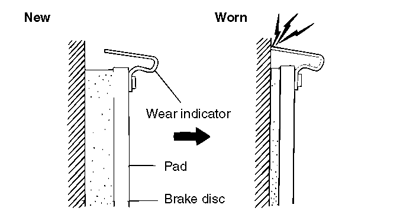
Check the pads for wear or oil contamination
and replace if necessary.
The pads for the right and left wheels
should be replaced at the same time.
|
| 2. |
Check the leading and trailing shoe keys and
retaining screw for damage, or wear. Replace the keys and retaining
screw at the same time when the pads are
replaced. |
| 3. |
Check dust boots for wear or damage. If dust
or mud has entered the caliper assembly through this seal, the
caliper assembly must be replaced. |
| 4. |
Before replacing the brake pads, drain the
brake fluid from the master cylinder reservoir until it is half
full. |
| 5. |
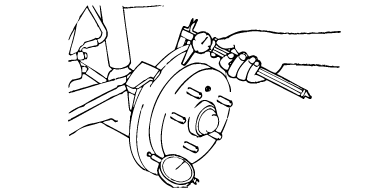
Inspect the disc by using a calipers and a
dial gauge.
|
| a. |
Using a micrometer, measure the disc
thickness at eight positions approximately 5mm from the outer edge
of the disc and at 45° intervals.
If you substract the minimum of measurements
from the maximum, you get the difference of the disc
thickness. |
| b. |
When measuring the disc runout, fix a dial
gauge approximately 5mm from the outer edge of the disc, and rotate
the disc 360°.
At this time, if you subtract the minimum of
measurements from the maximum, you get the disc
runout. |
| 6. |
If necessary, replace the brake
disc. |