| INSPECTION AND CLEANING OF SPARK PLUGS |
| 1. |
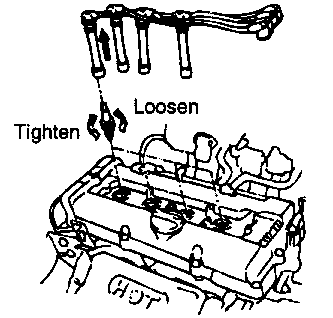
Disconnect the spark plug cables from the
spark plugs.
When removing the spark plug cable, pull on
the spark plug cable boot (not the cable), as it may be
damaged. |
| 2. |
Using a spark plug socket, remove all spark
plugs from the cylinder head.
Be careful that no contaminants enter
through the spark plug holes. |
| 3. |
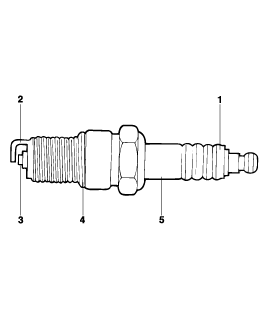
Check the spark plugs for the following
:
|
| 4. |
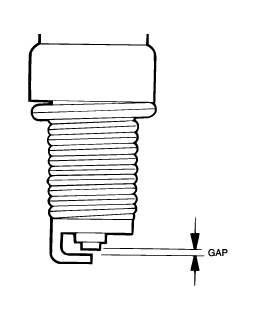
Check the spark plug gap using a wire gap
gauge, and adjust if necessary.
|
| 5. |
Re- insert the spark plug and tighten to the
specified torque.
If it is over torqued, damage to the threads
of the cylinder head may result.
|
ANALYZING
SPARK PLUGS
Engine
conditions can be analyzed by examining the tip deposits near the
electrode.
|
Condition |
Dark deposits |
White deposits | ||||||||||
|
Description |
|
|
SPARK
PLUG TEST (WHEN ENGINE CAN BE CRANKED)
Connect the
spark plug cable. Ground the outer electrode (main body), and crank the
engine. In the atmosphere, only short sparks are produced because of the
small discharge gap. If the spark plug is good, however, sparks will
occur in the discharge gap (between the electrodes). In a defective spark
plug, no sparks will occur because of a leak through the insulation.
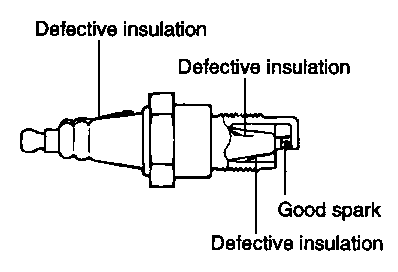
CHECKING
SPARK PLUG CABLES
| 1. |
Check the cap and outer shell for
cracks. |
| 2. |
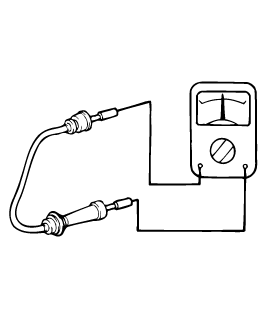
Measure the resistance
Resistance should not be higher than 10K per
foot of cable. If resistance is higher, replace the
cable. |