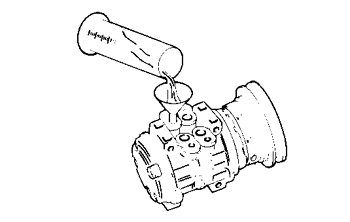
| COMPRESSOR OIL |
The oil used
to lubricate the compressor circulates in the system while the compressor
is operating. Whenever replacing any component of the system or when a
large amount of gas leakage occurs, add oil to maintain the original total
amount of oil.
|
Single :
140-160g |
HANDLING OF OIL
| a. |
The oil should be free from moisture, dust,
metal filings, etc. |
| b. |
Do not mix
oils. |
| c. |
The moisture content in the oil increases when
exposed to air for prolonged periods. After use, seal the container
immediately. |
OIL RETURN OPERATION
To check the
oil level or add oil, idle engine for 20-30 minutes and setting the heater
control set to maximum cooling and blower level, to return the lubricant
to compressor.
CHECKING AND ADDING COMPRESSOR OIL
In order to
add oil to an operating compressor, check the compressor oil using the
following procedure:
| 1. |
Perform the oil return operation, stop the
engine, discharge the refrigerant, and dismantle the compressor from
vehicle. |
| 2. |
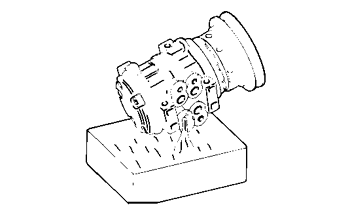
Discharge oil from the system line
outlet.
If compressor is cold, sometimes it can be
hard to drain the oil. Warm up the compressor (approx. 40–50°C) to
drain the oil.
|
| 3. |
Check the amount of the discharged oil. If it
is less than 70cc, it means there is a little leak of oil. Perform
the leakage test on each system connection, and repair or replace
faulty parts if necessary. |
| 4. |
Check oil for contamination and set the oil
level in the following procedure:
|