|
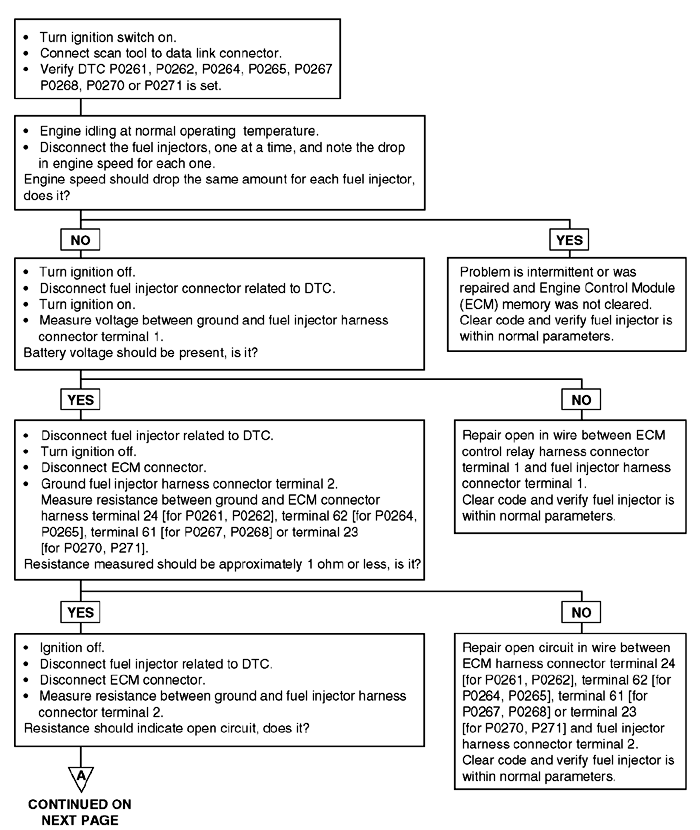
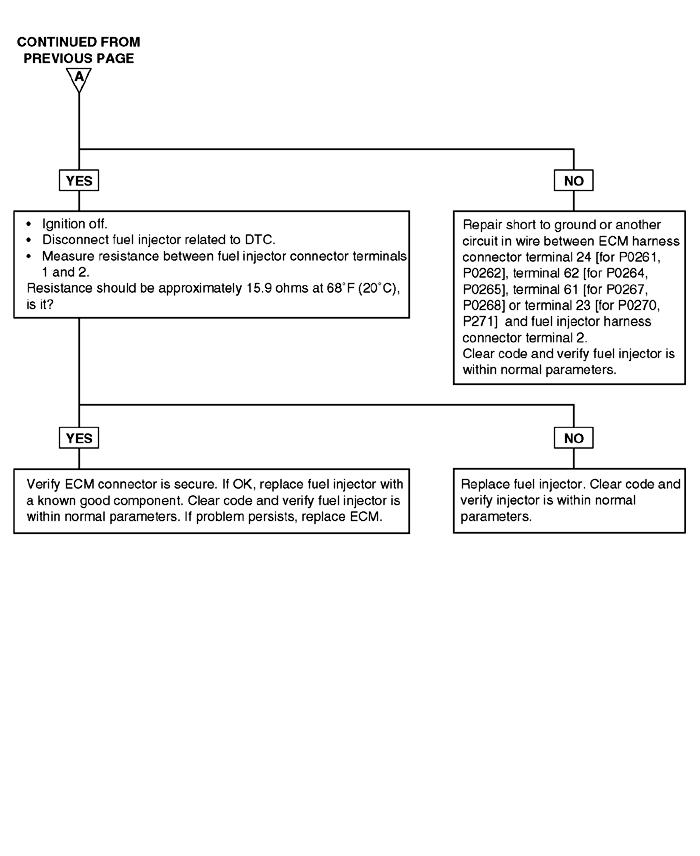
DTC |
Diagnostic item |
|
P0261
P0262
P0264
P0265
P0267
P0268
P0270
P0271 |
Cylinder 1 Injector Circuit Low
Input
Cylinder 1 Injector Circuit High
Input
Cylinder 2 Injector Circuit Low
Input
Cylinder 2 Injector Circuit High
Input
Cylinder 3 Injector Circuit Low
Input
Cylinder 3 Injector Circuit High
Input
Cylinder 4 Injector Circuit Low
Input
Cylinder 4 Injector Circuit High
Input |
DESCRIPTION
The fuel
injectors are solenoid operated valves. When a fuel injector solenoid is
energized (pulsed) the injector needle valve opens, allowing pressurized
fuel to pass through the injector and mix with air entering the
engine.
The Engine
Control Module (ECM) controls injector timing and pulse width. The ECM
pulses the fuel injectors based on information provided by its network of
engine sensors. The ECM uses the crankshaft position sensor to determine
when to pulse the injectors. Engine coolant temperature, intake air
temperature, air flow, and throttle position data are all used by the ECM
to calculate injector pulse width.
The ECM also
uses its network of sensors to determine whether all injectors should be
pulsed at the same time (simultaneous injection) or each injector should
be pulsed individually (sequential injection). Sequential injection is
almost always used during normal engine operation. Simultaneous injection
may be used when the engine is being cranked.
FAILURE CONDITIONS
The ECM will
set a code and the MIL will turn on if an open circuit or short to ground
is detected in the fuel injector circuit during two driving cycles.
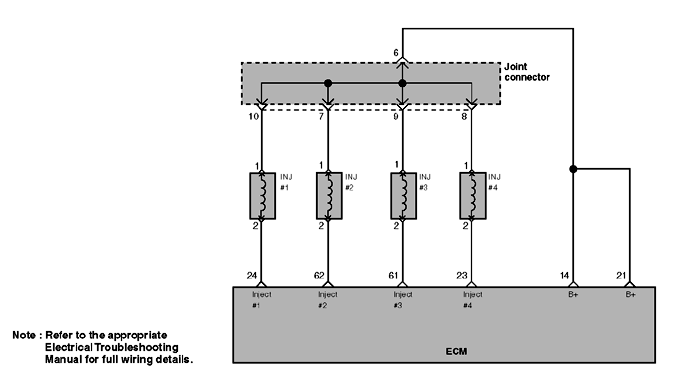
CIRCUIT DIAGRAM
TEST PROCEDURE