| ADJUSTING DRIVE BELT TENSION |
| 1. |
Check that the belts are not damaged and are
properly fit for the pulley
grooves. |
| 2. |
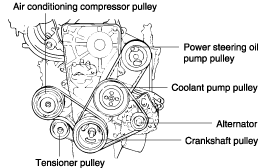
Apply 100 N (22 lbs.) force to the back and
midway portion of the belt between the pulleys as shown in the
illustration, measure the amount of deflection with a tension
gauge. |
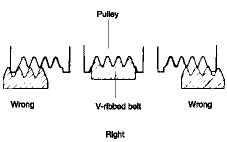
| a. |
When installing the V-ribbed belt, check that
the V-ribs are properly aligned. |
| b. |
If noise or slippage is detected, check the
belt for wear, damage, or breakage on the pulley contact surface,
and check the pulley for scoring. Also check the degree that the
belt is deflected. |
Standard value:
|
Items |
Inspection |
Adjustment | ||
|
New |
Used | |||
|
For alternator |
Deflection mm (in.) |
5.1-6.0
(0.200-0.236) |
4.0-4.4
(0.157-0.173) |
5.1-5.7
(0.200-0.224) |
|
Tension N (lb) |
350-500
(79-112) |
650-750
(143-165) |
400-500
(88-110) | |
|
For air conditioner |
Deflection mm (in.) |
8
(0.31) |
5.0-5.5
(0.20-0.22) |
6.0-7.0
(0.24-0.28) |
|
Tension N (lb) |
250-500
(56-112) |
470-570
(106-128) |
320-400
(72-90) | |
|
For power steering |
Deflection mm (in.) |
6.0-9.0
(0.24-0.35) |
- |
- |
| a. |
The belt tension must be measured half - way
between the specified pulleys. |
| b. |
When a new belt is installed, adjust the
tension to the central value of the standard range indicated under
"New in the above table. Let the engine idle for 5 minutes or more,
and check the standard value indicated under
"Inspection." |
| c. |
When adjusting a belt which has been used or a
belt installed newly after 5 minutes or more of operation, refer to
the standard value indicated under "Used in the above
table. |
| d. |
Refer to the standard value indicated under
"Inspection" for periodic
inspections. |
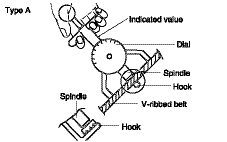
Type A tension gauge
Do not let the
dial section of the tension gauge contact other objects during
measurement.
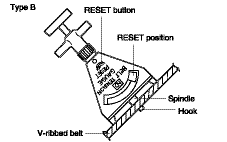
Type B tension gauge
| 1. |
When measuring, turn the reset button in the
direction of the arrow and set the gauge needle to the RESET
position. |
| 2. |
If the tension gauge is removed from the belt,
the needle will still indicate the tension.Read the tension value
after removing the gauge. |
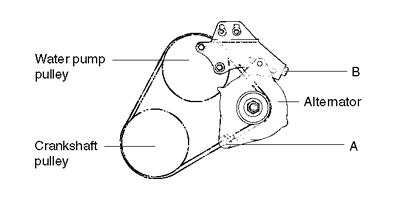
Adjusting the alternator Belt
If the belt is too
loose, it will cause noise or sudden wear.
If the belt is too
tight, the engine coolant pump bearing or the alternator can get
damaged.
| 1. |
Loosen the alternator nut "A" and the tension
adjuster lock bolt "B". |
| 2. |
Using the tension adjuster bolt, adjust the
belt tension to the specification. |
| 3. |
Tighten the adjuster lock bolt
"B". |
| 4. |
Tighten the alternator nut
"A". |
| 5. |
Check the tension or the deflection of belt,
and readjust if necessary.
|