| GENERAL |
The
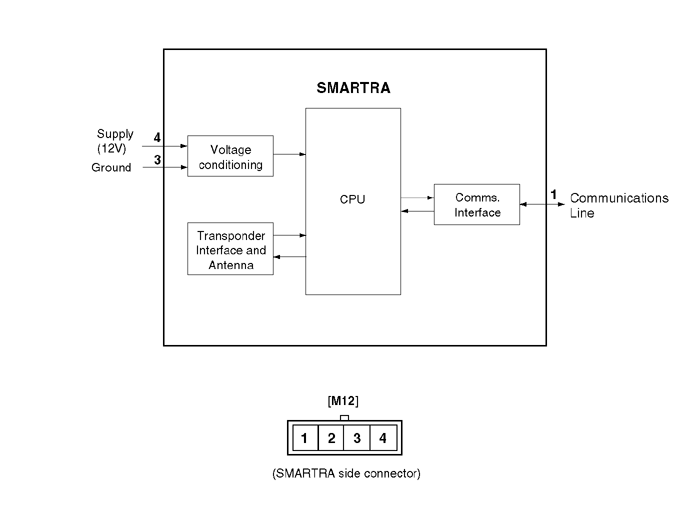
immobilizer system consists of a passive challenge-response (mutual
authentication) transponder inside the key head and the SMARTRA (SMARt
TRansponder Antenna) unit.
The SMARTRA
unit contains an integrated inductive antenna and electronics around the
lock assembly. The SMARTRA communicates to the ECM (Engine Control Module)
via a dedicated communications line.
Since the
vehicle engine management system is able to control engine mobilization,
it is the most suitable unit to control the SMARTRA.
SYSTEM BLOCK DIAGRAM
COMPONENT
|
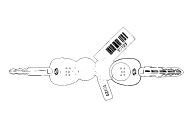
A. TRANSPONDER KEY |
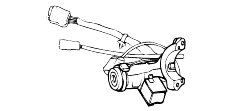
B. SMARTRA |
|
|
|
|
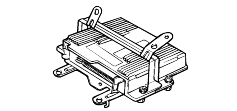
C. ENGINE CONTROL MODULE |
|
|
|
DESCRIPTION
The vehicle
immobilizer system consists of the ECM, the SMARTRA and ignition keys with
built-in TRANSPONDER.
|
COMPONENT |
DESCRIPTION |
|
ECM |
The ECM carries out a check of the ignition
key using a special encryption algorithm, which is programmed into
the transponder as well as the ECM simultaneously. Only if the
results are equal can the engine be started. The data of all
transponders, which are valid for the vehicle, are stored in the
ECM. |
|
SMARTRA |
The SMARTRA carries out communication with the
built - in transponder in the ignition key. This wireless
communication runs on RF (Radio frequency of 125 kHz). The SMARTRA
is mounted at the ignition lock close to the antenna coil for RF
transmission and receiving. The RF signal from the transponder,
received by the antenna coil, is converted into messages for serial
communication by the SMARTRA device. And, the received messages from
the ECM are converted into an RF signal, which is transmitted to the
transponder by the antenna.
The SMARTRA does not carry out the validity
check of the transponder or the calculation of encryption algorithm.
This device is only an advanced interface, which converts the RF
data flow of the transponder into serial communication to the ECM
and vice versa. |
|
TRANSPONDER
(built-in keys) |
The transponder has an advanced encryption
algorithm. During the key teaching procedure, the transponder will
be programmed with vehicle specific data. The vehicle specific data
are written into the transponder memory. The write procedure is once
only ; therefore, the contents of the transponder can never be
modified or changed. |
TEACHING PROCEDURES
1. Key
Teaching Procedure
Key teaching
must be done after replacing a defective ECM or when providing additional
keys to the vehicle owner.
The procedure
starts with an ECM request for vehicle specific data from the tester. The
"virgin" ECM stores the vehicle specific data and the key teaching can be
started. The "learnt" ECM compares the vehicle specific data from the
tester with the stored data. If the data are correct, the teaching can
procede.
If incorrect
vehicle specific data have been sent to the ECM three times, the ECM will
reject the request of key teaching for one hour. This time cannot be
reduced by disconnecting the battery or any other manipulation. After
reconnecting the battery, the timer starts again for one hour.
The key
teaching is done by ignition on with the key and additional tester
commands. The ECM stores the relevant data in the EEPROM and in the
transponder. Then the ECM runs the authentication required for
confirmation of the teaching process. The successful programming is then
confirmed by a message to the tester.
If the key is
already known to the ECM from a previous teaching, the authentication will
be accepted and the EEPROM data are updated. There is no changed
transponder content (this is impossible for a learnt transponder).
The attempt to
repeatedly teach a key, which has been taught already during the same
teaching cycle, is recognized by the ECM. This rejects the key and a
message is sent to the tester.
The ECM
rejects invalid keys, which are presented for teaching. A message is sent
to the tester. The key can be invalid due to faults in the transponder or
other reasons, which result from unsuccessful programming of data. If the
ECM detects different authenticators of a transponder and an ECM, the key
is considered to be invalid.
The maximum
number of taught keys is 4.
If an error
occurs during the Immobilizer Service Menu, the ECM status remains
unchanged and a specific fault code is stored.
If the ECM
status and the key status do not match for teaching of keys, the tester
procedure will be stopped and a specific fault code will be stored at
ECM.
2. User
Password Teaching Procedure
The user
password for limp home is taught at the service station. The owner of the
vehicle can select a number with four digits.
User password
teaching is only accepted by a "learnt" ECM. Before first teaching of user
password to an ECM, the status of the password is "virgin". No limp home
function is possible.
The teaching
is started by ignition on, with a valid key and sending the user password
by tester. After successful teaching, the status of the user password
changes from "virgin" to "learnt".
The learnt
user password can also be changed. This can be done if the user password
status is "learnt" and the tester sends authorization of access, either
the old user password or the vehicle specific data. After correct
authorization, the ECM requests the new user password. The status remains
"learnt" and the new user password will be valid for the next limp home
mode.
If incorrect
user passwords or wrong vehicle specific data have been sent to the ECM
three times, the ECM will reject the request to change the password for
one hour. This time cannot be reduced by disconnecting the battery or any
other actions. After reconnecting the battery, the timer starts again for
one hour.
The user password can be in the status
00. Not yet
checked
The status is
stored in the EEPROM. In case of incorrect or no plausible data from this
circuit, the ECM cannot check the status and the ECM sends 00.
01.
Learnt
The password
has been taught successfully to the ECM.
02.
Virgin
This is the
status at the end of the ECM production line before delivery to the final
customer.
04. Locked by
timer
After a
certain number of incorrect inputs, the ECM is locked for one hour and no
inputs are accepted during this time.
05. Teaching
not accepted
This status is
set if, for example, the ECM is in neutral status.
LIMP HOME FUNCTION
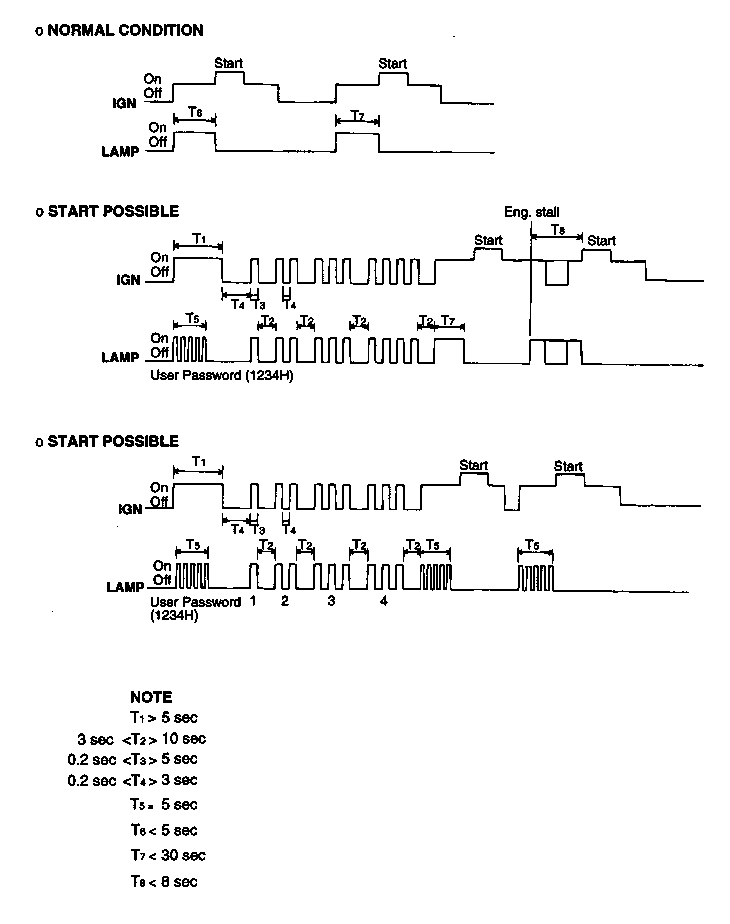
1. By
tester
If the ECM
detects a fault of SMARTRA or transponder, the ECM will allow limp home
function of immobilizer. Limp home is only possible if the user password
(4 digits) has been given to the ECM before. This password can be selected
by the vehicle owner and is programmed at the service station.
The ECM
informs the driver about the limp home condition by blinking the
immobilizer indicator. Then the user password can be sent to the ECM via
the special tester menu.
Only if the
ECM is in status "learnt" and the user password status is "learnt" and the
user password is correct will the ECM be unlocked for a period of time (30
sec.). The engine can only be started during this time. After the time has
elapsed, engine start is not possible.
If the wrong
user password is sent, the ECM will reject the request of limp home for
one hour. Disconnecting the battery or other actions cannot reduce this
time. After connecting of battery to ECM, the timer starts again for one
hour.
2. By ignition
key
The limp home
can be activated also by the ignition key. The ECM informs the driver by
blinking the immobilizer indicator for the limp home condition. Then the
user password can be input to ECM can be done by special sequence of
ignition on/off.
Only if the
ECM is in status "learnt" and the user password status is "learnt" and the
user password is correct will the ECM be unlocked for a period of time (30
sec.). The engine can be started during this time. After the time has
elapsed, engine start is not possible. After a new password has been input
the timer (30 sec.) start again.
After ignition
off the ECM is locked (If timer 8 sec. is elapsed). For next start the
input of user password is requested again.
DIAGNOSIS OF IMMOBILIZER RELATED FAULTS
The diagnosis
monitors
| a. |
the communication between ECM and
SMARTRA |
| b. |
the function of SMARTRA and transponder
and |
| c. |
the data (stored in the ECM) related to
immobilizer function. |
There are four
different faults which are assigned to the immobilizer system. Every fault
is broken down into four different types (circuit malfunction, circuit
range / performance problem, low input, high input). The following table
shows the assignment of immobilizer related faults to each types:
|
Immobilizer Related Faults |
Fault types |
Diagnostic Codes |
|
Transponder Fault |
Invalid transponder data |
P1801 |
|
Passive mode invalid |
P1801 | |
|
Programming error |
P1801 | |
|
SMARTRA Fault |
Antenna error |
P1800 |
|
Invalid request from ECM or corrupted
data |
P1803 | |
|
No answer from SMARTRA |
P1610 | |
|
Invalid message from SMARTRA to
ECM |
P1610 | |
|
EEPROM |
Inconsistent data of EEPROM |
P1805 |
|
Invalid write operation to
EEPROM |
P1805 | |
|
Immobilizer indicator or ECM
Faults |
Not plausible immobilizer indicator stored in
the ECM |
P1805 |
|
No valid data from SMARTRA after 3 attempts by
ECM |
P1805 | |
|
Invalid tester message or unexpected requests
by tester |
P1805 |
REPLACEMENT OF ECM AND SMARTRA
In case of a
defective ECM, the unit has to be replaced by "virgin" or "neutral" ECM.
All keys have to be programmed into the new ECM. Keys, which are not
programmed into ECM, are invalid for the new ECM. Refer to key teaching
procedure . The vehicle specific data have to be left unchanged due to the
unique programming of transponder.
In case of a
defective SMARTRA, there is no special procedure required. A new SMARTRA
device simply replaces the old one. There are no transponder - related
data stored in this device.
NEUTRALISING OF ECM
The ECM can be
set to the "neutral" status by a tester.
A valid
ignition key is inserted and after ignition on is recorded, the ECM
requests the vehicle specific data from the tester. The communication
messages are described at " Neutral Mode". After successfully receiving
the data, the ECM is neutralized.
The ECM
remains locked. Neither the limp home mode nor the "twice ignition on"
function is accepted by ECM.
The teaching
of keys follows the procedure described for virgin ECM. The vehicle
specific data have to be unchanged due to the unique programming of
transponder. If data should be changed, new keys with virgin transponder
are requested.