| TESTS |
Functional test
| 1. |
With the engine stopped, depress the brake
pedal several times to deplete the vacuum reservoir, then depress
the pedal hard and hold it for 15 seconds. If the pedal sinks,
either the master cylinder is bypassing internally, or the brake
system (meter cylinder, lines, proportioning valve, or caliper) is
leaking. |
| 2. |
Start the engine with the pedal depressed. If
the pedal sinks slightly, the vacuum booster is operating normally.
If the pedal height does not vary, the booster or check valve is
faulty |
Leak test
| 1. |
Depress the brake pedal with the engine
running, then stop the engine. If the pedal height does not vary
while depressed for 30 seconds, the vacuum booster is OK. If the
pedal rises, the booster is faulty. |
| 2. |
With the engine stopped, depress the brake
pedal several times using normal pressure. When the pedal is first
depressed, it should be low. On consecutive application, the pedal
height should gradually rise. If the pedal position does not vary,
check the booster check valve. |
Check valve test
| 1. |
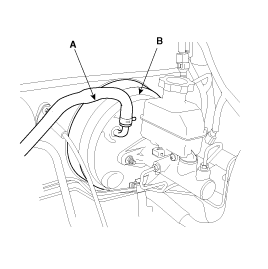
Disconnect the brake booster vacuum hose
(check valve built in) (A) at the booster (B).
|
| 2. |
Start the engine and let it idle. There should
be vacuum available. If no vacuum is available, the check valve is
not working properly. Replace the brake booster vacuum hose and
check valve and retest. |
| REPLACEMENT |
| 1. |
Remove the master cylinder (see page
BR-21). |
| 2. |
Disconnect the vacuum hose (A) from the brake
booster (B).
|
| 3. |
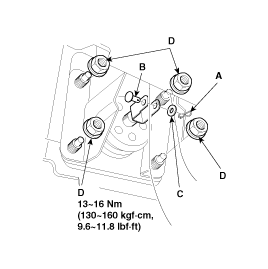
Remove the snap pin (A) clevis pin (B) and
washer (C).
|
| 4. |
Remove the for booster mounting nuts
(D). |
| 5. |
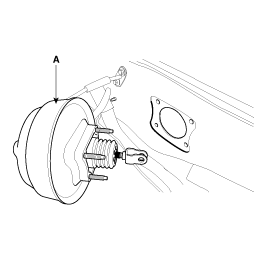
Remove the brake booster (A) from the engine
compartment.
|
| 6. |
Install the brake booster in the reverse order
of removal, and note these items:
|