| INSPECTION CHART FOR TROUBLE SYMPTOMS |
| Trouble symptom |
Suspect area |
Remedy (see page) | |
| Communication with HI-SCAN is
not possible If communication with the HI-SCAN is not possible, the cause is probably a defective diagnosis line or the PCM is not functioning. |
Malfunction of
diagnosis line |
AT-21 | |
| Malfunction of
connector | |||
| Malfunction of
the PCM | |||
| Driving impossible |
Starting
impossible Starting is not possible when the selector lever is in "P" or "N" range. In such cases, the cause is probably a defective engine system, torque converter or oil pump. |
Malfunction of
the engine system |
AT-23 |
| Malfunction of
the torque converter | |||
| Malfunction of
the oil pump | |||
| Does not move
forward If the vehicle does not move forward when the selector lever is shifted from “N” to “D” range while the engine is idling, the cause is probably abnormal line pressure or a malfunction of the underdrive clutch or valve body. |
Abnormal line
pres |
AT-23 | |
| Malfunction of
the underdrive solenoid valve | |||
| Malfunction of
the underdrive clutch | |||
| Malfunction of
the valve body | |||
| Does not
reverse If the vehicle does not reverse when the selector lever is shifted from “N” to “R” range while the engine is idling, the cause is probably abnormal pressure in the reverse clutch or low and reverse brake or a malfunction of the reverse clutch, low and reverse brake or valve body. |
Abnormal reverse
clutch pressure |
AT-25 | |
| Abnormal low and
reverse brake pressure | |||
| Malfunction of
the low and reverse brake solenoid valve | |||
| Malfunction of
the reverse clutch | |||
| Malfunction of
the low and reverse brake | |||
| Malfunction of
the valve body | |||
| Does not move (forward or
reverse) If the vehicle does not move forward or reverse when the selector lever is shifted to any position while the engine is idling, the cause is probably abnormal line pressure or a malfunction of the power train, oil pump or valve body. |
Abnormal line
pressure |
AT-25 | |
| Malfunction of
power train | |||
| Malfunction of
the oil pump | |||
| Malfunction of
the valve body | |||
| Malfunction when starting |
Engine stalling when
shifting If the engine stalls when the selector lever is shifted from "N" to "D" or "R" range while the engine is idling, the cause is probably a malfunction of the engine system, damper clutch solenoid valve, valve body or torque converter (damper clutch malfunction). |
Malfunction of
the engine system |
AT-26 |
| Malfunction of
the damper clutch control solenoid valve | |||
| Malfunction of
the valve body | |||
| Malfunction of
the torque converter (Malfunction of the damper clutch) | |||
| Shocks when changing from “N”
to “D” and large time lag If abnormal shocks or a time lag of 2 seconds or more occur when the selector lever is shifted from "N" to "D" range while the engine is idling, the cause is probably abnormal underdrive clutch pressure or a malfunction of the underdrive clutch, valve body. |
Abnormal
underdrive clutch pressure |
AT-27 | |
| Abnormal low and
reverse brake pressure | |||
| Malfunction of
the underdrive solenoid valve | |||
| Malfunction of
the valve body | |||
| Malfunction of
the idle position switch | |||
| Shocks when changing from "N"
to "R" and large time lag If abnormal shocks or a time lag of 2 seconds or more occur when the selector lever is shifted from "N" to "R" range while the engine is idling, the cause is probably abnormal reverse clutch pressure or low and reverse brake pressure, or a malfunction of the reverse clutch, low and reverse brake, valve body or idle position switch. |
Abnormal reverse
clutch pressure |
AT-28 | |
| Abnormal low and
reverse brake pressure | |||
| Malfunction of
the low and reverse solenoid valve | |||
| Malfunction of
the reverse clutch | |||
| Malfunction of
the low and reverse brake | |||
| Malfunction of
the valve body | |||
| Malfunction of
the idle position switch | |||
| Shocks when changing from "N"
to "D", "N" to "R" and large time lag If abnormal shocks or a time lag of 2 seconds or more occur when the selector lever is shifted from "N" to "D" range and from "N" to "R" range while the engine is idling, the cause is probably abnormal line pressure or a malfunction of the oil pump or valve body. |
Abnormal line
pressure |
AT-30 | |
| Malfunction of
the oil pump | |||
| Malfunction of
the valve body | |||
| Malfunction when shifting |
Shocks and running
up If shocks occur when driving due to upshifting or downshifting and the transmission speed becomes higher than the engine speed, the cause is probably abnormal line pressure or a malfunction of a solenoid valve, oil pump, valve body, brake or clutch. |
Abnormal line
pressure |
AT-31 |
| Malfunction of
each solenoid valve | |||
| Malfunction of
the oil pump | |||
| Malfunction of
the valve body | |||
| Malfunction of
each brake or each clutch | |||
| Displaced shifting points |
All points If all shift points are displaced while driving, the cause is probably a malfunction of the output shaft speed sensor, TPS or solenoid valve. |
Malfunction of
the output shaft speed sensor |
AT-32 |
| Malfunction of
the throttle position sensor | |||
| Malfunction of
each solenoid valve | |||
| Abnormal line
pressure | |||
| Malfunction of
the valve body | |||
| Malfunction of
the PCM | |||
| Some points If some of the shift points are displaced while driving, the cause is probably a malfunction of the valve body, or it is related to control and is not an abnormality. |
Malfunction of
the valve body |
AT-34 | |
| Does
not shift |
No diagnosis
codes If shifting does not occur while driving and no diagnosis codes are set, the cause is probably a malfunction of the transaxle range switch, or PCM |
Malfunction of
the transaxle range |
AT-34 |
| Malfunction of
the PCM | |||
| Malfunction while driving |
Poor a
acceleration If acceleration is poor even if downshifting occurs while driving, the cause is probably a malfunction of the engine system, brake or clutch. |
Malfunction of
the engine system |
AT-35 |
| Malfunction of
the brake of clutch | |||
| Malfunction while
driving |
Vibration If vibration occurs when driving at constant speed or when accelerating and deceleration in top range, the cause is probably abnormal damper clutch pressure or a malfunction of the engine system, damper clutch control solenoid valve, torque converter or valve body. |
Abnormal damper
clutch pressure |
AT-36 |
| AUTOMATIC TRANSAXLE (F4A42) |
| TROUBLESHOOTING (A/T) |
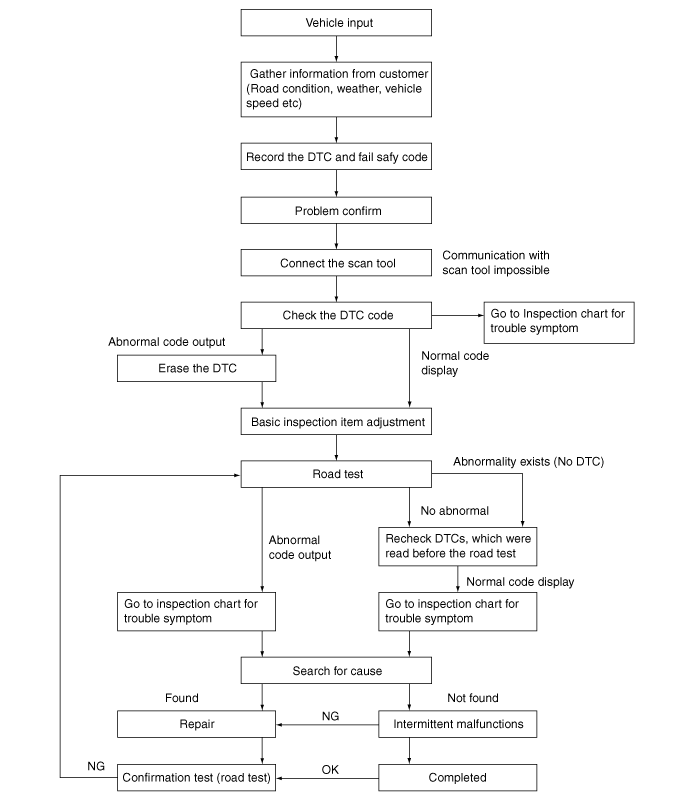
DIAGNOSIS FUNCTION
| 1. |
Connect the Hi Scan Pro to the connector for
diagnosis. |
| 2. |
Read the output diagnostic trouble codes. Then
follow the remedy procedures according to the "DIAGNOSTIC TROUBLE
CODE DESCRIPTION" on the following pages.
|

| 3. |
If the fail-safe system is activated and the
transaxle is locked in third gear, the diagnostic trouble code in
the fail-safe code description will be stored in the RAM. Three of
these diagnostic trouble codes can be
stored. |
| 4. |
The cancellation will occur if, with the
transaxle locked in third gear, the ignition key is turned to the
OFF position, but the diagnostic trouble code is stored in the
RAM. |
| 5. |
Memorization.
|
| 6. |
Diagnosis Code Deletion
|
ROAD TEST
| No. |
Condition |
Operation |
Judgment value |
Check item | ||||||||||||
| 1 |
Ignition switch :
OFF |
Ignition
switch (1) ON |
Battery voltage
(mV) |
Control
relay | ||||||||||||
| 2 |
|
Selector lever
position (1) P, (2) R, (3) N, (4) D |
(1) P, (2) R, (3)
N, (4) D |
Transaxle range
switch | ||||||||||||
| Accelerator
pedal (1) Released (2) Half depressed (3) Depressed |
(1) 400~1,000
mV (2)Gradually rises from (1) (3) 4,500~5,000 mV |
Throttle position
sensor | ||||||||||||||
| Brake
pedal (1) Depressed (2) Released |
(1)
ON (2) OFF |
Brake
switch | ||||||||||||||
| 3 |
|
Starting test
with lever P or N range |
Starting should
be possible |
Starting possible
or impossible | ||||||||||||
| 4 |
Warming
up |
Drive for 15
minutes or more so that the automatic fluid temperature becomes
70~90°C |
Gradually rises
to 70~90°C |
Oil temperature
sensor | ||||||||||||
| 5 |
|
A/C
switch (1) ON (2) OFF |
(1)
ON (2) OFF |
Triple pressure
switch | ||||||||||||
| Accelerator pedal (1) Released (2) Half depressed |
(1)
ON (2) OFF |
Idle
position switch | ||||||||||||||
| (1) 600~900
rpm (2) Gradually rises from (1) | ||||||||||||||||
| (1) Data
changes |
Communication
with engine-ECU | |||||||||||||||
| Selector lever
position (1) N→D (2) N→R |
Should be no
abnormal shifting shocks Time lag should be within 2 seconds |
Malfunction when
starting | ||||||||||||||
| 6 |
Selector lever position : N (Carry out on a flat and
straight road) |
Selector lever position and vehicle speed
|
(2) 1st, (4) 3rd,
(3) 2nd, (5) 4th |
Shift
condition | ||||||||||||
| (2) 0%, (4) 100%,
(3) 100%, (5) 100% |
Low and reverse
solenoid valve | |||||||||||||||
| (2) 0%, (4) 0%,
(3) 0% |
Underdrive
solenoid valve | |||||||||||||||
| (1) 100%, (2) 0%,
(3) 100% |
Second solenoid
valve | |||||||||||||||
| (2) 100%, (3)
100%, (4) 0% |
Overdrive
solenoid valve | |||||||||||||||
| (1)
0km/h (4) 50km/h |
Vehicle speed
sensor | |||||||||||||||
| (4) 1,800 ~
2,100rpm |
Input shaft speed
sensor | |||||||||||||||
| (4) 1,800 ~
2,100rpm |
Output shaft
speed sensor | |||||||||||||||
| 7 |
Selector lever position : D (Carry out on a flat and
straight road) |
|
For
(1), (2) and (3), the reading should be the same as the specified
output shaft torque, and no abnormal shocks should
occur. For (4), (5) and (6), downshifting should occur immediately after the shifting operation is made. |
Malfunction when
shifting | ||||||||||||
| Displaced shift
points | ||||||||||||||||
| Does not
shift | ||||||||||||||||
| Does not shift
from 1 to 2 or 2 to 1 | ||||||||||||||||
| Does not shift
from 2 to 3 or 3 to 2 | ||||||||||||||||
| Does not shift
from 3 to 4 or 4 to 3 | ||||||||||||||||
| 8 |
Selector lever
position : N (Carry out on a flat and straight road) |
Move selector
lever to R range drive at constant speed of 10km/h |
The ratio between
input and output shaft speed sensor data should be the same as the
gear ratio when reversing. |
Does not
shift |
INSPECTION PROCESS FOR TROUBLE SYMPTOMS
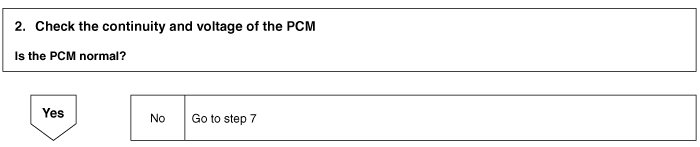
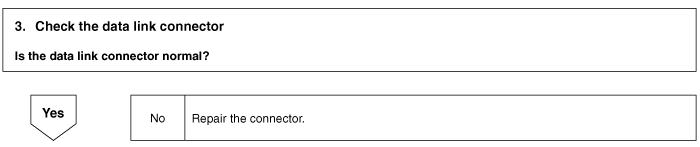
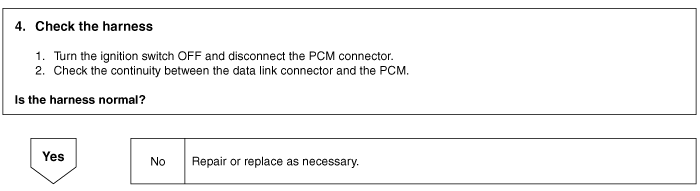
INSPECTION PROCEDURE 1
| Communication with the scan
tool |
Possible cause | ||||||
| If communication
with the scan tool is not possible, the cause is probably a
defective diagnostic trouble line or the PCM is not
functioning. |
|
INSPECTION PROCEDURES

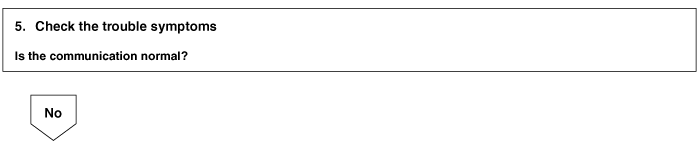

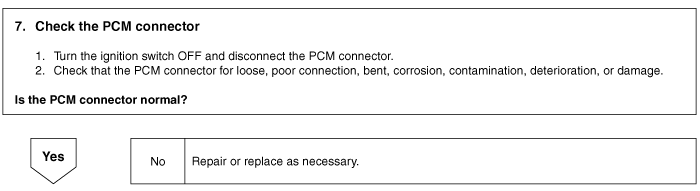
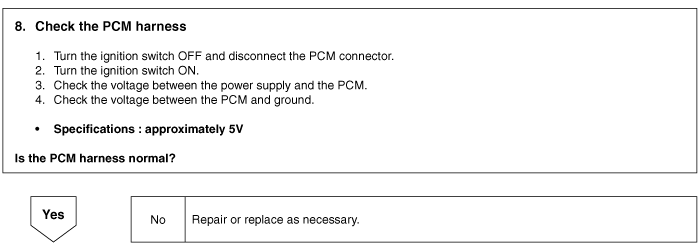
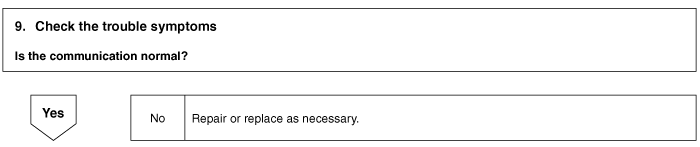

INSPECTION PROCEDURE 2
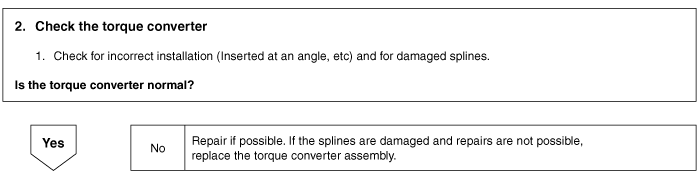
| Starting
impossible |
Possible cause | ||||||
| Starting is not
possible when the selector lever is in “P” or “N” range. In such
cases, the cause is probably a defective engine system, torque
converter or oil pump. |
|
INSPECTION PROCEDURES


INSPECTION PROCEDURE 3
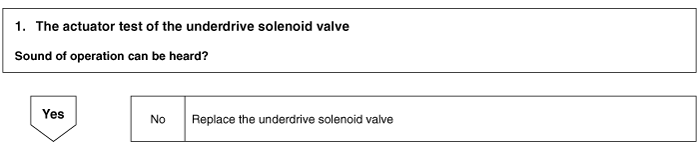
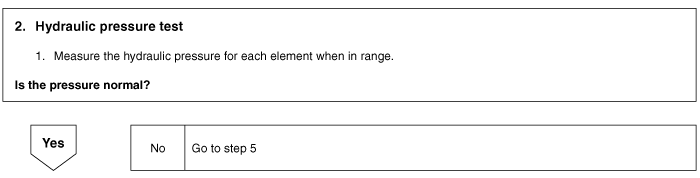
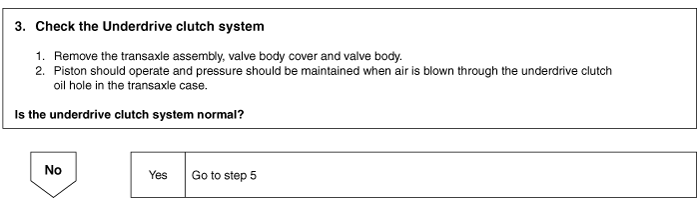
| Does not move |
Possible cause | ||||||||
| If the vehicle
does not move forward when the selector lever is shifted from “N” to
“D” range while the engine is idling, the cause is probably abnormal
line pressure or a malfunction of the underdrive clutch or valve
body. |
|
INSPECTION PROCEDURES


INSPECTION PROCEDURE 4
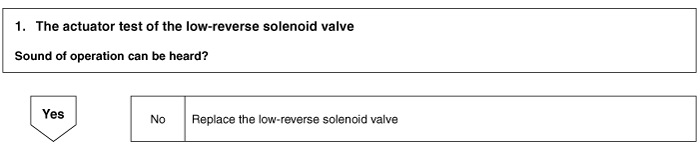
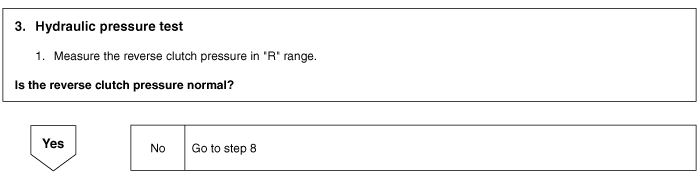
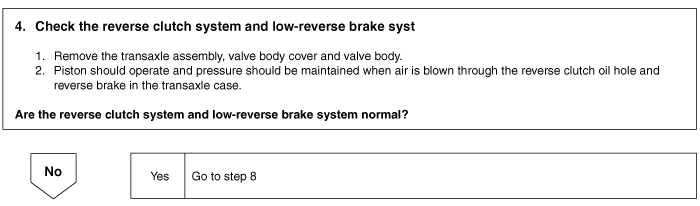
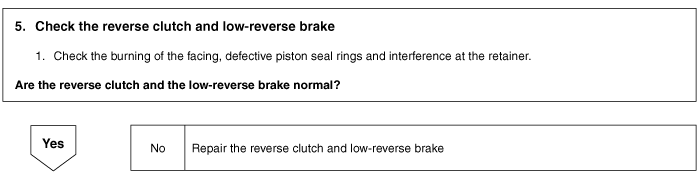
| Does not reverse |
Possible cause | ||||||||||||
| If the vehicle
does not reverse when the selector lever is shifted from “N” to “R”
range while the engine is idling, the cause is probably abnormal
pressure in the reverse clutch or low and reverse brake or a
malfunction of the reverse clutch, low and reverse brake or valve
body. |
|
INSPECTION PROCEDURES


INSPECTION PROCEDURE 5
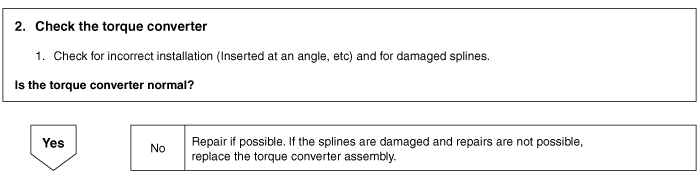
| Does not move (forward or
reverse) |
Possible cause | ||||||||
| If the vehicle
does not move forward or reverse when the selector lever is shifted
to any position while the engine is idling, the cause is probably
abnormal line pressure, or a malfunction of the power train, oil
pump or valve body. |
|
INSPECTION PROCEDURES

INSPECTION PROCEDURE 6
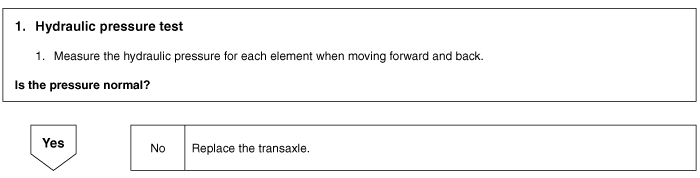
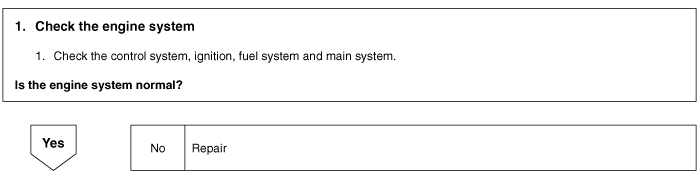
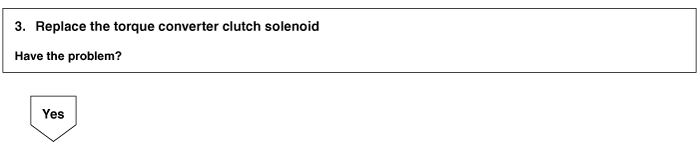
| Engine stalling when
shifting |
Possible cause | ||||||||
| If the engine
stalls when the selector lever is shifted from N to D or R range
while the engine is idling, the cause is probably a malfunction of
the engine system, torque converter clutch soledoid, valve body or
torque converter (torque converter clutch
malfunction). |
|
INSPECTION PROCEDURES

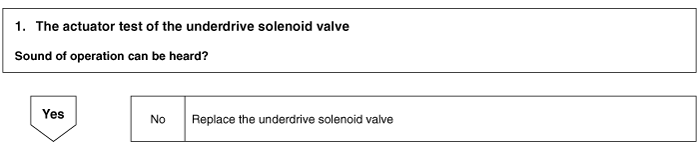
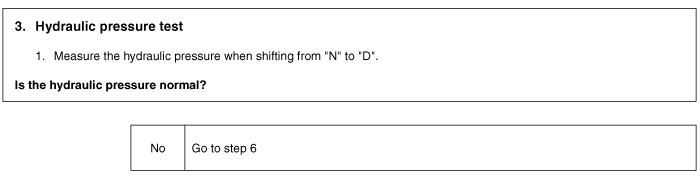
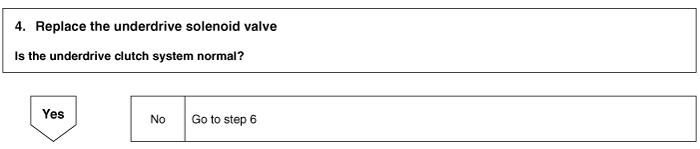
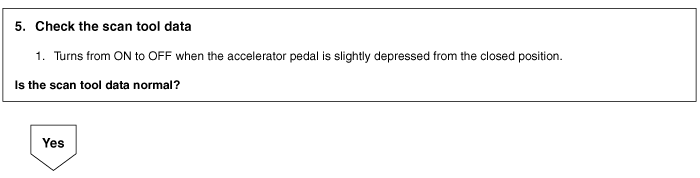
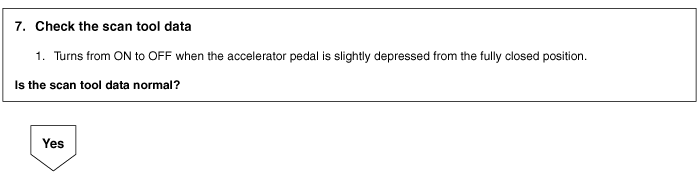
INSPECTION PROCEDURE 7
| Shocks when changing from N to
D range and time lag |
Possible cause | ||||||||||
| If abnormal
shocks or a time lag of 2 second or more occur when the selector
lever is shifted from N to D range while the engine is idling, the
cause is probably abnormal underdrive clutch pressure or a
malfunction of the underdrive clutch, valve body or closed throttle
position switch. |
|
INSPECTION PROCEDURES


INSPECTION PROCEDURE 8
| Shock when changing from “N” to
“R” and large time lag |
Possible cause | ||||||||||||
| If abnormal
shocks or a time lag of 2seconds or more occurs when the selector
lever is shifted from “N” to “R” range while the engine is idling,
the cause is probably abnormal reverse clutch pressure or low and
reverse brake pressure, or a malfunction or the reverse clutch, low
and reverse brake. |
|
INSPECTION PROCEDURES



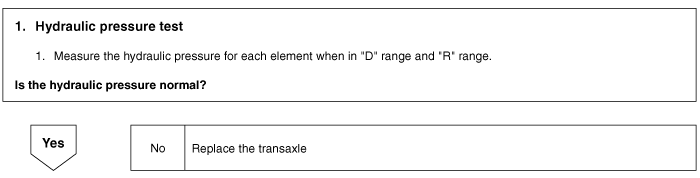
INSPECTION PROCEDURE 9
| Shocks when changing from “N”
to “R”, “N” to “D” and large time lag |
Possible cause | ||||||
| If abnormal
shocks or a time lag of 2 seconds or more occurs when the selector
lever is shifted from “N” to “R” range while the engine is idling,
the cause is probably abnormal line pressure or a malfunction of the
oil pump or valve body. |
|
INSPECTION PROCEDURES


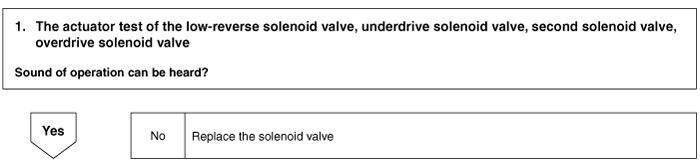
INSPECTION PROCEDURE 10
| Shocks and running
up |
Possible cause | ||||||||||
| If shocks occur
when driving due to upshifting or downshifting and the transaxle
speed becomes higher than the engine speed, the cause is probably
abnormal line pressure or a malfunction of a solenoid valve, oil
pump, valve body, brake or clutch. |
|
INSPECTION PROCEDURES
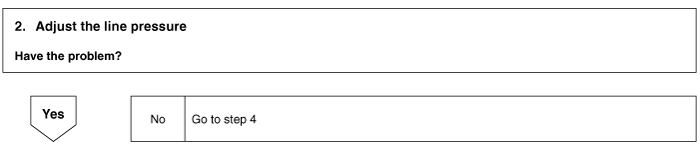

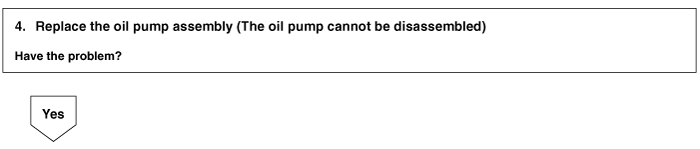

INSPECTION PROCEDURE 11
| All points (Displaced shifting
points) |
Possible cause | ||||||||||||
| If all shift
points are displaced while driving, the cause is probably a
malfunction of the output shaft speed sensor, TPS or a solenoid
valve. |
|
INSPECTION PROCEDURES
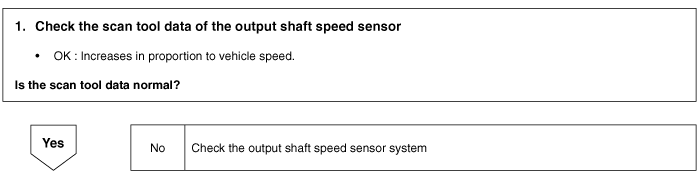
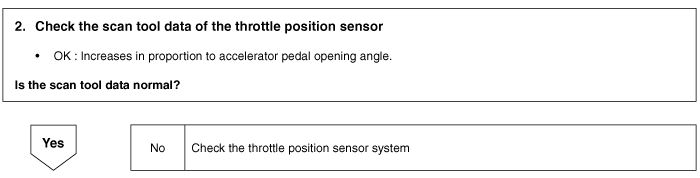
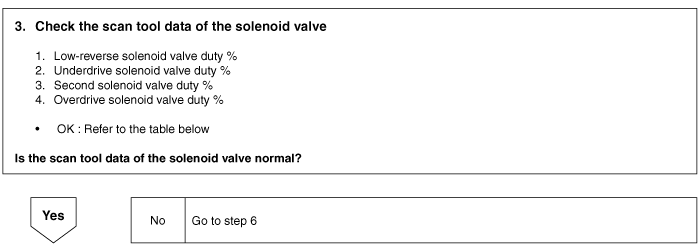
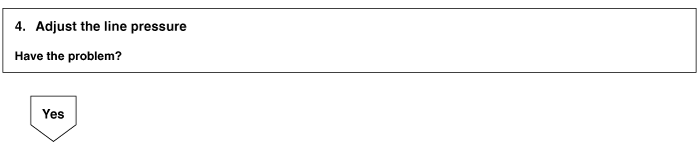

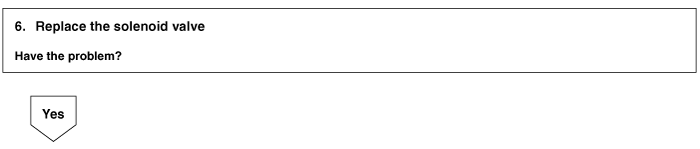

INSPECTION PROCEDURE 12
| Some points (Displaced shifting
points) |
Possible caus | ||
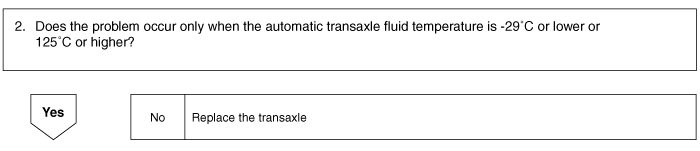
| If some of the
shift points are displaced while driving, the cause is probably a
malfunction of the valve body, or it is related to control and is
not an abnormality. |
|
INSPECTION PROCEDURES


INSPECTION PROCEDURE 13
| No diagnostic trouble codes (Does not
shift) |
Possible cause | ||||
| If shifting does
not occur while driving and no diagnostic trouble codes are output,
the cause is probably a malfunction of the Park/Neutral position
switch, or PCM. |
|
INSPECTION PROCEDURES





INSPECTION PROCEDURE 14
| Poor acceleration |
Possible cause | ||||
| If acceleration
is poor even if downshifting occurs while driving, the cause is
probably a malfunction of the engine system, brake or
clutch. |
|
INSPECTION PROCEDURES

INSPECTION PROCEDURE 15
| Vibration |
Possible cause | ||||||||||
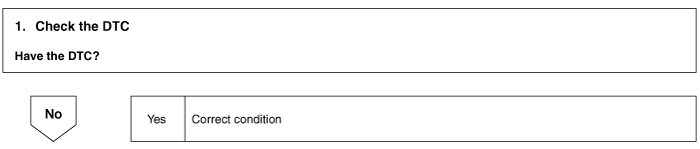
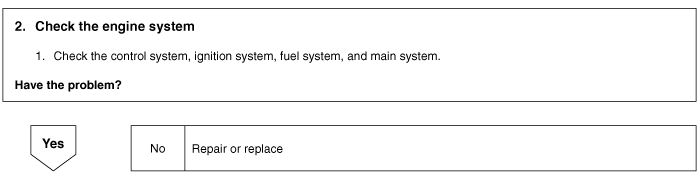
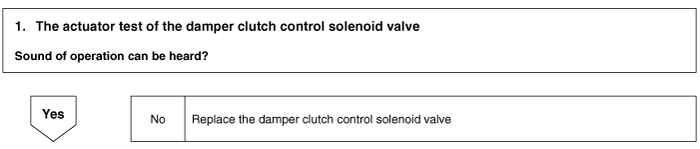
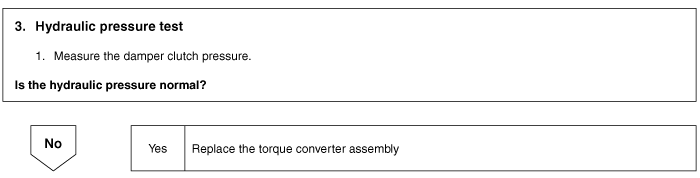
| If vibration
occurs when driving at constant speed or when accelerating in top
range, the cause is probably abnormal damper clutch pressure or a
malfunction of the engine system, damper clutch control solenoid,
torque converter or valve body. |
|
INSPECTION PROCEDURES



TROUBLE CODE LIST
| No. |
DTC |
Description |
MIL |
Remark |
| 1 |
P0703 |
STOP LAMP
SWITCH(BRAKE SW) - SHORT(+B) |
- |
AT-39 |
| 2 |
P0707 |
TRANSAXLE
RANGE SWITCH CIRCUIT LOW INPUT |
● |
AT-44 |
| 3 |
P0708 |
TRANSAXLE
RANGE SWITCH CIRCUIT HIGH INPUT |
AT-49 | |
| 4 |
P0712 |
TRANSAXLE
FLUID TEMPERATURE SENSOR CIRCUIT LOW INPUT |
● |
AT-52 |
| 5 |
P0713 |
TRANSAXLE
FLUID TEMPERATURE SENSOR CIRCUIT HIGH INPUT |
● |
AT-58 |
| 6 |
P0715 |
A/T INPUT
SPEED SENSOR CIRCUIT - OPEN or SHORT(GND) |
● |
AT-61 |
| 7 |
P0720 |
AT OUTPUT
SPEED SENSOR CIRCUIT - OPEN or SHORT(GND) |
● |
AT-68 |
| 8 |
P0731 |
GEAR 1
INCORRECT RATIO |
● |
AT-75 |
| 9 |
P0732 |
GEAR 2
INCORRECT RATIO |
● |
AT-81 |
| 10 |
P0733 |
GEAR 3
INCORRECT RATIO |
● |
AT-87 |
| 11 |
P0734 |
GEAR 4
INCORRECT RATIO |
● |
AT-93 |
| 12 |
P0736 |
REVERSE
INCORRECT RATIO |
● |
AT-97 |
| 13 |
P0741 |
TORQUE
CONVERTER CLUTCH STUCK OFF |
● |
AT-102 |
| 14 |
P0742 |
TORQUE
CONVERTER CLUTCH STUCK ON |
● |
AT-106 |
| 15 |
P0743 |
TORQUE
CONVERTER CLUTCH CONTROL SOLENOID VALVE - OPEN or
SHORT(GND) |
● |
AT-109 |
| 16 |
P0750 |
LOW and
REVERSE SOLENOID VALVE CIRCUIT - OPEN or SHORT(GND) |
● |
AT-115 |
| 17 |
P0755 |
UNDERDRIVE
SOLENOID VALVE CIRCUIT - OPEN or SHORT(GND) |
● |
AT-121 |
| 18 |
P0760 |
SECOND
SOLENOID VALVE CIRCUIT - OPEN or SHORT(GND) |
● |
AT-127 |
| 19 |
P0765 |
OVERDRIVE
SOLENOID VALVE CIRCUIT - OPEN or SHORT(GND) |
● |
AT-132 |
| 20 |
P1603 |
CAN
communication BUS OFF |
- |
AT-138 |
| 21 |
P1604 |
No ID from
ECU |
- |
AT-140 |
| 22 |
P1723 |
A/T CONTROL
RELAY - OPEN or SHORT(GND) |
● |
AT-142 |
| 23 |
P1764 |
TCU CAN MI-COM
MALFUNCTION |
- |
AT-148 |