| Engine Coolant Refilling and Bleeding |
When pouring engine coolant, be sure to shut
the relay box lid and not to let coolant spill on the electrical
parts or the paint. If any coolant spills, rinse it off
immediately. |

| 1. |
Slide the heater temperature control lever to
maximum heat. Make sure the engine and radiator are cool to the
touch. |
| 2. |
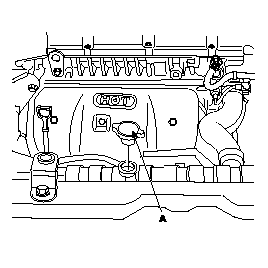
Remove radiator cap (A).
|
| 3. |
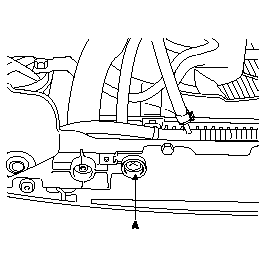
Loosen the drain plug, and drain the
coolant.
|
| 4. |
Tighten the radiator drain plug (A)
securely. |
| 5. |
Remove, drain and reinstall the reservoir.
Fill the tank halfway to the MAX mark with water, then up to the MAX
mark with antifreeze. |
| 6. |
Mix the recommended antifreeze with an equal
amount of water in a clean container.
|

| 7. |
Pour coolant into the radiator up to base of
the filler neck, and install the radiator cap
loosely. |
| 8. |
Start the engine and let it run until it warms
up (the radiator fan comes on at least
twice). |
| 9. |
Turn off the engine. Check the level in the
radiator, add coolant if needed. |
| 10. |
Put the radiatir cap on tightly, then run the
engine again and check for leaks. |
Cap Testing
| 1. |
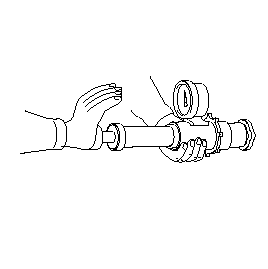
Remove the radiator cap, wet its seal with
engine coolant, then install it no pressure tester.
|
| 2. |
Apply a pressure of 93 ~ 123kPa (0.95 ~
1.25kgf/cm², 14 ~ 19psi) |
| 3. |
Check for a drop in
pressure. |
| 4. |
If the pressure drops, replace the
cap. |
Testing
| 1. |
Wait until engine is cool, then carefully
remove the radiator cap and fill the radiator with engine coolant,
then install it on the pressure
tester. |
| 2. |
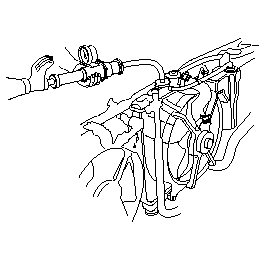
Apply a pressure tester to the radiator and
apply a pressure of 93 ~ 123kPa (0.95 ~ 1.25kgf/cm² 14 ~
19psi).
|
| 3. |
Inspect for engine coolant leaks and a drop in
pressure. |
| 4. |
Remove the tester and reinstall the radiator
cap.
|