| Description |
1.
System Description
AL: Auto Learning
CAN: Controller Area Network
ECU: Electronic Control Unit
IC: Instrument Cluster
LF: Low Frequency
LFI: Low Frequency Initiator
MIL: Malfunction Indicator LED
RF: Radio Frequency
WE: Wheel Electronic
WU: Wheel
Unit |

The TPMS monitors the
pressure and temperature of a vehicles tire to alert on pressure
variations that may impact the driving conditions. Messages deduced from
processed data are displayed at the Instrument Cluster (IC) via 2 warning
lamps and 4 tire-related LEDs. In parallel, the ECU executes error
evaluation on input and output signals. Pressure monitoring during parking
is provided.
The ECU processes data
from the WE sensor, determines the state of the tires and communicates the
required warning message via the CAN line to the driver.
2.
Functional Description
Warning
Thresholds
Hard
Warning
One non temperature
compensated hard warning threshold applies to front and rear axle of
vehicle. If the pressure reported by the WE sensor is below the
tire-specific minimum pressure then the low pressure warning telltale and
the telltale indicating position of the under-inflated tire is illuminated
immediately. A warning is reset when tire pressure is reported to be at
211kPa (30.6psi).
TPMS warning can be light on because the
tire pressure declined by low temperature in the cold
weather. |
Fast
Pressure Loss
Fast pressure loss
function is deactivated during parking and only active while driving. So
it is avoided that a warning is set when the driver manually deflates the
tire to a level above hard warning threshold.
Upon a rapid pressure
decrease the WE emits a delta-p telegram which triggers the fast pressure
loss function to start. Including the first dp-telegram the function waits
for a 2nd telegram of the same wheel electronic and calculates the
pressure loss rate. If the pressure drops by more than 20kPa/min, a "fast
pressure loss" warning is generated and displayed with a maximum of 60s
delay while driving.
Initialization
The initialization
function determines which WE sensor identifier belongs to the
vehicle.
The corresponding set
of identifiers is stored in the ECU memory and used to determine if a
received RF telegram comes from a wheel unit, which belongs to the
vehicle.
Only telegrams
containing known (initialized) identifiers are being supervised in the
warning algorithm.
The initialization
function is implemented in two independent parts: as an auto learning
function and as an auto location function.
Initialization-auto
Learning
AL starts every time,
the vehicle was parked long enough to change or permute wheels (19min),
and is traveling again at a speed that ensures that the WE sensors are
transmitting.
AL is automatically
considering all WE identifiers received and extracts, based on statistical
evaluation, IDs belonging to the WEs mounted on the vehicle. If new
(unknown) IDs are detected, their recurrence will be tracked by
AL.
AI compares the
acceleration reported by the wheel unit to the vehicle speed to rule out
transmissions received from neighboring vehicles traveling with different
speeds.
A WE sensor identifier
is assigned to the vehicle when 8 RF telegrams have been received while
driving above 25km/h.
Initialization-auto
Location
This function gives
very reliable full localization information.
It relies on the
physical properties of long wave emissions in the frequency range of 125
kHz. These emissions are inductively sensed in the wheel
unit.
The localization
consists in a classification of the WU identifiers in the following
order:
0. Left Front
Wheel
1. Right Front
Wheel
2. Right Rear
Wheel
After activation of
the initiators the system listens for wheel units reporting that their
transmission was caused by an LF trigger signal. If such a transmission is
received, the respective identifier is assigned to the triggered wheel
well.
The position of the
WE, which belongs to the wheel well without LF initiator, is deduced by
identifying the WE sensor, that never detected LF, but assigned to the
vehicle by auto learning.
Sensor
Registraion
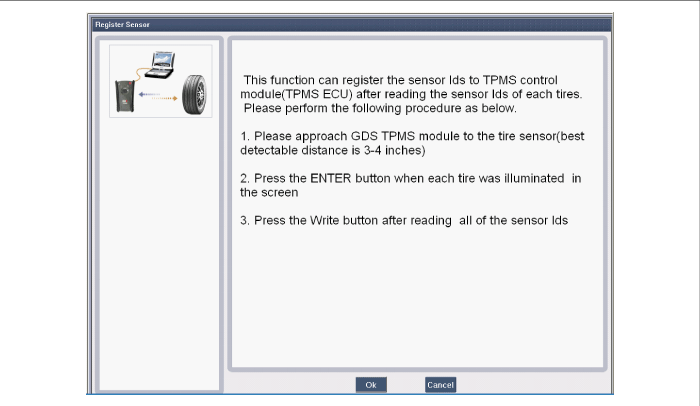
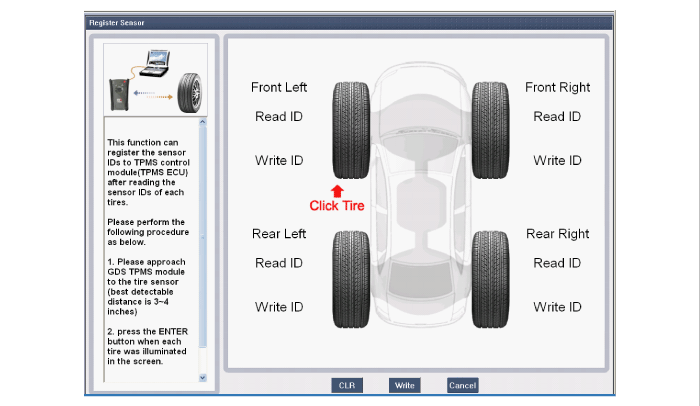
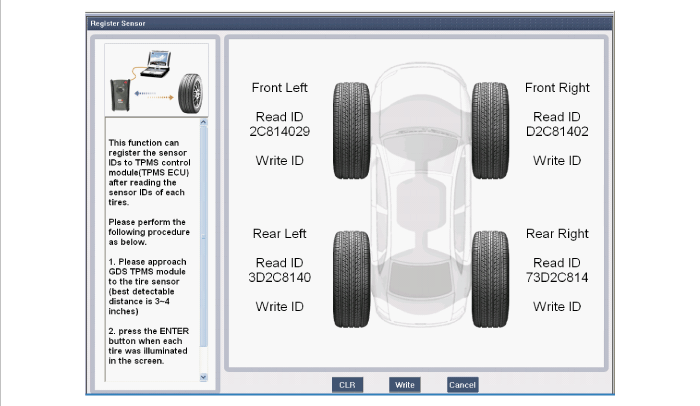
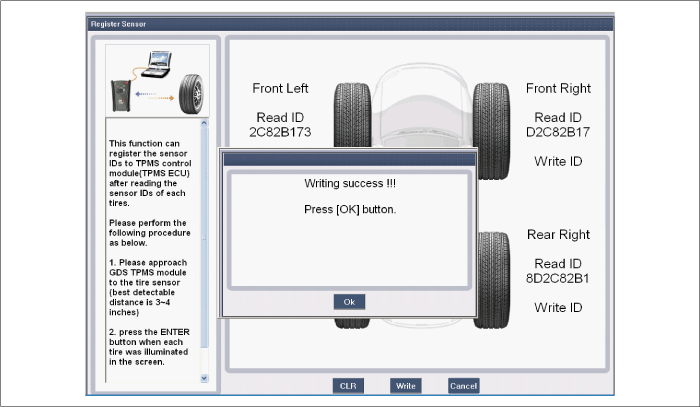
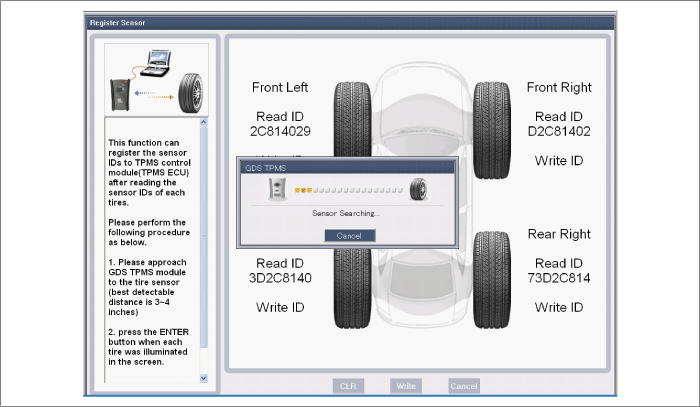
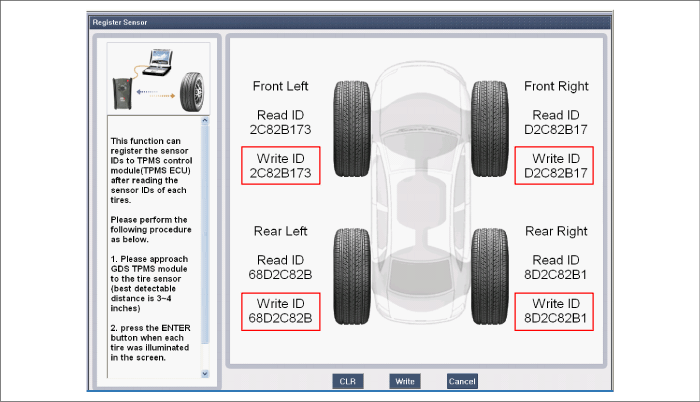
If the sensor registration procedure is not
performed by GDS after replacing the TPM sensor or Receiver, TPMS is
not operated. |

| 1. |
Install GDS (Global Diagnostic System) and
GDS TPMS module to vehicle. |
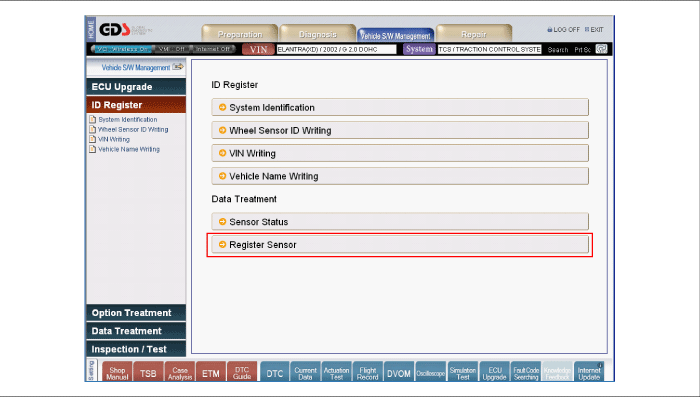
| 2. |
Select the model and perform the sensor
registration procedure according to instruction of the GDS as
follows.
|
Vin
And Vehicle Name Writing
| 1. |
Install GDS (Global Diagnostic System) and
GDS TPMS module to vehicle. |
| 2. |
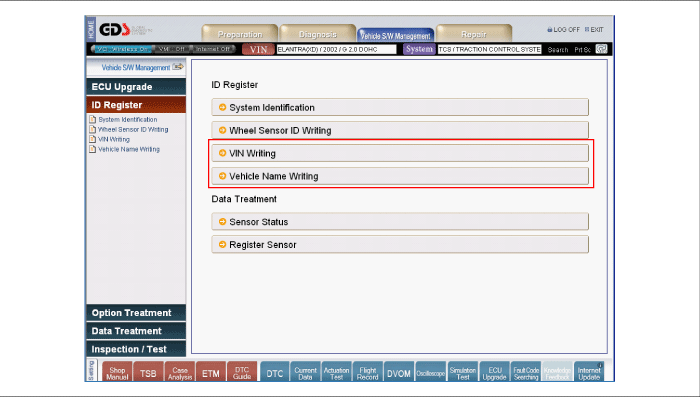
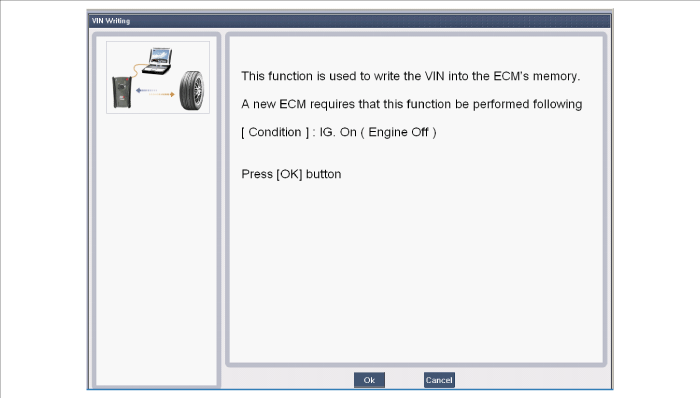
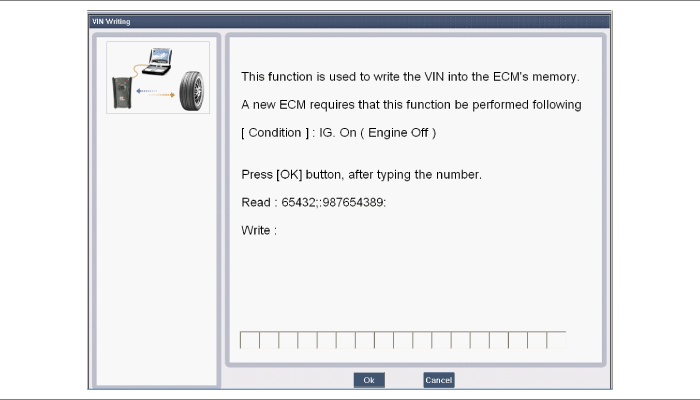
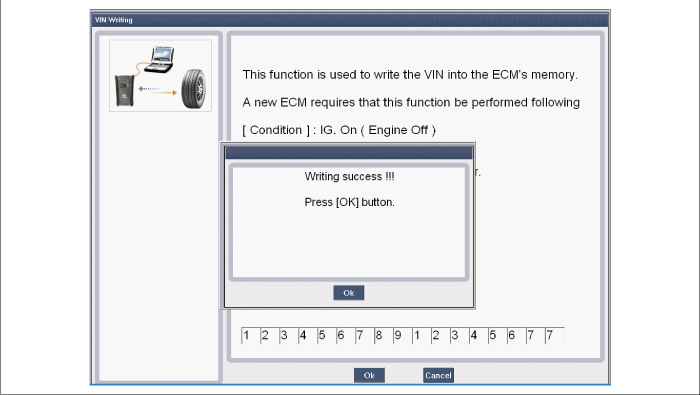
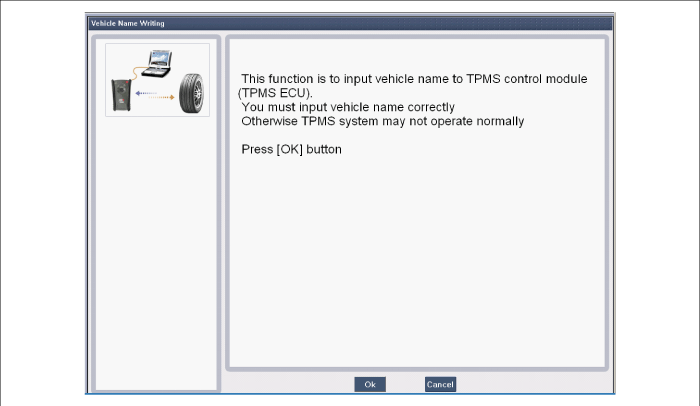
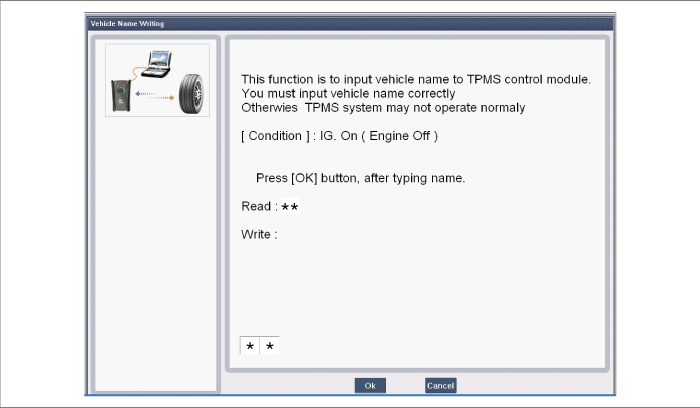
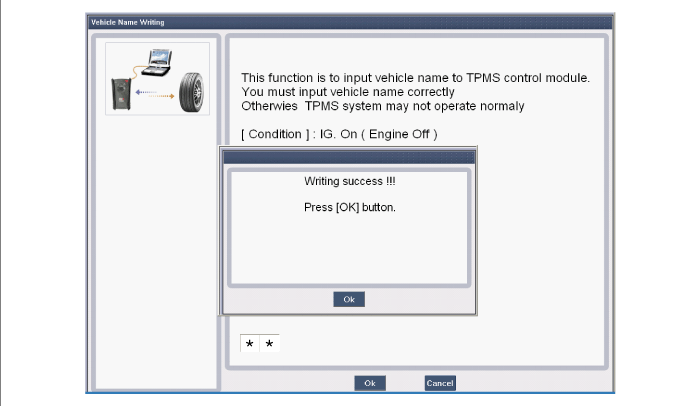
Select the model and perform the VIN and
vehicle name writing procedure according to instruction of the GDS
as follows.
[VIN Writing]
|